Ernest Hemingway and Hadley's Marriage
A Moveable FeastErnest Hemingway and Hadley Richardson’s marriage in these passages is a partnership formed in the material and imaginative conditions of their early life in Paris: limited money, a modest home, uncertain work, shared risks, and a closeness expressed through remembered conversation. Hadley is not merely a witness to Hemingway’s artistic life. She recalls its details as someone included in its arguments and experiences, while their domestic decisions and financial setbacks show the practical stakes they faced together.
Identity and Shared Circumstances
The account presents Hadley as Hemingway’s wife and companion during a period when paid newspaper work helped sustain them and he was trying to establish himself as a writer. Their circumstances were neither comfortable nor wholly bleak. The two-room flat on Rue Cardinal Lemoine had no hot water and no indoor toilet, but it had a good mattress, pictures they liked, a fine view, and enough cheerfulness to feel like a home. Hemingway’s description emphasizes the conditions plainly; the flat’s warmth comes from the shared life they have made within them.
Their work and home lives did not entirely overlap. Hemingway had a hotel room where he wrote, and the city’s first cold winter rains made that room and the prospect of heating it feel costly: fuel had to be bought in several stages, and a chimney that failed to draw could waste both the wood and the money. The streets darkened, shops shut their doors, and the narrator walked on rather than risk spending on a fire. This urban hardship helps frame the marriage, but does not reduce it to deprivation. The couple’s decisions take place within a continuing effort to balance rent, work, travel, and the possibility of earning more.
Decisions, Money, and Shared Risk
When Hemingway considers leaving Paris, he reckons that the rent on their Rue Cardinal Lemoine flat is nominal, that Toronto journalism checks are due, and that he can write journalism under different circumstances. The decision is conditional on Hadley’s wishes, but her answer is immediate and delighted: she thinks the trip would be wonderful and wants to leave right away. The exchange gives her a clear role in shaping their shared plans. She is not simply carried along by his choice; her enthusiasm helps turn a possibility into a decision.
Their finances also include the memory of a damaging wager. After money arrives from the Toronto paper, they consider going racing and hope to find a long shot. Hadley once had a horse, Chèvre d’Or, at Hippodrome d’Auteuil: it was quoted at a hundred and twenty to one and led by twenty lengths before falling at the final jump. The savings they had placed on it could have supported them for six months. They try not to think about the loss, and Hemingway recalls that they had been ahead that year until the horse fell. The episode makes their shared economic exposure concrete: a single race could turn apparent security into a sharp reversal. Their later plan is restrained by that precariousness; they do not have enough money to bet freely and expect to spend only what they take.
Memory and Intellectual Companionship
Hadley’s recollections make the marriage an intellectual relationship as well as a domestic one. On a walk beside the Seine, after they have crossed near the Louvre, she remembers conversations about making things true in writing and putting them rightly rather than merely describing them. She recalls Hemingway and Chink disputing lights, textures, and shapes, and says that sometimes one man was right and sometimes the other. Her memory is particular rather than ceremonial: she retains the subjects of their arguments and the details of their shared attention.
She also insists that she was included when Hemingway and Chink talked. The contrast she draws is with being a wife in Gertrude Stein’s company, where she did not experience that same inclusion. In the remembered exchange, Hadley says that she remembers what the three of them did and said on the trip, and stresses that the conversations between the men included her. This gives her recollection a significance beyond nostalgia: it records the terms on which she understood her place in Hemingway’s creative and social world. The evidence does not make her a co-author of his work, but it does show her as an attentive participant in the discussions through which he and his friend tested how to render experience.
Intimacy and the Limits of Ease
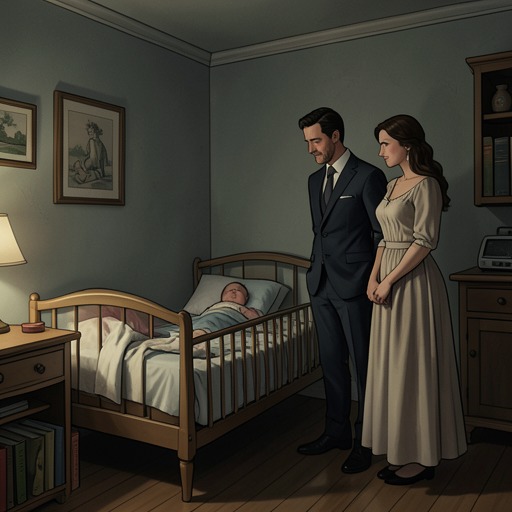
The marriage is also shown through quiet physical and emotional closeness. After a meal at Michaud’s, the couple’s hunger is satisfied, yet the feeling that had accompanied them on the bridge remains. It follows them on the bus, into their room, and into the night after they make love. Hemingway wakes with moonlight on the roofs and on Hadley’s face; he turns away from the light and cannot sleep, while she sleeps beside him. The scene places sexual intimacy and shared domestic space beside an unease neither a good meal nor the night together dissolves.
That unresolved feeling is not presented as evidence of a quarrel. Rather, it complicates the apparent simplicity of their life. The day had begun with a false spring, the sound of a goatherd, and a racing paper; by night, Hemingway is thinking about poverty, money, right and wrong, and the breathing of the person beside him. Paris, old and difficult to simplify, surrounds their private life without making their closeness unreal. The marriage is portrayed neither as a cure for hardship nor as a source of explicit conflict, but as the intimate setting in which uncertainty is experienced.
Work, Separation, and Narrative Significance
Hemingway’s writing remains a distinct discipline within this shared life. He walks through Paris to avoid a café where he might stop, then settles at the Closerie des Lilas to write in a notebook. A café crème cools beside him as he works on a story about coming back from war, one that contains no mention of war. He thinks about the days ahead and the need to stay well enough to begin again in the morning. These scenes do not describe Hadley’s presence at his desk; instead, they establish the demanding solitude of the work that his household and their uncertain finances had to accommodate.
Against that solitude, Hadley’s remembered participation in the conversations with Chink becomes especially telling. The passages place independent labor beside shared memory, rather than claiming that marriage erases the boundary between them. Their bond appears in the choices they make together, the losses they remember together, and Hadley’s detailed account of being intellectually included. In this portrait, marriage is a daily form of companionship under pressure: a home without conveniences, a journey welcomed by both, an expensive misfortune neither forgets, and an intimacy that persists even when the city and the future refuse to feel simple.