Hemingway’s failed attempt to deliver opium to Ralph Cheever Dunning
A Moveable FeastHemingway’s failed attempt to deliver opium to Ralph Cheever Dunning is a comic but uneasy episode about the limits of help: Ezra Pound entrusts Hemingway with a drug intended for a poet in danger, but when the supposed emergency arrives, Dunning rejects both the jar and its messenger. The story moves from an earlier near-fatal crisis to the rooftop alarm, then ends with the jar hidden away and the meaning of Dunning’s hostility unresolved.
The Charge and Its Background
Before leaving the Rue Notre-Dame-des-Champs for Rapallo, Ezra Pound asked Hemingway to keep a jar of opium and give it to Dunning only if he needed it. The container was an inconspicuous large cold-cream jar; inside was a dark, sticky substance with the smell of raw opium. Pound said that he had bought it from an Indian chief near the avenue de l’Opéra and the Boulevard des Italiens, and that it had been expensive. Hemingway suspected instead that it might have come from the Hole in the Wall, a narrow red-fronted bar on the rue des Italiens associated with deserters and drug peddlers during and after the First World War. The bar was said to have once had a rear exit into the Paris sewers, supposedly leading toward the catacombs. The jar’s disputed provenance makes the gift feel less like a straightforward remedy than a mysterious object passed between poets.
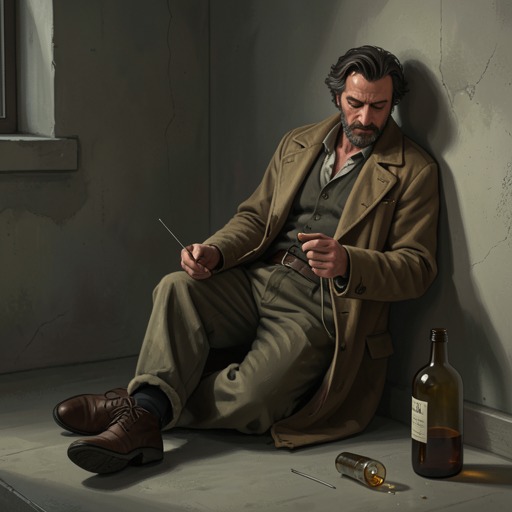
Dunning was a poet who smoked opium and neglected food. When he smoked heavily, he could drink only milk. Pound valued his poetry, including its terza rima, and had already tried to help him. Dunning lived in the same courtyard as Pound’s studio. A few weeks before Pound’s departure, he summoned Hemingway with the message, “Dunning is dying,” and asked him to come at once. Hemingway found Dunning skeletal on a mattress and believed that malnutrition could eventually kill him. He joked to Pound that few people died while speaking in well-rounded phrases, and that he had never known anyone to die while speaking in terza rima; Pound disputed Hemingway’s assessment of Dunning’s speech. After a night spent waiting for death, they put the matter in a physician’s hands. Dunning was taken to a private clinic to be detoxified. Pound guaranteed the bills and enlisted the help of other poetry lovers. The jar, however, remained Hemingway’s responsibility, to be delivered only in a genuine emergency.
The Rooftop Alarm
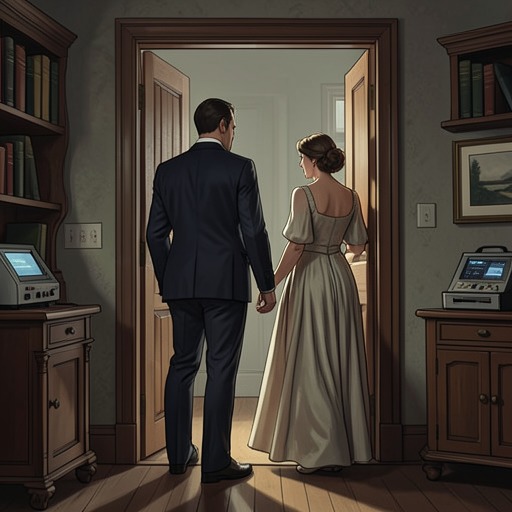
That emergency seemed to come one Sunday morning while Hemingway was studying the racing form in the open window of the sawmill yard. Pound’s concierge called up to report that Dunning had climbed onto the studio roof and categorically refused to come down. To Hemingway, a man on the roof who would not descend appeared to meet the condition Pound had set. He found the jar and walked with the concierge toward the courtyard; she was small, intense, and visibly excited by the situation. She asked whether he had what was needed. Hemingway assured her that he did, and said he had what it took. The exchange gives the errand the solemn shape of a rescue even as its object is a jar whose contents and intended use are surrounded by uncertainty.
By the time they reached the courtyard, the concierge announced that Dunning had come down. Hemingway joked that Dunning must have known he was coming, but continued up the outside stairway to Dunning’s room. Dunning opened the door looking gaunt and unusually tall. Hemingway explained that Pound had asked him to bring the jar and that Dunning would know what it was. Dunning took it, looked at it, and threw it back. It struck Hemingway on the chest or shoulder and rolled down the stairs. Dunning cursed him, calling him a son of a bitch and a bastard. Hemingway replied that Pound thought he might need it, but Dunning answered by throwing a milk bottle.
Rejection and Aftermath
Hemingway asked whether Dunning was sure he did not need the jar. Dunning threw another milk bottle, then hit Hemingway in the back with yet another before shutting the door. The delivery ended not in acceptance or explanation but in a retreat: Hemingway picked up the slightly cracked jar and put it in his pocket. He reported to the concierge that Dunning did not seem to want Pound’s gift. When she suggested that Dunning might have some opium of his own, Hemingway agreed that this was possible. The exchange offers no confirmation of what Dunning possessed or why he refused the jar; the apparent emergency and the intended remedy fail to meet.
The rescue effort did not end with Hemingway’s visit. The poetry lovers Pound had organized eventually rallied to Dunning’s aid again, while Hemingway and the concierge had been unsuccessful. Hemingway wrapped the cracked jar in waxed paper and carefully tied it inside an old riding boot. Years later, when he and Evan Shipman removed his belongings from the apartment, the boots were still there, but the jar was gone. Hemingway did not know whether Dunning had thrown the bottles because he remembered Hemingway’s earlier skepticism on the night of his first crisis, or because he simply disliked Hemingway. He also wondered whether Dunning had taken him for an agent of evil or of the police. None of these possibilities is settled, and the unexplained disappearance of the jar leaves the episode without a final account of its fate.
Mystery and the Poets
The incident’s comedy rests on a reversal: Hemingway accepts a solemn, conditional duty, but the man he means to help treats the gift as an offense and turns milk bottles into weapons. The rooftop alarm proves brief, since Dunning has already come down before Hemingway reaches him; the actual confrontation begins only after the crisis that justified the errand has apparently passed. The jar remains both a practical object and a burden of trust, passed from Pound to Hemingway and then refused by Dunning.
Hemingway says that Pound tried to be kind to Dunning as he was kind to many people, and he hopes Dunning was as fine a poet as Pound believed. Yet the ending resists a tidy moral or psychological explanation. Shipman thought the French report of Dunning on the roof refusing to descend was symbolic, but Hemingway does not claim to know what it symbolized. Shipman believed it should remain a mystery, and his preference gives the episode its final emphasis: Dunning’s need, anger, and disappearance of the jar cannot be made fully legible. Even the closing comparison—Dunning’s accuracy with a milk bottle set beside Pound’s skill at tennis—keeps literary admiration and comic physical action in the same frame.