Hemingway’s first meeting with Scott Fitzgerald
A Moveable FeastHemingway’s first meeting with F. Scott Fitzgerald at the Dingo Bar joined literary admiration, social awkwardness, and a startling episode that the two men later remembered differently. The encounter established Fitzgerald in Hemingway’s account as both a conspicuous enthusiast for his writing and a figure whose behavior could abruptly resist explanation: Hemingway believed he had watched him undergo a frightening change, while Fitzgerald later said that nothing had happened.
The Meeting at the Dingo Bar
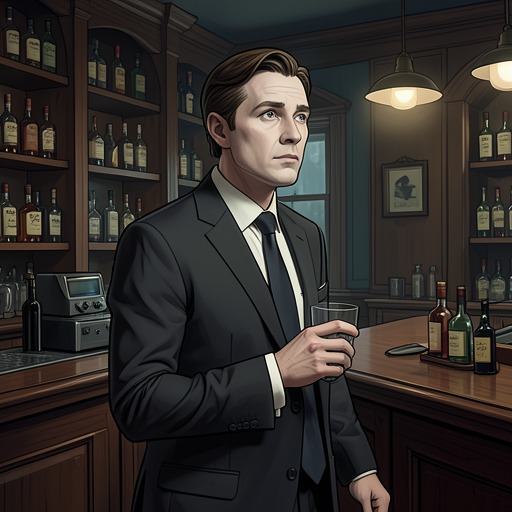
Fitzgerald came into the Dingo Bar on rue Delambre while Hemingway was sitting with people he later dismissed as worthless company. He introduced himself and his companion, Dunc Chaplin, as the famous pitcher. Hemingway had not followed Princeton baseball and had never heard of Chaplin, but found him relaxed, friendly, and more immediately likable than Fitzgerald. This first contrast matters to the shape of the recollection: Fitzgerald commands the scene, but Hemingway initially feels more at ease with the man who is less familiar to him.
Hemingway describes Fitzgerald as looking like a boy, with very fair wavy hair, a high forehead, and a face whose beauty was complicated by a mouth that seemed to worry the observer. He also notices that Fitzgerald was lightly built and looked less than robust, with a faint puffiness to his face. His Brooks Brothers clothes fitted him well; he wore a white buttoned-down shirt and a Guard’s tie. Hemingway considered warning him that the tie might attract attention from British people in Paris, then decided not to. He learned only later that Fitzgerald had bought it in Rome. These observations show Hemingway studying the stranger closely even as Fitzgerald keeps the conversation moving.
Praise and Personal Questions
Fitzgerald ordered champagne, and the three men drank together. He spoke at length about Hemingway’s writing and its greatness. Hemingway recalls being embarrassed by the praise, which he had thought was known only to himself, his wife, and people in their close circle. He was pleased that Fitzgerald appeared to share his belief in his possible talent, but also relieved when the speech began to wind down. The passage presents admiration as welcome but uncomfortable: Hemingway watches the speaker rather than openly accepting what he says.
The conversation did not end with the praise. Fitzgerald moved into direct questioning, a practice Hemingway says he would later recognize as Fitzgerald’s way of finding out what a novelist needed to know from friends and acquaintances. He asked about the private history of Hemingway’s marriage, including whether Hemingway and his wife had been intimate before they married. Hemingway answered that he did not know, and, when pressed to make an effort to remember, said that it was hopeless. The exchange makes the first meeting more than a ceremonial encounter between writers: Fitzgerald’s curiosity quickly crosses into personal territory, while Hemingway resists giving him the clear answer he seeks.
The Sudden Change
As the questioning continued, Hemingway looked back at Fitzgerald and noticed that he was sweating. The recollection lingers on the contrast between the effort of the speech and the altered expression that followed it. Fitzgerald sat holding a glass of champagne; to Hemingway, his face seemed to tighten and lose its earlier puffiness, while his eyes and lips appeared drawn. Hemingway describes the result as resembling a death mask. He insists that this was not imagination, presenting the moment as something he believed he witnessed rather than as a figure of speech he later invented.
Hemingway asked whether Fitzgerald was all right and, receiving no answer, turned to Chaplin. He suggested taking Fitzgerald to a first-aid station because he looked as if he were dying. Chaplin told him that Fitzgerald was all right and that this was the way it took him. Hemingway remained worried, but the two men got Fitzgerald into a taxi. Chaplin predicted that he would probably be all right by the time he got home. The scene ends without an explanation for the change: the bystanders act on what they see, but the account supplies no diagnosis or confirmed cause.
The Later Denial
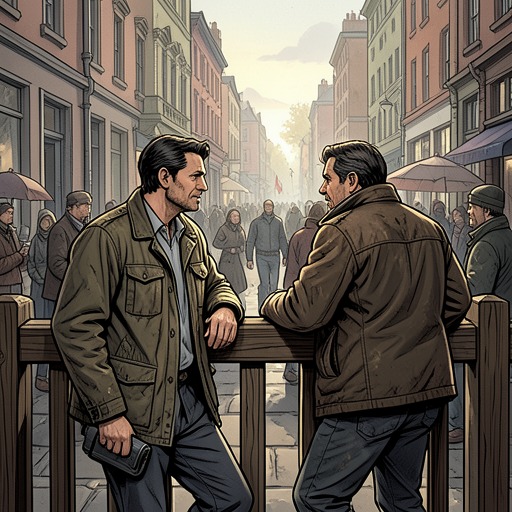
A few days later, Hemingway met Fitzgerald at the Closerie des Lilas and apologized for what he thought had happened at the Dingo. He suggested that the champagne might have affected Fitzgerald because they had drunk it too quickly while talking. Fitzgerald responded by asking what Hemingway meant and denied that anything had been wrong with him. He said he had simply become tired of the British people Hemingway had been with and had gone home.
Hemingway disputed that account on a specific point: he said there had been no British people there when Fitzgerald was present, apart from the bartender. Fitzgerald told him not to make a mystery of it and insisted that Hemingway knew whom he meant. The two explanations remain unresolved in the recollection. Hemingway’s account of the apparent crisis is vivid and certain, but Fitzgerald’s later version does not confirm it; instead, it replaces the episode with a social reason for leaving.
Significance in the Recollection
The meeting is remembered through this gap between observation and explanation. Hemingway presents himself as initially distracted by Fitzgerald’s appearance and uncomfortable with his praise, then forced into attention by the personal questions and the sudden change at the bar. Chaplin serves as a counterweight to Hemingway’s alarm: he is present at the scene, remains calm, and assures Hemingway that Fitzgerald will recover. The taxi carries the incident out of the bar, but not its explanation.
The encounter also gives Hemingway’s account of Fitzgerald an immediate tension. Fitzgerald appears capable of generous literary admiration and intrusive questioning in the same conversation; the man who speaks confidently about Hemingway’s talent is also the subject of a moment that Hemingway cannot reconcile with Fitzgerald’s own later denial. The first meeting therefore begins their relationship not with a settled portrait, but with a remembered scene whose central fact—the apparent crisis—is disputed by the person at its center.