Hemingway’s ill-fated road trip with Scott Fitzgerald
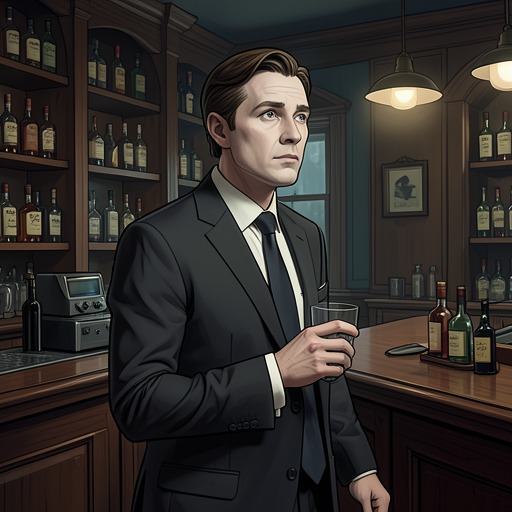
A Moveable FeastThe journey to Lyon with F. Scott Fitzgerald begins as an appealing excursion and becomes an improvised test of patience, judgment, and responsibility. Fitzgerald asks Ernest Hemingway to accompany him to retrieve a small Renault left behind in bad weather; the car proves damaged, the return drive is repeatedly interrupted by rain, and Fitzgerald becomes convinced that he is dying of a European disease. In Hemingway’s recollection, the trip’s comedy is inseparable from its strain: a friend’s charm and anxiety coexist, while the cost of the journey presses on a young household already saving carefully.
Invitation and Expectations
Fitzgerald explains that he and Zelda Fitzgerald had been forced to abandon their Renault in Lyon after bad weather stopped them. The couple had rented a furnished flat in Paris, and Fitzgerald asks Hemingway to take the train south, collect the car, and drive back with him. Hemingway agrees partly because the late-spring countryside promises a good trip, and partly because he expects to learn from the company of an older, successful writer. He regards Fitzgerald as more experienced, although he has not yet read The Great Gatsby and does not consider him a serious writer.
The invitation comes against a background of sharply different ideas about literary work. Fitzgerald has described writing stories first in the form he considers good, then altering them into commercially effective magazine pieces to earn money for books. Hemingway calls this practice a betrayal of the story; Fitzgerald argues that revising it for magazines does not damage the original work. Hemingway, still struggling to write at novel length and spending entire mornings on a paragraph, wants a novel of his own to substantiate his faith in an uncompromised method. The proposed journey therefore carries an expectation beyond sightseeing: it offers the prospect of conversation with a writer whose working compromises Hemingway distrusts but wants to understand.
Hemingway’s domestic and financial circumstances make the decision less carefree than it first appears. Hadley is pleased for him to take a rest, though she does not share his high opinion of Fitzgerald’s writing; her standard of a good writer is Henry James. The couple has received a two-hundred-dollar advance for Hemingway’s first American story collection and sells work to German and Parisian publications, but lives economically to save for travel to Spain. The Lyon trip therefore competes with a specific plan, not with surplus money. Hemingway also feels uneasy accepting an invitation ostensibly paid for by someone else and insists that they divide the expenses for hotels and meals.
The Missed Train and the Search in Lyon
The two men agree to meet the following morning at the Gare de Lyon and take a fast express, expected to make only one stop, at Dijon. Fitzgerald is to bring the tickets. Hemingway arrives in good time, waits outside the gates, then buys an entry ticket and searches the train when departure approaches. Fitzgerald is nowhere aboard. Hemingway boards alone, buys a second-class ticket because there is no third class, and wires the Lyon hotel address from Dijon, hoping the message will reach Fitzgerald through Zelda. He remembers being surprised that a grown man could miss a train; the incident is the first reversal of the journey’s orderly plan.
His quick anger has subsided by the time the train passes Montereau. Lunch in the dining car and a bottle of St.-Émilion help him turn the delay into a lesson in accepting a trip paid for by another person. He has already begun using Fitzgerald’s surname rather than his first name while angry, but is later glad to have spent the anger early. In Lyon, the search continues: Fitzgerald has arrived in the city but has left no lodging information, and calls to the major hotels fail to locate him. Hemingway leaves his address with the hotel staff and goes out to a café.
There, waiting for news, he meets a professional fire-eater who also bends coins with his jaws. The performer says that false fire-eaters have damaged the trade and that there is little money in such acts in Lyon. He has worked all evening and cannot afford another meal. Hemingway buys him a drink, then joins him for an inexpensive dinner at an Algerian restaurant. Their conversation briefly opens another possible route for Hemingway’s work: the performer offers to tell him extraordinary stories in exchange for whatever payment the writing earns, and proposes a journey to North Africa. Fitzgerald’s absence thus diverts Hemingway into an encounter with another precarious working life before the expected companionship resumes.
The Renault and the Rain-Interrupted Drive
When Hemingway finally meets Fitzgerald at the hotel desk, Fitzgerald apologizes for the mix-up, and Hemingway lets the matter go rather than begin a long drive in conflict. At the garage, the car reveals a second complication. Its top is missing: after it was damaged in Marseille, Zelda had ordered it cut away and refused to have it replaced because she disliked car tops. The Renault had then been driven as far as Lyon, where rain halted the couple. Although the car is otherwise in fair shape, the garage mechanic says it needs new piston rings and has been run without enough oil and water; the motor overheated badly enough to burn paint from its surface. Fitzgerald disputes some of the garage charges but pays the bill.
About an hour north of Lyon, rain stops them. Showers recur, perhaps ten times that day, sending the men to shelter beneath trees or into cafés. Without waterproof coats, driving is uncomfortable, though the meal carried from the Lyon hotel—truffled roast chicken, good bread, and white Mâcon wine—gives the day intervals of pleasure. Hemingway buys four more bottles at Mâcon, and Fitzgerald is delighted by the wine at their stops. The exposed, topless car makes the weather more than scenery: it is a consequence of the earlier damage and a continuing practical problem on the road.
Illness, Fear, and an Improvised Diagnosis
By early afternoon, Fitzgerald’s attention shifts from the drive to his health. He recalls two recent deaths from what he calls congestion of the lungs and fears that he may develop the same condition. Hemingway tells him that the phrase is an old-fashioned term for pneumonia, but Fitzgerald rejects his explanation and insists that the disease is peculiar to Europe. He argues that medical knowledge varies by region and even invokes the different diseases found in different parts of the United States. Hemingway answers with examples and an account of medical writing he remembers reading, then encourages Fitzgerald to drink the Mâcon wine. When Fitzgerald falters again, he asks whether they will reach a large town before fever and delirium begin.
Heavy rain forces them into a village café, and by the time they reach a hotel, probably at Châlon-sur-Saône, the drugstores are closed. Fitzgerald goes straight to bed. He says he does not mind dying, but worries about who will look after Zelda and their young son. Hemingway, who has Hadley and Bumby to care for, does not see how he could take on that responsibility, yet promises to do his best. Fitzgerald specifies that Zelda must not drink and that the boy should have an English governess. In this moment the road trip becomes an appeal for future protection, however improbable its premise.
The narrator checks Fitzgerald’s pulse, which is seventy-two, feels his cool forehead, and listens to his chest, which sounds normal. The men are in pajamas while their clothes are sent to be dried; rain continues outside, but the electric-lit room feels cheerful. Hemingway offers lemonade, whisky, and aspirin, assuring Fitzgerald that he is all right. The reassurance fails. Fitzgerald accuses him of being cold for reading the newspaper while he is supposedly dying, and demands that his temperature be taken, his clothes dried, and an express train arranged to Paris and the American hospital at Neuilly. Hemingway points out that the clothes will not be dry until morning and that no express trains are available.
The Thermometer and the Provisional Ending
After a prolonged wait, the waiter brings the hotel’s only thermometer. It is a bath thermometer with a wooden back and enough metal to sink in water, not a suitable instrument for the test Fitzgerald demands. Hemingway reports a reading of thirty-seven and six-tenths and calls it normal. The scene makes his reassurance look less like a confident diagnosis than an expedient attempt to contain Fitzgerald’s fear: he later admits uncertainty about whether the reading is normal, while the thermometer itself remains steady at thirty. Fitzgerald accepts the result as evidence of a rapid recovery and says he has always had great recuperative power.
Hemingway advises him to stay in bed, eat lightly, and leave early the next morning. He has planned to buy raincoats but would need to borrow money from Fitzgerald and does not want another argument. Fitzgerald, however, wants to get dressed and call Zelda to tell her he is well. The supplied episode closes not with a completed return to Paris but with this temporary reversal: the man who had entrusted his family to Hemingway’s care now declares himself recovered, and the companion who had managed the journey’s practical crises has no verified diagnosis to offer. The missed train, damaged car, repeated downpours, and improvised medical drama together make the trip an account of how quickly anticipation gives way to contingency.