Hunger Was Good Discipline
A Moveable FeastHunger Was Good Discipline is the narrator’s account of how going without food became entangled with learning to write in Paris. Hunger is not presented as an uncomplicated artistic virtue: it makes paintings seem clearer and perceptions sharper, but it also arises from poverty, skipped meals, and the narrator’s own decisions. The idea’s force comes from that tension between useful attention and avoidable deprivation.
Hunger, Work, and Perception
The narrator recalls being acutely hungry in Paris, where bakery windows displayed tempting food and people ate outdoors within sight and smell of passersby. After giving up journalism, the narrator was writing work that no one in America would buy and sometimes told his wife he was going out to lunch when he was not. The Jardin du Luxembourg offered a route with little exposure to food: walking from the Place de l’Observatoire to rue de Vaugirard, he could avoid seeing and smelling anything to eat. Hunger was thus partly a consequence of the uncertain transition from journalism to writing, and partly managed through deliberate choices about where to walk.
The walk could end at the Musée du Luxembourg, where hunger seemed to alter the experience of looking. Paintings appeared sharper, clearer, and more beautiful; the narrator felt he understood Cézanne’s landscapes better while empty. He wondered whether Cézanne had also been hungry when he painted, then considered the possibility that the painter had simply forgotten to eat. The narrator identifies this as an unsound but illuminating thought, the kind that came with hunger or sleeplessness. Later, he imagined that Cézanne’s hunger had been of a different kind. The speculation does not establish the painter’s circumstances; it shows how deprivation led the narrator to connect bodily need with artistic attention, while also recognizing that the connection might be more suggestive than reliable.
The Discipline and Its Limits
Hunger’s perceptual effect becomes an explicit principle, but the narrator also warns against letting it turn into excessive hunger-thinking. The body had to be managed when food was reduced. In the narrator’s formulation, hunger could teach and discipline, yet its usefulness depended on restraint rather than neglect. The claim that deprivation sharpened perception therefore contains its own limit: a hungry writer might see differently, but hunger could also distort judgment.
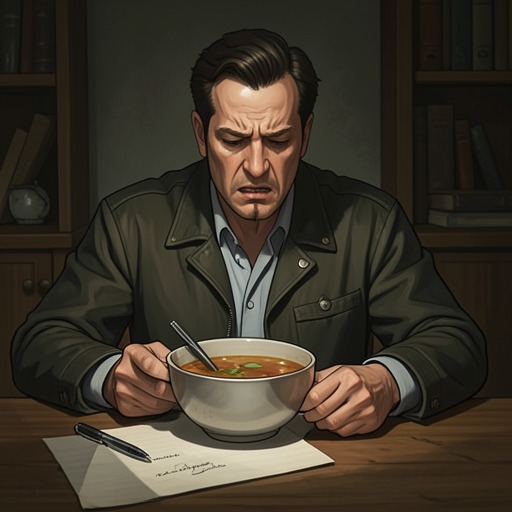
That contradiction surfaces when the narrator reproaches himself after complaining about the situation. He recognizes that he had chosen to leave journalism and could have bought a large piece of bread instead of missing a meal. He remembers the taste of its brown crust, while also noticing that bread seemed dry without something to drink. The self-rebuke widens into an acknowledgment that Sylvia Beach had lent him money before and could have done so again. He had treated hunger as evidence of sacrifice, although practical alternatives were available; he worries that accepting help or eating might lead to other compromises. The passage makes discipline a contested choice, not simply a hardship imposed from outside.
The narrator also links hunger to the work’s uncertain reception. He fears that readers do not understand the stories and that there is little demand for them, yet insists that understanding may take time and confidence. Hunger becomes part of a defiant posture toward the audience: if readers have not caught up, the writer imagines himself ahead of them. The irony is that this sense of artistic distance coincides with being unable to eat regularly. The narrator then recognizes the need to write a novel, but resists doing so merely because regular meals depend on it. He intends to let the pressure build and, meanwhile, to write a long story about what he knows best. Material necessity presses on artistic decisions even when he refuses to let it dictate the next form.
Routes Toward Food
The account gives hunger a physical geography. After leaving the Musée du Luxembourg, the narrator takes rue Férou toward Place Saint-Sulpice, where the quiet square, its benches, trees, fountain, lions, pigeons, and church offer a pause without restaurants. To continue toward the river would mean passing shops selling fruit, vegetables, wine, bread, and pastry. By choosing a route around the church and up rue de l’Odéon toward Sylvia Beach’s bookshop, he can avoid many of those displays; the street remains free of eating places until a square with three restaurants. Hunger shapes not only perception but movement through the city: the route is planned to keep food out of view.
The avoidance eventually gives way to eating at Lipp's. The walk there becomes pleasurable because the narrator notices the places his stomach registers as quickly as his eyes or nose. In the brasserie, he orders a one-liter glass of beer and potato salad. He eats the potatoes slowly with bread and olive oil, peppering them, then orders another portion and a cervelas split and covered with mustard sauce. He uses bread to mop up the oil and sauce, finishes the first beer as it loses its chill, and orders a smaller one. The careful sequence turns an ordinary meal into a vivid counterpoint to the earlier effort to avoid food: appetite can sharpen experience, but eating is itself a source of pleasure rather than merely a lapse in discipline.
Poverty, Economy, and Shared Life
The narrator’s account of Parisian poverty places skipped meals within a broader practice of small economies. At twenty-five and a natural heavyweight, he says, missing a meal made him very hungry, though it also sharpened perception. He sometimes spent two hours walking in the Jardin du Luxembourg and returned home having described a marvelous lunch to his wife. The people he wrote about often had strong appetites and a desire for food and drink, so bodily hunger also informed what he noticed in others.
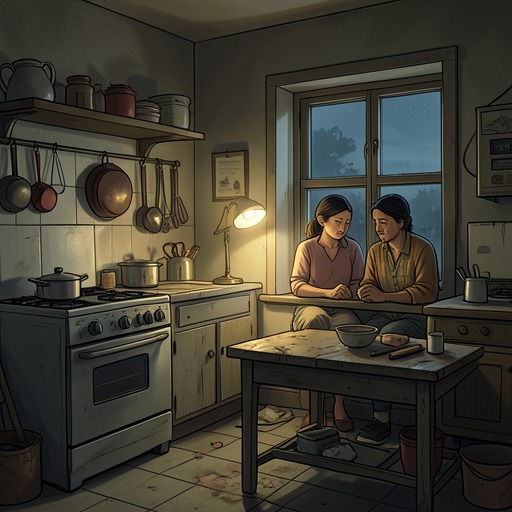
Economy extended to drink and domestic life. At the Nègre de Toulouse, the narrator and his companions bought Cahors by the quarter, half, or full carafe and usually diluted it with water. At home, above the sawmill, Corsican wine was inexpensive and could be diluted by half while still retaining its force. He recalls that in Paris it was possible to live well on little, skip meals occasionally, and avoid buying new clothes in order to save for luxuries. In his reflections on the household, he remembers his wife’s patience with their conditions: she did not complain about lacking modern bathing and plumbing comforts, though she had cried when Chèvre d’Or fell. He recognizes that he had been mean about money and had been foolish about her need for a grey lamb jacket, which he came to love after she bought it. Their thrift could mean worn clothing and limited comforts, but he also describes them as eating and drinking well for little, sleeping warmly together, and loving each other.
A promised meal at home gives this shared economy an intimate shape. Rather than eat elsewhere, the couple plans to return home, drink Beaune from the cooperative visible through the window, read, and go to bed together. Their insistence that they will love no one else sits beside the need to pay the library and keep costs in mind. The scene does not erase poverty; it shows how shared food, reading, and affection make a life within it.
Depletion and Renewal
The book also places hunger beside the bodily emptiness that follows creative work. After finishing a story in a café on a cold day, the narrator closes his notebook and orders a dozen portugaises and a half-carafe of dry white wine. He describes the aftermath of writing as both sad and happy, like the aftermath of making love, and believes the story is good without yet knowing for certain. As he eats the oysters and drinks the wine, the empty feeling recedes and he begins to make plans. This is not the same as the hunger used to sharpen attention before or during work: here, food answers the depletion that follows it.
Taken together, these scenes keep the principle unresolved in a productive way. Hunger can focus the eye, shape a route, and become part of a writer’s account of discipline; it can also be the result of poverty or an avoidable refusal to eat. A meal can interrupt work, reward it, restore the body, or become part of the modest pleasures shared with a spouse. The concept matters because the book does not separate artistic practice from material life: the sharpened painting, the crust imagined on the street, the potato salad at Lipp's, and the oysters after a story all belong to the same account of what writing costs and what sustains it.