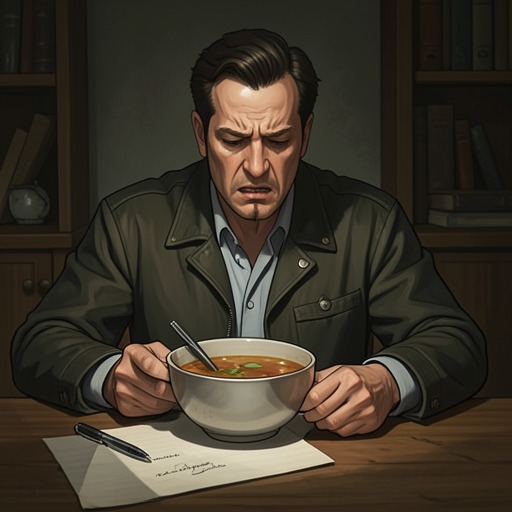
Hunger is good discipline
A Moveable FeastHunger is good discipline names a double experience in the narrator’s Paris: deprivation can sharpen attention and teach restraint, yet hunger is also a material hardship that food, companionship, and work can relieve. The idea runs from the empty stomach that intensifies his encounter with painting to the meals that restore him after writing, making scarcity part of both his artistic training and his account of shared life.
Scarcity and the Discipline of Looking
When he had given up journalism and was writing work that no one in America would buy, the narrator sometimes went without lunch. He could tell himself he was meeting someone, but the Jardin du Luxembourg offered a place to walk without passing restaurants or the food displayed in bakery windows. From the Place de l’Observatoire to the rue de Vaugirard, he could avoid seeing and smelling anything to eat; inside the Musée du Luxembourg, meanwhile, the paintings appeared sharper, clearer, and more beautiful to him when he was hollow with hunger.
That bodily condition changed how he looked at Cézanne. He felt he understood the painter’s landscapes more truly while hungry, and wondered whether Cézanne, too, had painted while hungry—or had simply forgotten to eat. The narrator marks this as an unsound but illuminating thought, prompted by hunger or sleeplessness, and later revises it: Cézanne was probably hungry in a different way. The comparison does not turn the painter’s experience into a fact; instead, it reveals how deprivation makes the narrator search for a connection between physical appetite and artistic perception.
A Chosen Restraint, and Its Limits
The discipline is not simply imposed from outside. After complaining about hardship, the narrator rebukes himself: he had left journalism by choice, could have bought bread, and could have borrowed money from Sylvia Beach, who had lent him money before. His self-accusation complicates the romance of hunger: he recognizes that he is choosing not to eat, and that his complaint risks turning voluntary deprivation into a performance of martyrdom.
He nevertheless treats hunger as something to learn from, while warning that he must manage himself when cutting down on food so that he does not fall into excessive hunger-thinking. The claim that hunger is good discipline is therefore practical as well as aesthetic: it may sharpen attention, but too much deprivation can distort thought. His irony makes the tension explicit. He jokes that he is now so far ahead of an audience that does not understand his work that he cannot afford to eat regularly, then concedes that it would not be bad if they caught up a little.
Eating, Work, and Restoration
The account of a meal at Lipp's gives scarcity a concrete counterpoint. After reaching the brasserie, the narrator orders a liter mug of beer and potato salad. He eats slowly: first the firm potatoes dressed with olive oil, then another serving and a cervelas with mustard sauce, using bread to mop up the oil and sauce. The food is not incidental detail. Its taste, texture, and measured consumption turn the meal into a recovery from the hunger he had just defended as discipline.
Writing produces a related emptiness. After finishing a story, the narrator closes the notebook and puts it in his inside pocket, then orders a dozen portugaises and a half-carafe of dry white wine. He feels both sad and happy, as though after making love, and believes the story is very good, though he will not know for certain until he rereads it the next day. As he eats and drinks, the empty feeling recedes and he begins to make plans. Hunger and creative work are linked by depletion, but the meal marks the return from that state to pleasure and practical thought.
Poverty and Shared Life
The narrator’s reflections place food within a larger domestic economy. He recalls being severe about money and being slow to buy his wife a grey lamb jacket, though he came to love it once she had bought it. Their poverty also meant doing without bathtubs, showers, and flushing toilets, relying instead on a public bathhouse by the river. Yet he distinguishes material shortage from the identity of being poor: they did not accept that description, ate and drank well and cheaply, kept warm, and loved each other.
That balance appears in a modest plan for the evening: they will eat at home, drink inexpensive Beaune from the cooperative whose price can be seen through the window, read, and go to bed together. A promised meal and shared intimacy stand beside the narrator’s solitary hunger in the gardens and at Lipp's. The expression thus does not simply praise deprivation. It records a discipline the narrator associates with looking and writing, while the book’s meals show why hunger must also end.