Jules Pascin
A Moveable FeastJules Pascin is remembered in Ernest Hemingway’s account through a sharply drawn evening at Le Dôme: he is a very good painter, purposefully drunk yet making sense, and quick with jokes among two sisters who work as models. The scene’s decisive turn comes in retrospect. Hemingway says that Pascin later hanged himself, then insists on remembering him as he had been that night. Pascin’s appearance is thus both a social encounter and a portrait shaped by loss: the lively man at the table survives in memory without being reduced to the manner of his death.
Identity and Appearance
Pascin enters not through a biography or an account of his artistic career, but through the narrator’s close observation of him at Le Dôme. Hemingway calls him “a very good painter” and describes him as drunk in a particular way: “steady, purposefully drunk and making good sense.” The qualification matters. Pascin is not presented as simply incapacitated; even in that condition he remains composed enough to converse and joke. The description holds apparent opposites together—drunkenness and steadiness, disorder and sense—without explaining them away.
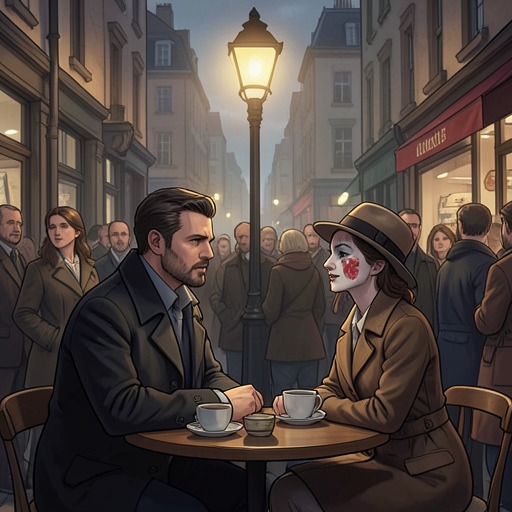
His appearance also becomes part of the scene’s retrospective image. Pascin wears his hat on the back of his head and, Hemingway says, looks “more like a Broadway character of the Nineties than the lovely painter that he was.” The comparison contrasts a comic, theatrical impression with the beauty associated with his identity as a painter. It is not a separate account of his art, but a remembered visual detail that keeps him present as a particular person: recognizable, amusing, and at odds with the solemnity that knowledge of his ending might impose.
The Evening at Le Dôme
The episode takes place in spring. Hemingway has stopped outside Le Dôme, uncertain whether to go in for a drink, when Pascin waves him over from a table. Two sisters who are models sit with the painter. Hemingway describes one as dark, small, and beautifully built; the other as childlike and pretty. His language is openly evaluative, and the scene places Pascin within a café company where conversation, drink, work, and flirtation mingle.
Pascin announces, “I have money. What will you drink?” The offer gives the encounter its immediate social ease: Hemingway joins a table where Pascin is hosting, rather than approaching him for a formal discussion of painting. The exchange is convivial but edged with sexual teasing. Pascin asks Hemingway, “Do you want to bang her?” and, looking toward the dark sister, adds, “She needs it.” Hemingway answers with a joke at Pascin’s expense, suggesting he has already been with her enough that day. The woman smiles and calls him wicked but nice. Their banter establishes the evening’s tone without turning the models into mere silent spectators; they answer back, and one explicitly says she is tired of the talk.
Painting, Wit, and Company
Pascin’s joking manner does not displace his work as a painter; it gives the scene its contrast between artistic labor and café sociability. When the conversation turns to canvases, he offers to paint one of the women in watercolors the next day: “If you think I’m in love with canvases, I’ll paint you tomorrow in water colors.” The line treats painting lightly in the moment, as a playful promise addressed to a model, while the narrator’s description has already identified Pascin as very good at it. The scene does not explain his artistic practice or establish whether the promised portrait was made. Its evidence is the offer itself, and the ease with which he brings painting into flirtatious conversation.
The group’s talk keeps moving between provocation and ordinary plans. One sister asks when and where they will eat; the dark girl asks Hemingway whether he will eat with them. The excerpt records the invitation, not the outcome. That unresolved practical question helps keep the episode grounded in an evening unfolding at a table, rather than turning it into a staged farewell. Pascin appears among people considering the next meal, making jokes, and passing time together. The reader is not told that anyone present understands the scene as a last meeting.
Retrospective Memory and Significance
Only after recalling the evening does Hemingway disclose that Pascin later hanged himself. He does not describe the death or supply its circumstances. Instead, he identifies what he wants to preserve: “afterwards, when he had hanged himself, I liked to remember him as he was that night at the Dôme.” The movement from the cheerful, crowded table to the knowledge of suicide changes the emotional weight of the scene, but it does not change what happened there. Pascin’s jokes and the company around him remain the substance of the memory.
Hemingway follows that recollection with a general reflection on the seeds of future actions and the people who make jokes in life. He suggests that those seeds seem better covered in them, under “a higher grade of manure.” The coarse joke resists solemn explanation: it neither claims to reveal why Pascin died nor makes his humor a clue that could have predicted it. Instead, it registers the gap between a life’s later outcome and the lively impression another person can retain. Pascin’s narrative presence rests on this tension. The reader knows the ending; Hemingway’s chosen image refuses to let the ending become the whole man.