Le Dôme
A Moveable FeastLe Dôme appears as a crowded Paris café where the end of the working day brings together artists, models, writers, and drinkers. Its significance in the account rests on this mixture of work and sociability: the café offers Ernest Hemingway a scene distinct from the horse-racing talk he has just avoided, and brings him into the company of the painter Jules Pascin and two model sisters.
Setting and Place in the Evening
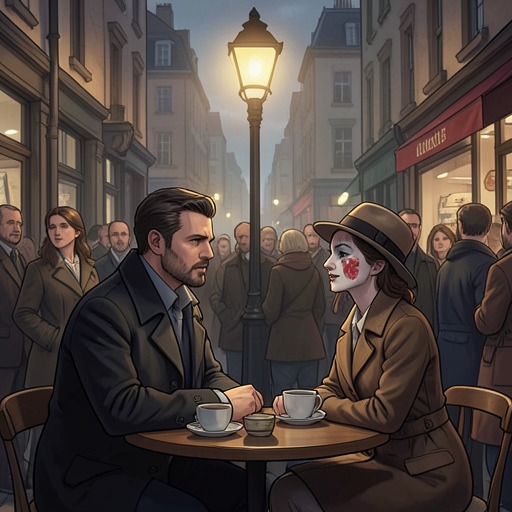
On his way back from The Select, Hemingway sees Harold Stearns, whom he expects would want to talk about horses. Having just renounced horse racing, he avoids that conversation, passes the group at the Rotonde, and crosses the boulevard to Le Dôme. The café is crowded too, but the people there seem to him to have worked. The contrast makes the stop more than a change of venue: Hemingway moves away from talk of the pastime he has foresworn and toward a room organized around the labor of making art.
A Gathering of Workers and Observers
The crowd includes models who have worked, painters who have continued until the light was gone, and writers who have finished a day’s work, whether successfully or not. Drinkers and other characters are present as well; Hemingway knows some, while others serve chiefly as part of the scene. Le Dôme thus holds together people with different relations to work and to one another, without making them a single community. The café is crowded, yet the account distinguishes those who have put in a day’s work from figures encountered as social decoration.
Jules Pascin and the Model Sisters
Pascin waves Hemingway over from the rue Delambre side, where Hemingway has paused on the sidewalk to decide whether to stop for a drink. Hemingway joins him and two sisters who work as models. Pascin is a very good painter and is drunk, but his intoxication is steady and purposeful; he still makes sense. Hemingway describes the sisters in sharply contrasting terms: one is dark, small, and beautifully built, while the other has a pretty, childlike appearance. Pascin calls them the good and bad sisters and offers to pay for a drink. Hemingway orders a half-pint of blonde beer, but Pascin urges him to have whisky, saying he has money. The exchange gives the café scene its intimate scale: a brief invitation, a drink chosen, and an offer made among people who have arrived there after their own work or exertions.