Leave the Well Unemptied
A Moveable FeastLeave the Well Unemptied is Ernest Hemingway’s rule for sustaining creative work: a writing session should end not when the writer has drained every possibility, but while the next step remains available. The principle joins a practical stopping point to a larger discipline of rest, attention, and renewal, making tomorrow’s work possible without forcing today’s work to run dry.
The Stopping Point
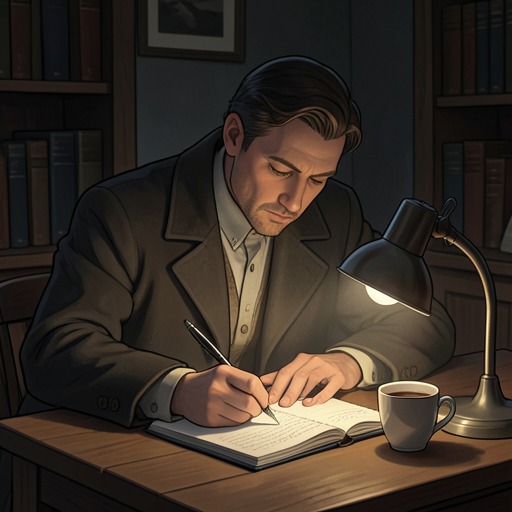
Hemingway describes a deliberate rhythm: he worked until he had something done, then stopped when he knew what would happen next. Ending at that point gave the next session a direction already in view. The rule is therefore not simply to stop at a fixed hour or when exhausted; it is to leave the work with a usable continuation, preserving the impulse to return.
The well metaphor makes this practice more than a scheduling technique. Hemingway had learned “never to empty the well of my writing,” but to leave something in its deep part and allow it to refill overnight from the springs that fed it. The image holds two ideas together: creative reserves can be depleted, and they can recover when they are given time. Stopping before exhaustion protects both the remaining material and the conditions under which new work can emerge.
The Interval Between Sessions
The rule governs the hours after writing as well as the moment of stopping. Hemingway learned not to think about a piece from the time he put it aside until he began again the next day. In his account, the subconscious could continue working during that interval, while deliberate attention turned outward—to other people, to what could be noticed and learned, and to reading. Rest from conscious effort was not inactivity: it made room for experience and for less deliberate processes to contribute to the work.
Reading had a specific place in this routine. After writing, when the writer was empty, reading helped prevent worry or continued rumination from consuming the pause before the next session. Hemingway also describes exercise, becoming physically tired, and making love with someone one loved as ways of shifting attention away from the work. These activities belong to the rule’s account of replenishment: they occupy the interval without demanding that the writer keep extracting from the same reserve.
Discipline, Not Evasion
Leaving the well unemptied did not mean waiting passively for inspiration. Hemingway links the stopping rule to the discipline of returning. When a new story would not get going, he tried to begin with one true sentence and proceed from there; when elaborate writing obscured a simpler, truer declarative sentence, he cut the ornament away. He also resolved to write one story about each thing he knew. The working method combines restraint at the end of a session with exacting effort within it.
The principle thus distinguishes productive incompletion from abandonment. A writer leaves the work unfinished in a controlled way: enough has been done for the day, and the next movement is known, but the deeper reserve has not been exhausted. That balance lets discipline and renewal support one another, rather than treating constant effort as proof of seriousness.