Lech
A Moveable FeastLech is a village in the Arlberg, across the mountains from the valley where the narrator lived in Schruns. In the memoir, its defining episode is a Christmas-period avalanche that kills nine members of a visiting German party. The disaster transforms the ski school’s fortunes and makes the surrounding mountains a place of both strenuous recreation and sustained attention to risk.
Setting and Regional Context
Lech lies beyond the mountains from Schruns, within the wider Arlberg region. Its connection to the narrator’s life comes not through residence but through Walther Lent, who was based in the Schruns area and was asked to ski with Germans spending their Christmas holidays in Lech. The journey between the two places therefore brings the social world of the ski school into contact with the hazards of a neighboring mountain district. The account places the Lech disaster within a winter of widespread avalanches. In a separate incident mentioned nearby, a couple from Vienna set out for Zürs and were later reported killed in an avalanche. That report extends the sense of regional danger beyond Lech, while the narrator identifies the accident near Lech as the first major loss of the season.
The Christmas Avalanche
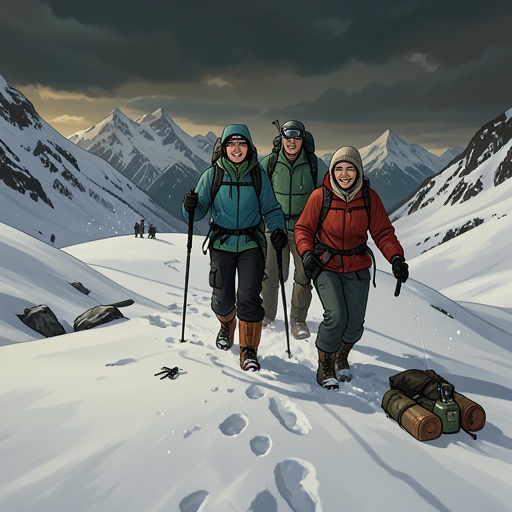
The danger followed an unusually treacherous sequence of conditions. Snow had arrived late, leaving the slopes and mountain sides warm from the sun; then a heavy snowfall deposited deep, powdery snow that was not firmly bonded to the ground. Walther Lent judged the conditions too dangerous and sent word to the Berlin visitors not to come. They came anyway, unfamiliar with the avalanche risk and undeterred by it. When the group arrived, Lent refused to take them out. After one man called him a coward and the visitors said they would ski on their own, Lent eventually chose what he considered the safest slope. He crossed it first, and the party followed. The hillside gave way in a sudden rush. Thirteen people were dug out, and nine had died. The sequence makes the outcome especially stark: a warning was given, the visitors rejected its implication, and Lent’s attempt to guide them toward a safer route could not prevent the disaster.
Aftermath and Changed Practice
The Alpine ski school had already struggled to attract members. After the avalanche, the narrator says, the people in the school were almost its only members. The event thus changed Lech’s meaning within the memoir from a place associated with a holiday gathering to a measure of the risks that could overwhelm even experienced judgment. The response was practical as well as emotional. The narrator and the others became serious students of avalanches, learning about different kinds, how to avoid them, and what to do if caught. Much of the narrator’s writing that year took place during what he calls avalanche time. Lech’s catastrophe therefore enters the account not only as a local tragedy but as the event that makes mountain knowledge an urgent part of daily life.
Narrative Significance
The Lech episode sets the pleasures of skiing against the limits of control. Elsewhere in the mountain narrative, long climbs, difficult snow, and the eventual fast descent on a glacier are achievements earned through physical effort and preparation. At Lech, however, the snow’s unstable condition defeats the effort to manage the danger: Lent’s caution, the visitors’ determination to ski, and his selection of a safer slope all converge on a slope that collapses. The disaster also marks the character of the remembered winter. The narrator describes the avalanche season as happy and innocent in comparison with the following winter, which he presents as a nightmare concealed beneath apparent pleasure. The party does not return to Vorarlberg. In this retrospective frame, Lech is both a specific site of mass death and part of the close of the mountain years, before the memoir turns toward a changed life elsewhere.