Lipp's
A Moveable FeastLipp's is presented as a brasserie where an ordinary meal becomes part of the narrator's struggle to balance poverty, hunger, and literary work. Its vivid menu and measured pace offer immediate bodily relief; the thoughts that accompany the meal turn it into a place for taking stock of what has been lost, what may yet be published, and what to write next.
Location and Urban Rhythm
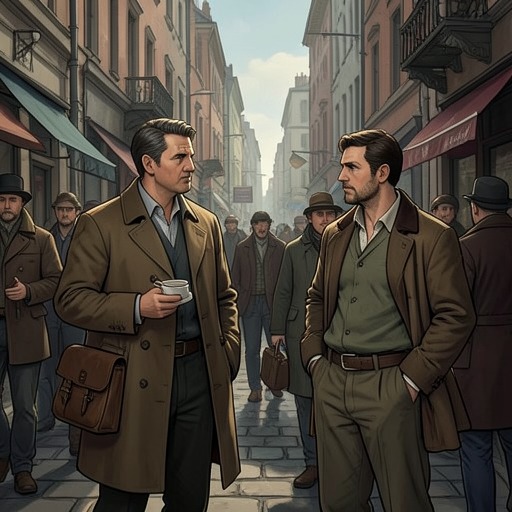
Lipp's lies within a city traversed on foot, and its place in the narrative is defined by a particular walk rather than by an account of its history or architecture. After reproaching himself on the rue de l'Odéon for complaining and skipping a meal, the narrator identifies Lipp's as the place where he will eat and drink. The walk there makes hunger newly acute: places noticed by his stomach, as well as by his eyes and nose, add to the pleasure of going.
The brasserie is a pause in a working day, not an escape from the demands of work. After paying the check, the narrator crosses the rue de Rennes to avoid going to the Deux-Magots for coffee and takes the shortest way home. The meal therefore sits between self-reproach and renewed effort: he leaves it with questions about what he knows best and what he should write, and then turns toward the Closerie des Lilas to work. Lipp's belongs to the network of Paris streets through which he moves between bodily need and the discipline of writing.
Hunger and the Meal
The scene begins with a practical correction to self-denial. The narrator recognizes that he could have bought bread instead of missing lunch and rebukes himself for treating an avoidable hardship as a virtue. He has given up journalism by choice, has credit, and could borrow from Sylvia Beach, who has lent him money before. His insistence that hunger is healthy is therefore not simply a report of necessity: it is a conviction he tests against the ordinary fact that eating is a pleasure.
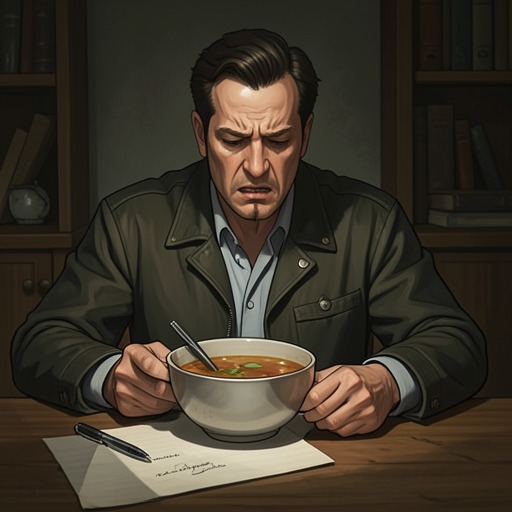
At Lipp's, the pleasure is rendered through a precise sequence. The brasserie is sparsely occupied. Seated on a bench against the wall, with a mirror behind him, the narrator orders a liter mug of beer called a distingué and potato salad. The beer is very cold; the pommes à l'huile are firm and marinated, and he seasons them with black pepper. He moistens bread in their olive oil and eats and drinks slowly after the first heavy draft.
When the first serving of potatoes is gone, he orders another, together with a cervelas split down the middle and covered in mustard sauce. He uses bread to mop up the oil and sauce, and drinks the beer until it begins to lose its chill. Then he orders a demi, watches it being drawn, finds it colder than the larger mug, and drinks half. The details make appetite tangible without turning the meal into extravagance: the scene attends to temperature, texture, seasoning, and the practical pleasure of finishing what is on the plate.
Poverty, Discipline, and Perception
The meal gains meaning from the narrator's wider experience of poverty in Paris. When he has stopped journalism and is writing work that no one in America will buy, hunger is intensified by the city around him: bakery windows display good things, and food is eaten at sidewalk tables where it can be seen and smelled. To avoid those reminders, he goes to the Luxembourg gardens, where the walk offers no food to see or smell, and then studies paintings at the Luxembourg museum. In his account, being hungry sharpens the paintings, especially his understanding of how Cézanne made landscapes. Hunger can alter perception, but the meal at Lipp's shows the other side of that discipline: eating is not a failure of artistic seriousness but a source of pleasure in its own right.
Elsewhere, the narrator reflects that he and his wife did not think of themselves as poor, despite the severity of their circumstances. He remembers being too tight with money about things she needed, while also recalling that they ate and drank well and slept warmly together. This distinction helps explain why the meal at Lipp's is described so attentively. Scarcity shapes choices, but it does not erase enjoyment; the food and beer receive full consideration rather than serving merely as evidence of deprivation.
Stories, Memory, and the Return to Work
During the meal, the narrator's thoughts turn to the uncertain reception of his writing. He has been confident that his stories are good and will eventually be published, but every story he has sent out has come back. He traces that confidence to Edward O’Brien's decision to include “My Old Man” in the Best Short Stories book and dedicate that year's volume to him. The recognition carried an irony: the story had never appeared in a magazine, O’Brien had broken his own rules to select it, and he had misspelled the author's name.
The memory opens onto the loss of the manuscripts in Hadley Richardson's suitcase at the Gare de Lyon. She had been bringing the work to him in Lausanne as a surprise so he could work during their mountain holiday; the suitcase contained originals, typescripts, and carbons in manila folders. The narrator had only one story because it had been in the mail, sent to an editor by Lincoln Steffens and returned. Another, “Up in Michigan,” had remained uncopied in a drawer after Gertrude Stein called it inaccrochable. The recollection gives the meal a second register: while the narrator eats, he confronts the precarious survival and recognition of the work that defines his days.
After leaving Lipp's, he moves through the city and asks himself what he knows best and cares for most. The answer leads him back toward writing, not to a finished plan but to the next necessary step: a story about coming back from the war, with no mention of the war in it. Lipp's thus marks a small but consequential interval in the book's account of creative life. Hunger brings the narrator to the table; food restores immediate pleasure; and the meal's unhurried attention gives way to the return of memory and work.