Montparnasse
A Moveable FeastMontparnasse emerges as more than a Paris address in Ernest Hemingway’s recollections: it is a daily landscape organized by work, walking, cafés, and careful spending. From the flat over a sawmill to the tables of the Closerie des Lilas and Le Dôme, the neighborhood holds both the labor of writing and the social life that gathers around it. Its cafés offer contrasting ways of occupying the same city—working, watching, or being watched—while the couple’s limited means determine which pleasures they can afford and how they make them last.
Home and Neighborhood
The Hemingways lived in a flat over the sawmill at 113 Rue Notre-Dame-des-Champs. The Closerie des Lilas was their nearest good café, a convenient extension of home and, for Hemingway, a place to work. The sawmill and the café gave the neighborhood a practical rhythm: he could leave the flat, cross the street, and settle at a table without turning the journey into a special outing.
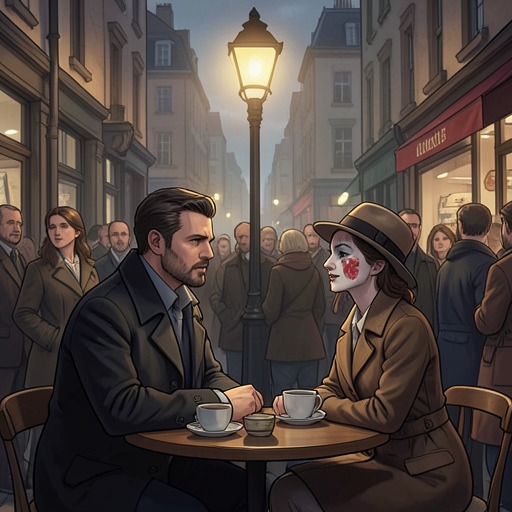
The Closerie changed with the seasons. In winter it was warm inside; in spring and fall, the tables outside lay beneath trees near the statue of Marshal Ney and under large awnings along the boulevard. Hemingway’s account makes these details part of the place’s use, not mere decoration: the café could shelter work in cold weather and offer an outdoor setting when the weather permitted. Two waiters were friends of the couple, giving the establishment the familiarity of a regular local refuge.
Cafés and Social Geography
The Closerie occupied a different social position from the more conspicuous cafés around the junction of Boulevard Montparnasse and Boulevard Raspail. Hemingway observed that patrons of Le Dôme and the Rotonde did not come to the Lilas; the latter lacked the familiar faces that drew them elsewhere, and visitors there would not attract stares. He contrasted the public visibility sought in some cafés with the relative privacy of the Lilas, where the couple could be regulars without making a spectacle of themselves.
The café’s clientele also differed from the image of a gathering place for celebrated poets. It had once hosted poets who met regularly, but Hemingway saw only Blaise Cendrars there, and only once. Most customers were older, bearded men in worn clothes, often accompanied by wives or mistresses. Some wore the red ribbon of the Legion of Honor; others wore the purple Palmes of the Academy. Hemingway and Hadley speculated hopefully that the men might be scientists, scholars, professors, or instructors. The Lilas’s social character thus came less from literary celebrity than from habitual, unassuming company.
Le Dôme, by contrast, offered a meeting place for people who had finished a day’s work. One evening, after passing the Rotonde, Hemingway crossed the boulevard and found Le Dôme crowded with models, painters, writers, drinkers, and other familiar or unfamiliar figures. He joined Jules Pascin and two sisters who were models. The scene links Montparnasse’s artistic social life to the end of the working day, but Hemingway’s route also registers a choice: he had recently given up betting on horses and approached the café feeling newly virtuous. The neighborhood’s cafés were not interchangeable stops; each carried its own clientele and associations.
Walking, Work, and the City
Walking connected Montparnasse’s cafés to Hemingway’s writing routine. After paying a bill, he avoided stopping at the Deux-Magots and took a route home by way of Rue Bonaparte, Guynemer, Rue d’Assas, and Rue Notre-Dame-des-Champs, continuing to the Closerie des Lilas. There he sat in a corner with the afternoon light over his shoulder, drank half a café crème, and wrote in his notebook. The movement through the streets leads directly into concentrated work: once seated, he became reluctant to leave the river scene he was composing, even though the river existed on the page rather than in the café before him.
The story he worked on concerned a return from war, yet it did not mention the war. Hemingway’s account of the session emphasizes the choice to write what he knew and cared about, and the daily discipline of returning to the work. He had lost an earlier novel when a bag was stolen at the Gare de Lyon and felt that he must eventually write another, but resisted writing one simply because it was necessary for earning a living. In the meantime, he chose a long story about what he knew best. Montparnasse provided a route, a table, and a repeatable working setting in which that decision could become practice.
Poverty, Food, and Departure
The neighborhood’s everyday life was shaped by financial constraint. Hemingway described the couple as very poor and recalled economies that included skipping meals and going without new clothes. At times he said he had been invited to lunch, then spent two hours walking in the Jardin du Luxembourg before returning home to describe a meal he had not eaten. Hunger sharpened his awareness of appetite, a quality he also noticed in the people he wrote about. At the Nègre de Toulouse, near the Boulevard Montparnasse, he read the menu and found the day’s cassoulet immediately tempting. The local restaurant offered a meal to anticipate, while at home the couple stretched modest means with inexpensive wine, sometimes diluted with water.
Poverty did not erase the couple’s sense of shared pleasure. Hadley did not complain about their limited comforts, and Hemingway recognized that he had been ungenerous when she needed a gray lamb jacket, even though he later loved it once she had bought it. He described their life as a struggle against poverty through not spending, but also recalled that they ate and drank well for little, slept warmly together, and did not think of themselves as poor. Their domestic life included plans for simple meals, a bottle of Beaune, reading, and an evening together; the small scale of the arrangements did not make them less meaningful.
Montparnasse belongs to the first phase of the Paris life Hemingway remembers, not to an unchanging home. When the winter became too harsh for their infant son, the family went to Schruns in Austria and lived at the Hotel Taube. Hemingway later recalled working well there and making trips with Hadley, but said that the trouble began again after they left the mountains and returned to Paris in late spring. The return marks a change in the remembered life of the city: Paris remained itself, yet the family and its circumstances had changed. Montparnasse’s significance lies in this conjunction of place and time—a neighborhood made intimate by work and shared routines, but never insulated from poverty, weather, or the changes that followed.