Musée du Luxembourg
A Moveable FeastThe Musée du Luxembourg is one of the narrator’s most important places of looking in Paris: a museum he visits nearly every day, where the paintings teach him that clear, truthful sentences alone cannot give a story all the dimensions he wants. It stands at the meeting point of artistic study and the disciplined routines of his writing life.
Setting and Collection
From the Jardin du Luxembourg, the narrator walks to the Musée du Luxembourg to see Cézanne, Manet, Monet, and other Impressionists. He had first learned about these painters at the Art Institute in Chicago; in Paris, repeated visits make looking a daily practice. The museum’s collection is described as it existed in the narrator’s time, with many of its great paintings later transferred to the Louvre and the Jeu de Paume.
The museum is part of a route rather than an isolated destination. On days when the light has gone from its galleries, the narrator walks back through the gardens and may stop at Gertrude Stein’s studio apartment at 27 rue de Fleurus. The sequence joins public collections and private rooms as places of sustained attention to art.
What the Paintings Teach
Cézanne gives the narrator a problem that the principle of writing simple, true sentences cannot solve by itself. He learns from the painter that stories need dimensions beyond sentence-level truth, although he cannot yet explain precisely what he is learning. He keeps that knowledge to himself, treating it as a secret rather than a finished theory.
The lesson is practical as well as aesthetic. The museum does not supply a formula for writing; instead, repeated viewing enlarges the narrator’s sense of what a story must contain. The paintings become evidence that simplicity is necessary but insufficient: truthful sentences must be shaped into something with the depth and structure he is seeking.
Hunger and Perception
The museum’s paintings appear different when the narrator is hungry. After giving up journalism and writing work that no one in America would buy, he sometimes goes to the Luxembourg gardens because the route from the Place de l’Observatoire to the rue de Vaugirard keeps food out of sight. In the museum, he finds that the paintings seem sharper, clearer, and more beautiful when he is hollow with hunger.
This bodily condition sharpens his study of Cézanne’s landscapes. He wonders whether Cézanne, too, had been hungry while painting, then recognizes that this is an unsound but illuminating thought brought on by hunger or sleeplessness. Later, he revises the comparison: Cézanne was probably hungry in a different way. The episode keeps physical deprivation distinct from artistic need even as it lets one illuminate the other.
Place in the Writing Life
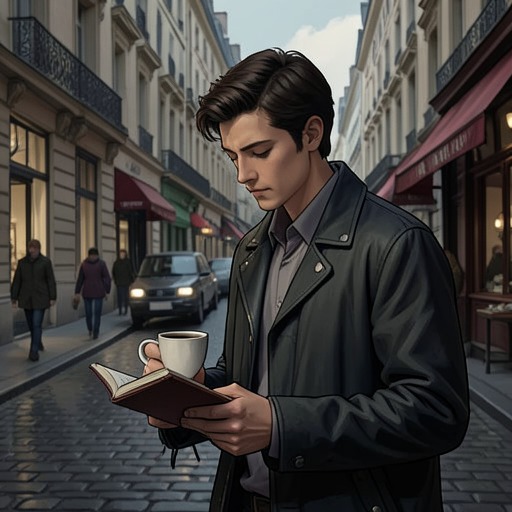
The Musée du Luxembourg belongs to a larger pattern in which walking, looking, and working support one another. The narrator’s days move between his workroom, the gardens, the museum, and the streets; elsewhere in the city he walks along the Seine, watches fishermen, reads, and thinks. These movements offer encounters and observations, but they remain bounded by the time he must return to work and by the money he has to spend.
The museum’s importance is therefore not simply that it contains admired paintings. It gives the narrator a repeated encounter with visual form at the moment his own fiction is reaching beyond the short, truthful sentence toward larger dimensions. Its influence remains partly inarticulate, but the daily visits establish looking as a form of study—and as one of the disciplines through which he learns to write.