Paris as a Moveable Feast
A Moveable FeastParis as a Moveable Feast names Ernest Hemingway’s understanding of Paris as an experience that travels with the person who lived there. Its significance lies in the way the memoir makes that persistence concrete: the city is not only a cherished idea, but a place encountered through walking, working, watching the river, calculating the cost of heat, and returning to scenes in memory.
Meaning and Memory
The dedication gives the idea its clearest formulation: “If you are lucky enough to have lived in Paris as a young man, then wherever you go for the rest of your life, it stays with you, for Paris is a moveable feast.” Addressed to a friend in 1950, the statement looks back from later life and presents Paris as something carried forward rather than left behind. The feast is therefore not simply a description of abundance: its lasting value comes from lived experience made available to memory.
That memory is explicitly selective. Ernest Hemingway says that many places, people, observations, and impressions have been left out, including both secrets and material already widely written about. He also allows that readers may regard the book as fiction, while suggesting that fiction can illuminate what has been written as fact. Paris as a Moveable Feast consequently describes not a complete inventory of the city but a shaped remembrance whose omissions and uncertain boundary between fact and fiction are part of its form.
A City Encountered on Foot
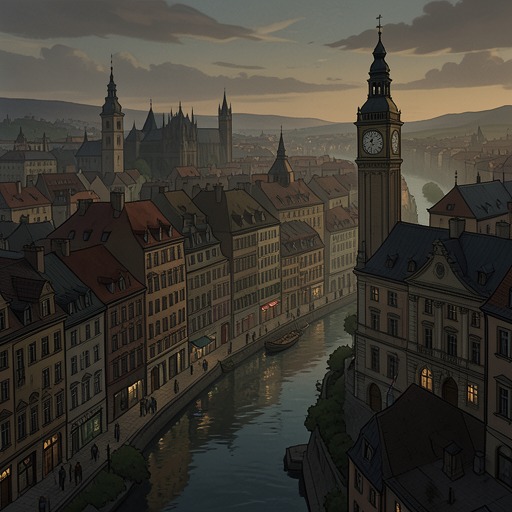
The remembered city changes with season and weather. With the first cold winter rains, the bright tops of the high white houses disappear from view; wet, dark streets and closed shop doors replace them. From a cold room on the top floor, the narrator calculates the expense of kindling, split pine, and hard wood, then hesitates over whether the chimney will draw or fill the room with smoke. Rather than risk wasting money and fuel, he walks on in the rain. The city’s emotional atmosphere is inseparable from such practical constraints: winter sadness arrives through weather, closed doors, and the cost of keeping a room warm.
Walking also provides a method of thought. After work, or when trying to work something out, the narrator follows the quais because movement and watching people at tasks they understand help him think. At the point of the Île de la Cité below Pont Neuf, he watches fishermen work the Seine’s changing currents. Their fine leaders, light tackle, and quill floats make the fishing a skilled, serious activity, not the idle pastime travel writers imagine. On bright days he buys wine, bread, and sausage, reads a book in the sun, and watches the men fish between the Île Saint-Louis and the Place du Verte Galente. He does not join them: he lacks tackle, saves his money to fish in Spain, and cannot know when work or travel will take him away. The scene brings observation, modest pleasure, financial caution, and the discipline of remaining unattached into a single urban routine.
Work, Routes, and the Making of Stories
The city’s streets also shape the movement from thought to writing. Ernest Hemingway knows he must eventually write a novel, but resists beginning one merely because it would provide regular meals. Instead, he intends to let the pressure build and work on a long story about what he knows best. After leaving a café, he avoids going to the Deux-Magots and takes the quickest route back toward where he works, through the streets leading to the Closerie des Lilas. The question of what he knows is answered not by an abstract plan but by the streets that bring him back to his work.
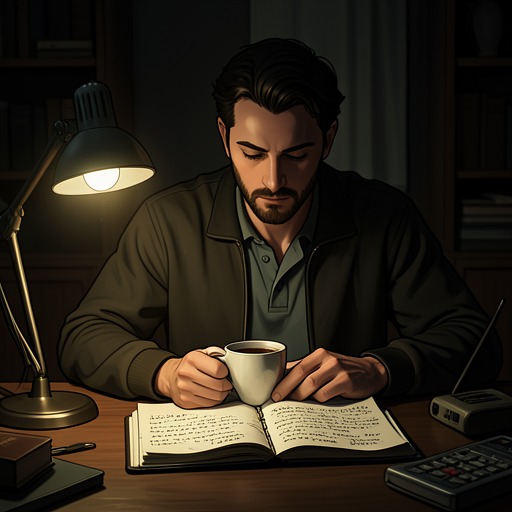
At the Closerie des Lilas, afternoon light falls over his shoulder as he writes in a notebook and drinks half a café crème. The story concerns a return from war, yet contains no mention of the war. He wants to remain beside the river he is making in the story, where trout move in a pool against the bridge piles; the next morning, he will have to make the river, the country, and what happens there. The episode links Paris’s cafés and walking routes to the act of composition: the remembered city is both a place to live in and a working environment from which a story can begin.
Departure and the Wider Geography of Memory
Paris is a lasting point of reference, but the book’s remembered life is not confined to it. A planned journey to Lyon with a fellow writer begins with an expectation of a pleasant spring trip; when the companion misses the morning train at the Gare de Lyon, the narrator continues alone, buys a second-class ticket, and wires ahead with the address of a hotel. Later, at the garage, he finds the small Renault without its top: it had been damaged in Marseille, and the owner’s wife had refused to replace it. The car is otherwise in fair shape, though the garage mechanic says that it has been run without enough oil and water and needs new piston rings. These disruptions make travel depend on missed connections, weather, money, and the condition of a vehicle, rather than on an effortless freedom to leave the city.
The move to Schruns in Vorarlberg offers a contrasting setting. There, Ernest Hemingway, his wife, and their child live at the Taube, a year-round hotel whose large rooms, stoves, beds, and simple meals provide warmth at about two dollars a day for all three. In winter, movement through the mountains requires climbing on skis with seal skins attached, carrying heavy packs, and learning to negotiate different kinds of snow and blizzards. The season culminates in a long glacier run, made possible by the climbs and labor that precede it. These alpine memories do not turn Paris into a literal setting for every later experience; rather, they show the broader reach of a life remembered through particular places, bodily effort, and repeated acts of attention. The moveable feast is the enduring power of such experience, not a claim that departure or change can be undone.