Rue Cardinal Lemoine
A Moveable FeastRue Cardinal Lemoine is a steep Paris street that shapes the narrator’s daily life as both a route through the city and the setting of a modest home. Its significance lies in the closeness of work, walking, and poverty: from a two-room flat, he moves through rain and crowded streets toward cafés, the Seine, and the places where he writes and observes the city.
Setting and Routes
The street rises toward the narrator’s home and leads down toward the river and the market district. One direct walk to the Seine descends steeply, crosses the busy traffic at the beginning of the Boulevard Saint-Germain, and reaches a bleak, windy bank beside the Halle aux Vins, a tax-bonded wine warehouse that looks, from outside, more like a prison camp or military depot than a market. The approach is practical, but the terrain and the river’s changing character make the walk part of the experience rather than a neutral passage.
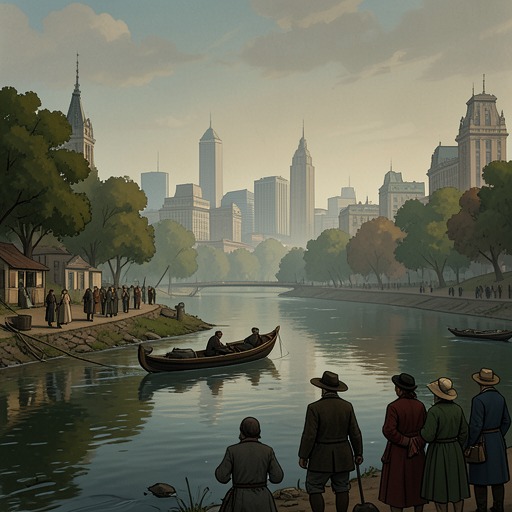
Other routes open onto a more varied city. Across a branch of the Seine lies Île Saint-Louis; walking along the quays brings Île de la Cité and Notre-Dame into view. At the island’s pointed head, below Pont Neuf and the statue of Henri Quatre, the narrator watches fishermen working the currents beneath spreading chestnut trees. Their fishing spots shift with the height of the river, and they use long cane poles, fine leaders, quill floats, and carefully baited lines. The narrator follows their activity but does not fish himself: he lacks the tackle, prefers to save his money for fishing in Spain, and cannot predict when work or travel will take him away. The street’s access to the river thus connects urban wandering with both careful observation and the limits imposed by time and money.
Home and Material Circumstances
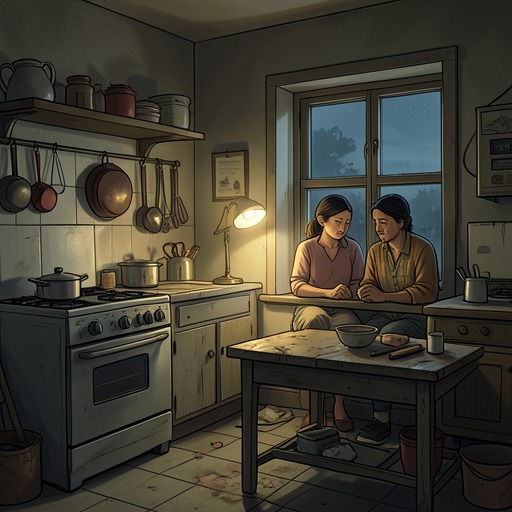
The Rue Cardinal Lemoine flat is a cheerful two-room home despite its lack of hot water and indoor toilet facilities. An antiseptic container serves in place of plumbing; for someone accustomed to a Michigan outhouse, this does not make the place intolerable. A fine view, a comfortable mattress and springs arranged as a bed on the floor, and pictures the couple likes give the flat warmth and character. The narrator calls the rent at 74 rue Cardinal Lemoine nominal, a small fixed expense in a life managed on little.
Poverty nevertheless sets the terms of daily choices. The couple goes without bathtubs, showers, and flushing toilets, relying on a public bathhouse at the foot of the street by the river. The narrator recognizes that he has been tight and mean about money, including when his wife needed a grey lamb jacket; he admits he was foolish about the purchase, though he loved the jacket once she had bought it. Their economy is not simply deprivation: they eat and drink well for little, sleep warmly together, and do not accept the label of poor. In the narrator’s memory, they regard themselves as superior to the rich, whom they mistrust, while clothes and comforts become items to weigh against the cost of pictures and other priorities.
Work, Weather, and Street Life
The surrounding streets register the change of season with particular force. At the first cold winter rains, the bright tops of the high houses disappear from view; the street becomes wet and black, and small shops close their doors. In the cold, the narrator considers buying twigs, kindling, and hard wood for a fire in his top-floor workroom. Before spending the money, he crosses the street to check whether chimneys are smoking, worrying that a cold chimney might fail to draw and fill the room with smoke. Seeing none, he walks on through the rain rather than risk wasting the fuel and the money.
That walk carries him past the Lycée Henri Quatre and the church of Saint-Étienne-du-Mont, across the windswept Place du Panthéon, and down toward the Boulevard Saint-Michel, the Cluny, and Boulevard Saint-Germain. He eventually reaches a warm, clean café at Place Saint-Michel, hangs his old waterproof and worn felt hat to dry, and writes in a notebook over café au lait. A story set in Michigan grows out of the day’s cold weather; writing allows him to transplant himself from one place to another. The return walk up Montaigne Sainte-Geneviève through the rain ends at the flat, where his wife welcomes the idea of leaving Paris for a while. Elsewhere, Rue Cardinal Lemoine also marks a former everyday address: he recalls living above a Bal Musette there for two years, and remembers its proprietor, who had a taxi and would take him to the airfield after a glass of white wine at the zinc bar.
A Working Neighborhood and a Remembered Paris
The street belongs to a neighborhood of ordinary routines rather than a single literary monument. Nearby, the Café des Amateurs is described as a place of persistent drunkenness and neglect, its public warning against drunkenness as disregarded as its clientele. The narrator’s recollection links that café to the crowded Rue Mouffetard and to the noisome practicalities of Parisian housing, while his own home and workroom remain part of the same closely inhabited city. Along the Seine, he buys bread, sausage, and wine, sits in the sun with a book, and watches local fishermen; their serious, productive pastime counters travel writers’ dismissive portrayals of them as men who never catch anything.
Rue Cardinal Lemoine consequently gathers together sharply different scales of experience: the cost of firewood, the warmth of a shared meal, the arduous walk to the river, and the city’s broader beauty and social life. The narrator’s Paris is not merely scenery around his writing. Its distances, weather, rooms, and affordable cafés determine where he can work and what he can spend, while its streets supply the observations through which the city becomes part of his memory. The modest flat is one center of that life, but the street continually leads outward—to work, to the river, and eventually away from Paris, whose remembered character changes with the people who have lived in it.