Scott Fitzgerald's Strong Reaction to Alcohol
A Moveable FeastF. Scott Fitzgerald's Strong Reaction to Alcohol emerges through a series of encounters in which drinking that seems ordinary to Ernest Hemingway has pronounced effects on Fitzgerald. In a bar, Hemingway sees Fitzgerald’s face change after he has been holding champagne; later, during a rain-soaked drive through France, whisky and wine accompany mounting fears of illness and death. The episodes expose a gap between Hemingway’s assumption that moderate drinking is harmless and Fitzgerald’s unusual sensitivity, while making their friendship a practical test of care, judgment, and responsibility.
Episodes of visible change
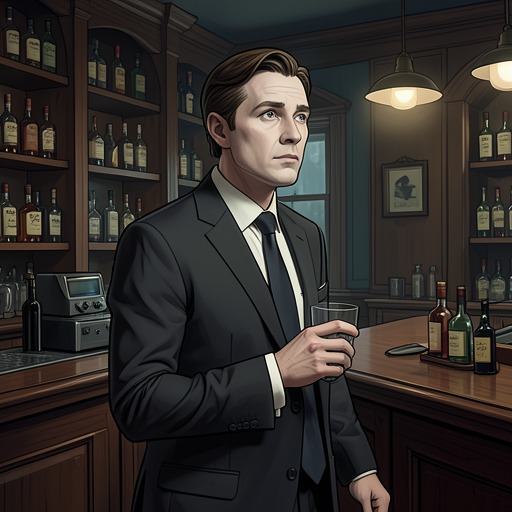
At a bar, Hemingway notices Fitzgerald sweating as he speaks. When he looks back at him, Fitzgerald’s face has become markedly drawn: its puffiness seems to have receded, his eyes appear sunken, and his color has faded. The change alarms Hemingway, who asks whether he is all right. Fitzgerald does not answer. A companion reassures Hemingway that this is the way Fitzgerald is affected. The scene establishes the reaction as something familiar to those around him, even though its severity surprises Hemingway. Fitzgerald is taken away by taxi, and Hemingway remains worried; when they meet again at the Closerie des Lilas a few days later, Hemingway apologizes for the effect of the drink and wonders whether they drank too quickly.
The account does not present this incident as an isolated response to a large quantity. On the later drive, Fitzgerald has apparently been drinking before Hemingway meets him, yet Hemingway offers him a whisky and Perrier while they wait for a hotel-prepared lunch. Fitzgerald says he is not a morning drinker, but agrees to join Hemingway if Hemingway wants a drink. Both feel better afterward. Hemingway’s invitation is intended as companionship, not as a recognition of risk: at this point, he does not understand how strongly alcohol can affect Fitzgerald.
The journey through France
The road trip makes that misunderstanding consequential. Fitzgerald and Hemingway set out in a small Renault whose top is missing; rain repeatedly interrupts their progress. Their lunch, ordered through the Lyon hotel, includes truffled roast chicken, bread, and white Mâcon wine. At Mâcon, Hemingway buys four more bottles, opening them as the journey continues. Fitzgerald finds drinking wine from a bottle exciting, but by early afternoon begins worrying about his health. He recalls two recent deaths in Italy and becomes convinced that he may develop congestion of the lungs.
Hemingway tries to answer the fear with confident explanations. He distinguishes the illness from pneumonia as Fitzgerald understands it, invokes medical knowledge, and reassures him with a deliberately elaborate account of the disease’s history and symptoms. He also encourages him to drink more Mâcon, presenting the wine as a remedy. Fitzgerald briefly seems cheered, then grows anxious again, asking whether they will reach a town before the fever and delirium he expects. The conversation turns from illness to mortality when he asks Hemingway whether he is afraid to die. Hemingway says that his fear varies.
Heavy rain forces them to shelter in a village café. By the time they reach a hotel, the drugstores are closed and Fitzgerald has gone to bed. He says he does not mind dying, but worries about who would care for Zelda Fitzgerald and their young son, Scotty. Hemingway promises to do what he can, including ensuring that Zelda does not drink and that Scotty has an English governess. The promise is made despite Hemingway’s recognition that his own responsibilities to Hadley and Bumby already make such a commitment difficult. Fitzgerald’s drinking episode has therefore become not only a health scare but a moment in which he entrusts his family’s future to his friend.
Care, misjudgment, and the evening’s reversal
At the hotel, Hemingway takes Fitzgerald’s pulse, checks his forehead, and listens to his chest; the pulse is seventy-two, his forehead is cool, and his chest sounds all right. These observations do not settle Fitzgerald’s fear. Hemingway later gives him lemonade mixed with whisky and two aspirin. Fitzgerald accepts the aspirin calmly and sips the drink while Hemingway reads a French newspaper. Hemingway initially feels relieved, even pleased with how settled the evening seems. Fitzgerald then accuses him of being indifferent to the possibility that he is dying. Hemingway recognizes that his prescription, even if his diagnosis seemed reasonable, has gone wrong: the whisky is making matters worse.
The episode sharpens the difference between the two men’s assumptions. Hemingway regards wine in Europe as ordinary, nourishing, and a source of pleasure; he dislikes heavy or sweet wines and sees light, dry white Mâcon as an unremarkable accompaniment to a meal. The morning whisky and Perrier also seem harmless to him, particularly during a wet drive in an open car. He admits that he does not yet understand alcoholism, and finds it difficult to think of Fitzgerald in those terms because even small amounts of alcohol affect him so strongly. His confidence in alcohol as normal hospitality becomes a form of misreading: the drink he offers in the spirit of companionship can deepen the very distress he is trying to soothe.
Significance in their friendship
Hemingway’s account holds affection and irritation together. He feels responsible for watching Fitzgerald, yet becomes angry with himself for being drawn into what he regards as foolishness. He also recognizes that Fitzgerald has a point, and that his own assumptions about alcohol have failed him. The memoir’s retrospective framing makes the episodes more than a record of an alarming physical reaction: they show care being negotiated through uncertain judgment, as Hemingway tries to distinguish genuine danger from Fitzgerald’s fear and repeatedly discovers that reassurance is not the same as understanding.
The contrast is especially clear in the movement from the shared drink to the accusation at the hotel. Hemingway treats wine as part of ordinary life and initially offers whisky as easy company; Fitzgerald’s response turns these gestures into evidence, for him, of whether his friend believes his danger. The account does not reduce their relationship to this conflict. Hemingway takes practical responsibility, attends to Fitzgerald’s condition, and makes a promise concerning his family, even as he recognizes the limits of that promise. Fitzgerald’s strong reaction to alcohol thus exposes both a bodily vulnerability Hemingway had not appreciated and the strain placed on friendship when one person’s ordinary measure of pleasure becomes another’s source of fear.