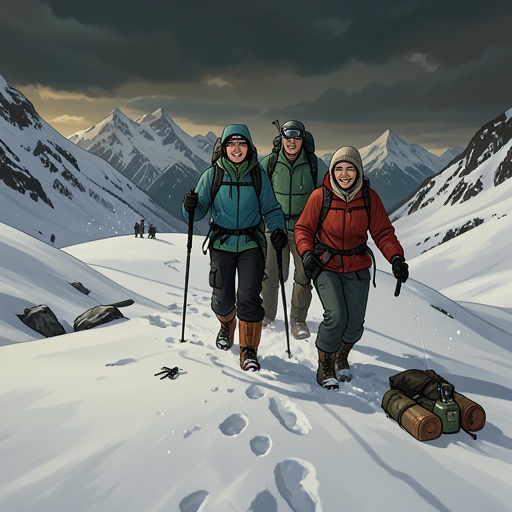
Silvretta Mountains
A Moveable FeastThe Silvretta Mountains shape the mountain world recalled from Schruns: a landscape reached by climbing from the valley, crossed on skis, and remembered through the effort needed to move through it. The routes offered no lifts or easy ascent; their reward was high country where snow, glaciers, and distance set the terms of travel.
Setting and Routes
Schruns lay in a wide, sunny valley in Vorarlberg, Austria. From nearby Tchagguns, a lumber village at the valley’s far edge, ski slopes rose toward the mountains. The ascent eventually allowed skiers to cross the Silvretta Mountains and reach the Klosters area, making the range both a high Alpine destination and a route onward from the valley.
There were no ski lifts or funiculars from Schruns. Logging trails and cattle trails led into the mountain valleys, and skiers climbed on seal skins attached to the bottoms of their skis. Above the valleys, Alpine Club huts provided places to sleep and leave payment for firewood. Longer journeys into the high mountains and glaciers could require someone to carry wood and supplies to establish a base; among the prominent huts in this network was the Madlener-Haus.
Climbing and Skiing
The mountains demanded that ascent precede descent. From Tchagguns, the skiing continued upward toward the high country; on longer trips, travelers carried skis on their shoulders and began climbing before daylight. Porters shouldered heavy loads and climbed steadily to the hut beside a snow-covered glacier, then negotiated for additional payment before skiing quickly back down. The route made the practical costs of Alpine travel visible: equipment, provisions, endurance, and local labor all mattered.
The skiing itself depended on building strength through those climbs and carrying heavy rucksacks. Walther Lent’s school encouraged pupils to leave the practice slopes for trips into the high mountains. His ideal was travel from one Alpine Club hut to another over passes and glaciers, in country without other people and with untracked snow. Because a broken leg could not be treated casually and there were no ski patrols, he insisted that bindings should release in a fall rather than hold a ski on until the leg broke. Unroped glacier skiing, one of his greatest pleasures, had to wait until spring covered the crevasses sufficiently.
A Seasonal Landscape
The mountain routes changed with weather and snow. Wind produced different kinds of snow, each with its own dangers; blizzards could erase familiar landmarks so completely that a route had to be found with the care required in unknown country. The high Alpine huts offered shelter during these storms, but did not make the surrounding terrain predictable.
Toward spring, the long winter’s labor culminated in a straight run down a glacier on crisp powder. The descent demanded locked ankles, a low posture, and legs strong enough to sustain the speed. It was not a pleasure that could be purchased by taking a ticket to the top: the climbs and heavy packs had built the capacity for it, and the final run was the end toward which the winter’s effort had been directed.
Place in the Recollection
The Silvretta Mountains belong to the remembered life around Schruns: a world of valley villages, climbing trails, mountain huts, and strenuous skiing. The range’s appeal rests on the contrast between effort and release. Long climbs and difficult conditions made the glacier descent possible, while weather could turn the same high country into an unfamiliar and hazardous place.
That winter’s mountain life is also set against what came afterward. The avalanche winter is remembered as happy and innocent beside the following winter, described as a nightmare disguised as fun, and the summer that followed it. The mountains therefore mark not only a physical landscape but a bounded period of shared life: a season of demanding journeys and exhilarating skiing before later changes made that remembered winter seem unusually untouched.