Ski-binding release principle
A Moveable FeastThe Ski-binding release principle was a safety rule taught by Walther Lent: a binding should let the ski come off in a fall before it broke the skier’s leg. In a period when a broken leg was a serious risk and there were no ski patrols, the rule made release—not simply holding the ski in place—a central condition of safe travel in the mountains.
Definition and Safety Logic
Lent insisted that a skier must not use a binding capable of breaking the leg in a fall. The ski should come off first. The account gives the principle as a clear priority rather than a technical specification: it does not describe a particular binding design or mechanism, but identifies the outcome the equipment must allow.
That priority belonged to a specific environment. Skiers had to climb anything they later skied down, and there were no patrols to respond to an injury. The account also notes that spiral fractures had not yet become common and that no one could afford a broken leg. In those circumstances, a binding that prevented a fall from becoming a leg injury was part of the basic discipline of skiing.
Lent’s Alpine Method
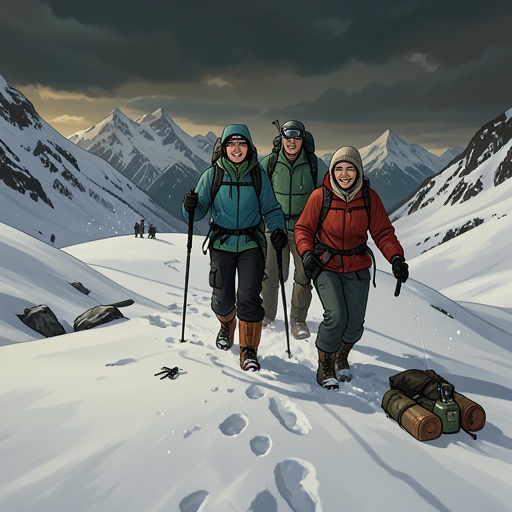
The rule formed part of Lent’s broader approach to instruction. As a pioneer of high-mountain skiing, he moved pupils off practice slopes as soon as possible and took them on trips into the mountains. He believed skiing’s pleasure lay in reaching high country where the snow was untracked and no one else was present, then travelling from one Alpine Club hut to another across high passes and glaciers.
The release principle made that ambition safer without removing its hazards. Lent especially loved skiing on glaciers without a rope, but the group had to wait until spring, when crevasses were sufficiently covered. His method joined equipment judgment to careful attention to mountain conditions: the binding had to release in a fall, and glacier skiing had to wait for a safer time.
Use and Significance
The principle is presented as a practical rule within a physically demanding form of skiing, not as a claim that the mountains could be made safe. The skiers still climbed their routes, crossed high terrain, and faced the particular dangers of glaciers. Lent’s instruction instead treated preventable injury as a matter of preparation, equipment, and judgment.
Its significance lies in how directly it connects the pleasures of high Alpine travel to its costs. The same commitment to untracked snow and remote passes that made the trips attractive required a binding that would not turn a fall into a broken leg. The rule thus expresses a balance at the center of Lent’s teaching: seek the high mountains, but do not let the equipment make a fall more dangerous than it has to be.