Theory of Omission
A Moveable FeastThe Theory of Omission is Ernest Hemingway’s principle that a writer can strengthen a story by knowingly leaving out part of its reality. The missing material is not simply forgotten or irrelevant: when the writer understands what has been withheld, its absence can shape what readers feel, even when they do not fully understand why. In A Moveable Feast, the idea applies both to the making of a short story and to the memoir’s broader selection of what it tells.
Definition and Method
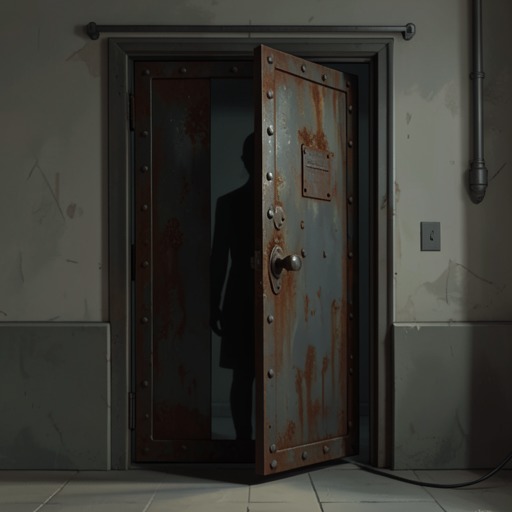
The clearest example is Ernest Hemingway’s short story Out of Season. Its real ending, in which the old man dies by suicide, is omitted. Ernest Hemingway describes the omission as deliberate: the writer knows what is missing, and the absent ending strengthens the story by prompting a response beyond the reader’s conscious understanding. The method depends on an asymmetry of knowledge. The writer retains the whole event; the reader encounters a shaped account whose silence carries part of its force.
Ernest Hemingway connects this method to painting, arguing that a work may not be understood at first and that understanding can take time and confidence. The comparison places omission within a larger account of artistic reception: immediate comprehension is not the only measure of a work’s effect. The absent element can remain active in the reader’s experience without being stated outright.
Hunger, Discipline, and the Work of Writing
The principle appears alongside Ernest Hemingway’s reflections on hunger and artistic discipline. He observes that writing while eating less requires self-management, because hunger can dominate thought; he also treats hunger as a source of discipline and learning. In this context, withholding is not only a compositional technique. It belongs to an account of the difficult conditions in which a writer works, and of the restraint required to keep those conditions from overwhelming the work.
After the loss of an earlier novel in a stolen bag at the Gare de Lyon, Ernest Hemingway considers it possible that the loss was, in one respect, beneficial, while still recognizing that he must write another novel. He resists writing one merely because it is necessary to earn a regular living, and instead plans to let the pressure build while he works on a long story about what he knows best. That postponement echoes the discipline of omission: the work is not forced before its moment, and pressure is allowed to accumulate rather than being prematurely discharged.
Omission in the Memoir
The memoir’s own framing makes selection explicit. In the preface, Ernest Hemingway acknowledges that many places, people, observations, and impressions have been left out. Some omissions concern secrets; others concern material already widely discussed and likely to be written about again. The preface names examples of absent experiences and acquaintances, making clear that the book does not claim to contain everything remembered or everything that could be told.
The book also permits the reader to regard it as fiction, while suggesting that fiction might still shed light on what has been written as fact. This qualification unsettles any simple division between a complete factual record and an invented story. The memoir presents recollection as shaped material: it offers particular scenes and judgments while acknowledging that other experiences remain outside its account. Its omissions therefore define the limits of the book as well as contributing to its form.
Memory and the Meaning of Absence
At the close, Ernest Hemingway says that there is no final ending to Paris and that each person who has lived there remembers it differently. The statement extends the logic of omission beyond a single story: no one account can encompass every version of a place or recover the past in its entirety. People return to Paris under different circumstances, and the city changes along with them; the book’s remembered Paris is one particular account, not a definitive one.
This ending gives the Theory of Omission a retrospective significance. What is left out is not merely a gap awaiting completion: selection is part of how the past becomes narratable. By identifying the memoir’s exclusions, treating fiction as a possible route to insight, and closing on the plurality of memory, A Moveable Feast makes its limits visible without claiming to resolve them.