There Is Never Any End to Paris
A Moveable FeastThere Is Never Any End to Paris is the closing expression of the book’s belief that a city can outlast any single stay without remaining fixed or meaning the same thing to everyone. Paris endures through memory, return, and the daily acts of walking, watching, reading, and writing; its continuity is real, but always filtered through a life that changes.
A refrain shaped by memory
Near the book’s end, the expression appears twice in succession as a heading, then returns in a slightly different form in the closing reflection. Its placement follows an exchange about remembering someone: the narrator is told to write about him as remembered, so that, if he comes there, the other speaker will remember him too. The refrain thus arrives beside an explicit recognition that memory is personal and transmissible, not a single account shared by everyone.
The closing formulation makes that plurality central: “There is never any ending to Paris and the memory of each person who has lived in it differs from that of any other.” Paris persists, but each person carries a distinct version of it. The expression does not promise an unchanged city or a return to an untouched past; it makes recurrence compatible with difference.
A city learned by walking
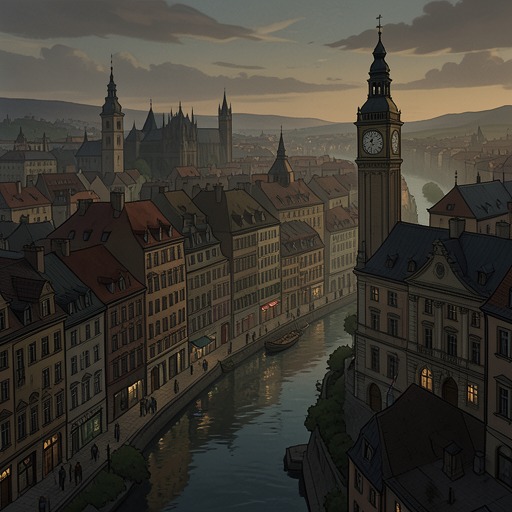
The phrase’s force is prepared by the narrator’s repeated movement through Paris. In winter, the city’s sadness comes with the first cold rains: the high white houses give way to wet darkness, while small shops close their doors. The narrator has a room on the top floor of the hotel where Verlaine died, but the cost and uncertainty of lighting a fire are enough to send him walking instead. The city is encountered through weather, streets, work, and the limits of a poor person’s budget, not only as a view.
Walking also gives the narrator a way to think. Along the quays, below Pont Neuf at the point of Île de la Cité, he watches fishermen adapt their positions to the changing height of the Seine. Their long jointed cane poles, fine leaders, light tackle, and quill floats mark a skilled practice that travel writers, in his view, wrongly dismiss as futile. He knows some of the fishermen and is glad that they can take fish home to their families. On bright days he buys wine, bread, and sausage, reads one of his books in the sun, and watches; he does not fish himself, preferring to save his money for Spain and not knowing when work or travel will take him away. These details make the city’s continuity a matter of attentive, temporary participation.
Streets as part of the work
The narrator’s routes also lead directly into writing. After paying a café check, he crosses rue de Rennes to avoid going to Deux-Magots, then takes the shortest way home by way of rue Bonaparte, Guynemer, rue d’Assas, and rue Notre-Dame-des-Champs, reaching Closerie des Lilas. The practical choice of streets accompanies a larger question: what does he know best, and care for most, that he has not already written about and lost?
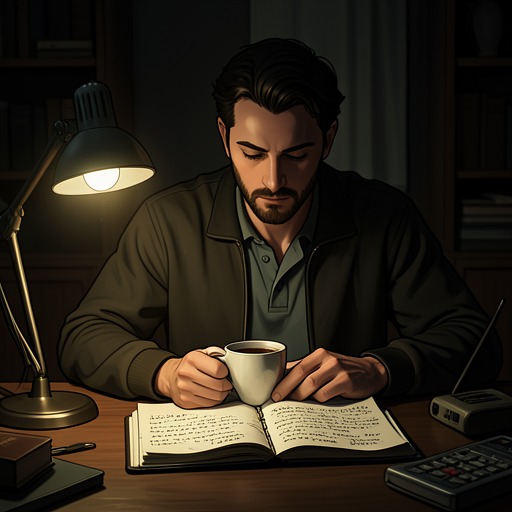
At Closerie des Lilas, he writes in a notebook in the afternoon light while a café crème cools beside him. The story concerns a return from war, though the war itself is not mentioned. What he must make next is the river, the country, and what happens there. The sequence joins Paris’s streets to the act of composition: walking provides both a route back to work and the conditions in which a remembered place can become something made anew.
Return without restoration
The closing reflection connects the refrain to change rather than escape from it. The narrator says that people return to Paris regardless of who they are, how the city has changed, or how difficult or easy it is to reach. The promise is reciprocal: “Paris was always worth it and you received return for whatever you brought to it.” The city gives back, but what someone receives is bound to what that person carries there.
That return does not restore the earlier life. When the narrator, his wife, and Bumby are together, winter weather finally drives them out of Paris; leaving with a baby is different from managing the cold alone or spending a morning writing in a café. After the mountain stay, they return to Paris, but the narrator says the first part of Paris has ended: the city is still Paris, while the people in it have changed. The final image of early poverty and happiness therefore holds both attachment and loss. There is no definitive ending to Paris because its memories and returns continue, not because any one period can be recovered unchanged.