
Memory Versus Self-Protection
A Pale View of HillsEtsuko’s recollections offer explanations and then revise them, making the reader’s understanding depend on the tensions within her narration.
increasing Bearing strength in each event
 decreasing
Bearing strength in each eventdecreasingMemory Announced as Uncertain
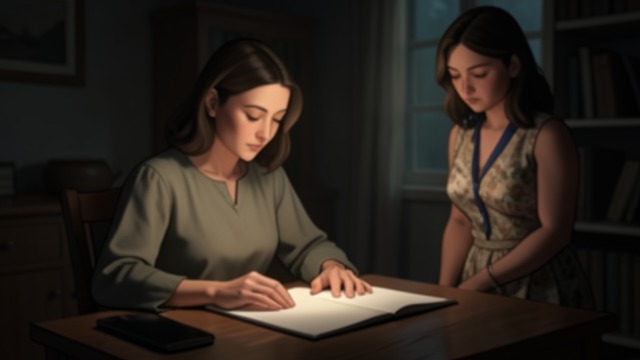
A Recollection With Doubt
A warning from the narrator
Etsuko says her memory may have grown hazy and that events may not have happened exactly as she recalls. The qualification appears before the most vivid incidents of the summer.
The account remains persuasive
Her uncertainty does not erase detail; instead, it makes each remembered scene open to competing interpretations. The novel establishes memory as both the means of telling the story and a source of instability.
The Woman’s Identity
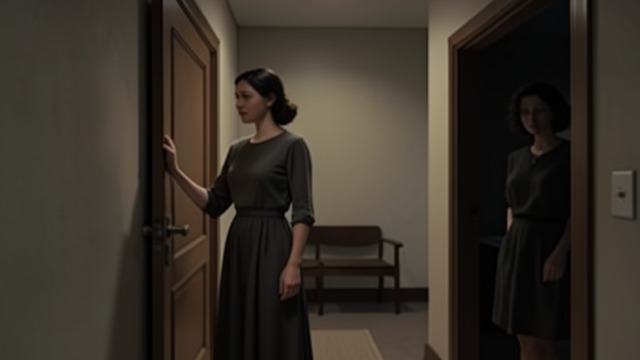
A Story Reframed
Contradictory explanations
Mariko speaks of a woman who visits her, while Sachiko first calls the figure imaginary and later connects her to a dead woman seen in Tokyo. Etsuko receives these versions without a definitive explanation of every encounter.
A memory with consequences
The shifts invite questions about whether the story is fantasy, trauma, or a distorted account of events. What remains clear is that the child’s fear affects the adults’ choices.
The Rope Returns
A Repeated Object
A strange detail
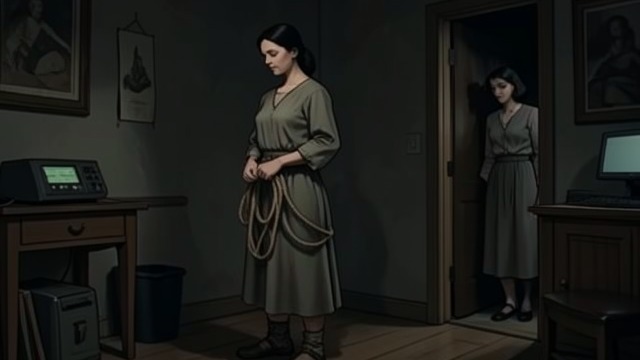
Etsuko finds a piece of rope tangled around her ankle while searching for Mariko. Later, when the child asks what it is, Etsuko describes it as something that simply caught on her foot.
A pattern reopened
The object’s appearance echoes a later moment in which Etsuko again holds a rope while speaking to Mariko. Its repetition does not settle what happened, but makes the remembered scenes feel connected in ways Etsuko does not explain.
The Dream Identified
A Child in the Dream
An image shifts
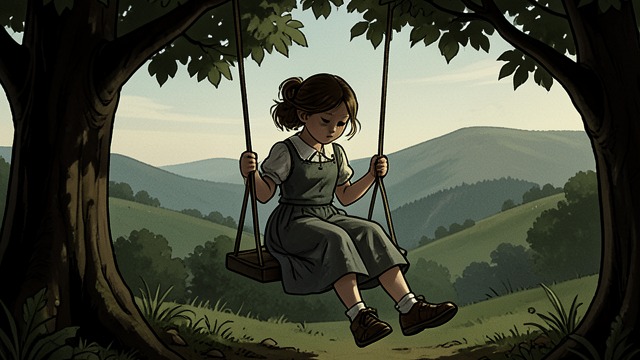
Etsuko first describes a dream about a girl on a swing, then says it was not really the child she and Niki saw. Niki suggests that the girl was Keiko.
Refusal and recognition
Etsuko rejects that identification while admitting the dream concerns a girl she knew long ago. The exchange shows the past surfacing in disguised form, and the narrator resisting a direct name for it.
A Confession of Knowledge
What the Story Cannot Conceal
Etsuko’s admission
Etsuko says she knew Keiko would not be happy in England but brought her there anyway. The admission revises the image of migration as a decision made without foreknowledge.
Self-protection remains
Even after confessing, Etsuko says there is little to gain by revisiting the past. The story closes on a tension between acknowledging responsibility and protecting herself from a full reckoning.
the opening of the remembered summer
during Etsuko’s conversations about the river woman
on the night Mariko runs from the cottage
near the end of Niki’s visit
the final morning of Niki’s visit
