America
A Pale View of HillsAmerica is less a depicted place than a destination invested with promise in Sachiko’s plans to leave Nagasaki with Mariko. It represents the possibility of a settled future with Frank, but the shifting arrangements and Sachiko’s own account of earlier disappointments keep that future uncertain. In Etsuko’s later recollection of England, America also sits within a wider contrast between places as imagined before migration and the lives that must actually be made there.
A destination imagined in advance
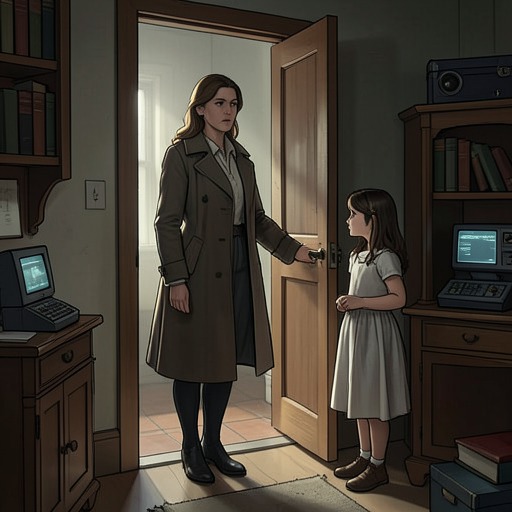
Sachiko announces that the arrangements have been settled and that she and Mariko will leave for America within days. Her confidence rests partly on familiarity acquired at a distance: she has heard so much about the country that it will not feel wholly foreign, and she already speaks English with Frank. She expects that, after living there for a while, she will speak it like an American woman. America is thus presented through anticipation and language rather than through any description of its landscape or society.
That assurance does not remove the question of Mariko’s welfare. When Etsuko asks what will become of the child, Sachiko’s confidence about adapting to a new country gives way to a more practical concern: a move would place Mariko among foreigners and give her an American father, adding another disturbance to a life Sachiko says has already been unsettled. Sachiko concludes that a settled place is what her daughter needs, and says she will write to her uncle about her whereabouts and the possibility of returning to his house. America’s appeal is therefore weighed against the responsibilities and disruptions migration would bring.
The promise depends on Frank
For Sachiko, America is bound to Frank’s promise of a respectable, steady life. When he goes away, she insists that the departure is only a delay: he travelled from Tokyo to Nagasaki to find her at her uncle’s house, she argues, because he genuinely intended to take her to America. Her reasoning turns their shared destination into evidence of his commitment, even as his absence leaves Etsuko unsure what to make of his actions.
Sachiko later supplies a history that makes this confidence more precarious. In Tokyo, Frank had disappeared before, spending their money on drink in three days. Sachiko says she had earned money as a hotel maid, scrubbing floors, and that they had been only a few weeks from being able to get a ship to America when he spent it. Now, with Frank away again and associated with a bar and a saloon girl, Sachiko says she cannot entrust Mariko’s future to him. The earlier near-departure gives America a concrete logistical dimension—a ship that the couple almost managed to reach—while also showing how easily the plan can be undone.
A plan repeatedly revised
Sachiko’s statements about leaving do not settle into a single clear course. After Frank’s disappearance, she says she intends to contact her uncle and considers the possibility of returning to his house, presenting the reversal as potentially beneficial for Mariko. Later, while packing, she tells Etsuko that she and Mariko are leaving Nagasaki for Kobe, and then adds that America will come afterward because Frank has arranged everything. America remains the declared destination, but the immediate move is to Kobe, and the evidence does not establish that the further journey takes place.
The changing itinerary exposes the distance between a destination and the means of reaching it. Sachiko speaks as if America’s future is assured, yet the plans depend on Frank, available money, and a sequence of moves that has already faltered once. Her repeated confidence gives the imagined future emotional force; the changes in route and her account of Frank’s past make its practical uncertainty equally visible.
America beside England
In a later conversation with Niki, Etsuko recalls arriving in the countryside where she lives in England. The fields and the house seemed to her just as she had imagined England would look, and she remembers being pleased by the resemblance. This recollection does not describe America, but it offers a telling contrast: Etsuko can remember an imagined destination becoming an actual home, while Sachiko’s America remains a projected future whose realization is not confirmed in these episodes.
The contrast makes America significant as an idea as well as a place. For Sachiko, it gathers hopes of partnership and respectability, but it is also inseparable from the question of who will care for Mariko and whether Frank can be trusted. Its meaning shifts with each revision of the plan: first an imminent departure, then a possibility set aside in favor of a settled home, and finally a destination placed beyond Kobe. The narrative keeps the promise vivid without resolving it into a completed journey.