Domestic cats
A Pale View of HillsDomestic cats connect the intimate domestic world of Sachiko and Mariko to the uncertainties surrounding their past and their planned future. A cat lies in the shadowed cottage, a former family cat is remembered through conflicting accounts of a move from Tokyo to Nagasaki, and kittens become the subject of Mariko’s persistent attempts to secure them a home. The animals matter both as particular creatures and as a recurring measure of what the mother and daughter can keep, leave behind, or hope to carry with them.
Appearances and Setting
When Etsuko first enters Sachiko’s cottage, she finds Mariko lying in the corner furthest from the sunlight. Beside the child, a large cat is curled on the tatami. The cottage is tidy but starkly shabby: old-looking beams cross the ceiling, dampness lingers, and although the front partitions have been opened to admit sunlight across the veranda, much of the interior remains in shadow. The cat’s quiet presence belongs to this close, enclosed scene; it is not introduced as a stray but as an animal already at home beside Mariko.
The kittens extend the cats’ presence beyond the cottage and into its surroundings. From the veranda, Etsuko cannot see the river, but can see the ground slope toward it and the mud grow wetter near the water. Sachiko observes that the area is alive with stray cats and doubts that the kittens will all find homes. Her remark places the family’s concern within a visible local circumstance: cats are numerous, and finding homes for more of them is not assured. The narrative does not explain how the kittens came to be there, or identify their mother, so their immediate importance lies in the uncertain future the women discuss for them.
The Cat Before the Move
Mariko’s memories associate a family cat with Tokyo and with the journey to Nagasaki. She recalls that the cat used to catch spiders, and later says that the family had intended to bring her with them. The recollection gives the animal a distinct place in the child’s remembered household: the cat was valued not only as a pet but also through a familiar habit, catching the spiders Mariko encounters herself. As Mariko watches a spider crawl along a wall and reaches to catch one of its legs, the remembered cat becomes part of how she understands the creature before her.
The cat’s departure, however, is described differently by Mariko and Sachiko. Mariko says her mother promised they could bring the cat, but that she disappeared the day before they were leaving. Sachiko, asked whether Mariko had found her cat nearby, instead says that they brought the animal with them. The accounts are not reconciled. Their contradiction leaves the cat’s fate uncertain and draws attention to the instability of what is remembered or said about the family’s past; the evidence does not establish whether the speakers refer to different animals or whether one account corrects the other.
Mariko also connects the cat to Yasuko. She explains that Maru had belonged to Yasuko before they took her, and reasons that the kittens therefore belong to Yasuko as well. The detail complicates any simple distinction between a household’s own animals and strays or animals belonging elsewhere: Mariko’s understanding of responsibility follows the cat’s earlier connection to Yasuko, rather than treating the kittens as unrelated creatures who simply need placing. Her appeal is practical and personal at once, grounded in who liked, owned, and took in the cat.
The Kittens and Their Prospective Home
At first, Sachiko is unsure whether the kittens can stay. Mariko proposes that they might be kept at Yasuko’s house, pointing out that Yasuko likes cats and that the kittens are connected to her through Maru. Sachiko does not immediately accept the proposal; she says they will have to see what Yasuko’s father thinks. Mariko’s sullen response shows that the answer matters to her, but she turns back to Etsuko with a serious expression and repeats that they might be able to keep them. The exchange makes her persistence plain without resolving the practical question at once.
The wish for a home takes material form during the visit to a lottery stand. Mariko wants to win a basket because the kittens need one of their own, but her ticket brings her a flowerpot instead. She hands the prize to Etsuko and asks to try again; Sachiko sighs that it is getting late. The basket would have answered a specific need as Mariko sees it, so the consolation prize does not satisfy her. Yet the episode redirects her attention from the object she has lost to another possible solution.
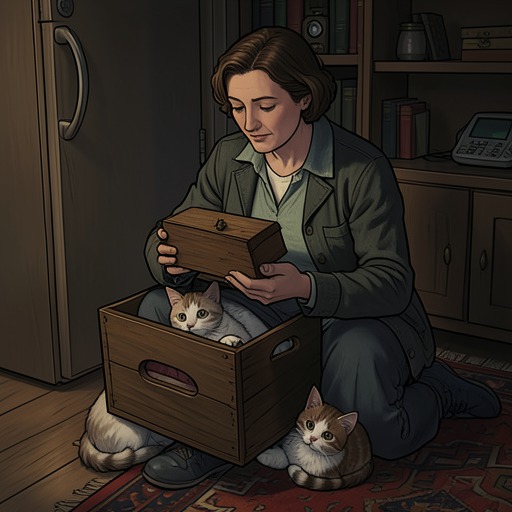
Walking away from the stand, Mariko notices a box among the newspapers and rubbish littering the street. She imagines putting rugs inside it so the kittens can live in it as their house, and suggests that it could also carry them when they go to Yasuko’s. Sachiko looks doubtful about whether they would like the box, but eventually agrees that they can carry the kittens in it and says that Yasuko’s father will surely not object to keeping them. Mariko runs a little ahead and waits for the others to catch up. Her immediate question is whether they will no longer have to find homes for the kittens. The proposed box thus shifts from discarded street material to shelter and transport, while Sachiko’s assent gives Mariko a hopeful answer about the animals’ future.
Significance
The cats recur at points where affection meets uncertainty. The cat beside Mariko in the cottage is present and still; the cat remembered from Tokyo is at the center of incompatible accounts of departure; the kittens, meanwhile, are not yet settled anywhere. These different appearances resist a single, neat story of domestic security. Even the family cat’s remembered role in catching spiders links ordinary companionship to a small scene of contact between Mariko and the world around her, without making the animal merely an accessory to that moment.
The kittens’ proposed home also reveals a difference in emphasis between Sachiko and Mariko. Sachiko initially weighs whether the kittens can be kept and whether Yasuko’s father will agree. Mariko turns instead to the animals’ needs, their connection to Yasuko, and the concrete possibilities of a basket or a box lined with rugs. Her insistence does not prove that the arrangements will last, but it gives the kittens a future that the earlier comment about abundant strays had left doubtful. By the scene’s end, the hope of keeping them has become a shared plan, even as the narrative leaves open what will ultimately happen to the cats.