Etsuko and Niki
A Pale View of HillsEtsuko and Niki’s relationship is marked by care that does not erase disagreement. In their conversations about Keiko, Niki recognizes the unfairness of her sister’s treatment, while Etsuko confesses that she had anticipated Keiko’s unhappiness and nevertheless chose to bring her to England. Niki rejects her mother’s self-blame. Later, as Niki prepares to leave, their difference over marriage and family makes their generational distance explicit; yet Niki also asks whether Etsuko disapproves of the life she has chosen. Etsuko’s reassurance leaves the bond neither perfectly harmonious nor broken, but grounded in a difficult effort to understand and accept one another.
Identity and Pattern of Conversation
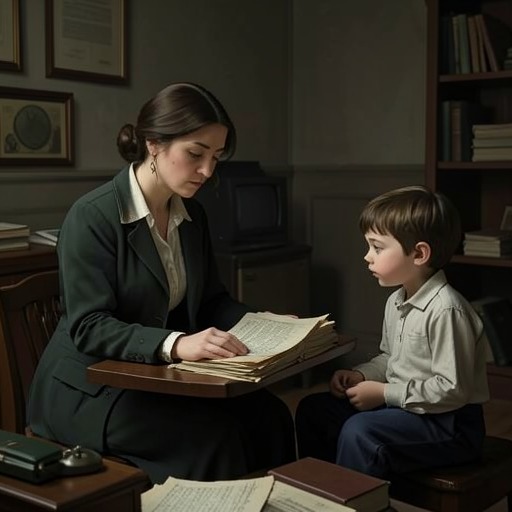
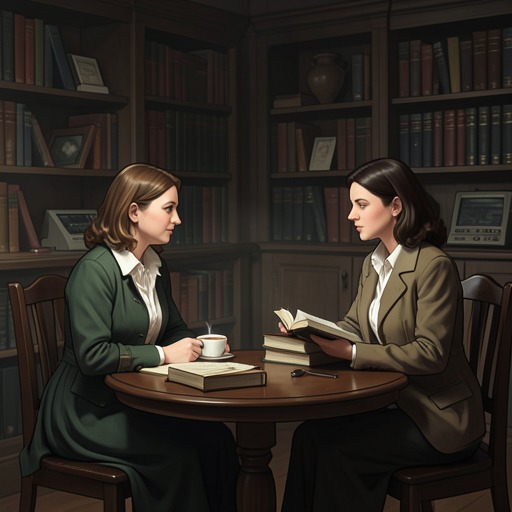
Niki is Etsuko’s adult daughter, and the relationship comes into focus through intimate exchanges rather than a single decisive confrontation. Their talks move between everyday business and painful family history: Niki is packing, asks about her mother’s feelings, and speaks with her about Keiko. Etsuko, in turn, watches Niki closely and raises questions about the life she intends to lead. Their exchanges show affection, but also how quickly concern can become a challenge to the other’s assumptions.
One early-morning encounter gives this intimacy a quiet physical setting. Etsuko, roused by noises, first looks toward Keiko’s room, then finds Niki emerging from the kitchen in a pale dressing gown with a cup held in both hands. Niki starts at the sight of her mother. The small domestic moment precedes a conversation in which Niki brings up Keiko, connecting their immediate household closeness to the loss and unease that remain within it.
Keiko, Grief, and Responsibility
Niki wonders whether a male member of the family should have looked after Keiko more, saying that his frequent disregard for her was unfair. Etsuko answers that he was not Keiko’s real father, but Niki returns to the point: whatever the relationship, Keiko was treated unfairly. Her insistence makes the conversation more than an expression of grief; it is also a judgment about the care Keiko received and the responsibilities the family did not adequately meet.
Etsuko then turns the criticism inward. She tells Niki that she had known Keiko would not be happy in England, yet had decided to bring her there anyway. Niki dismisses the idea that her mother could have known the outcome, argues that Etsuko did everything she could, and says she is the last person who should be blamed. She also defends the decision as a risk worth taking rather than an error that should have prevented Etsuko from acting. In this exchange, Niki offers her mother compassion without pretending that Keiko’s unhappiness did not matter. Etsuko’s confession exposes the persistence of her guilt; Niki’s answer tries to loosen its hold.
Independence and Conflicting Expectations
As Niki packs, Etsuko asks whether she plans to keep living in London. Niki indicates that she is happy there. Their talk then turns to marriage: Niki questions why she should marry and objects to the assumption that women’s lives must center on husbands and children. She describes that expectation as something women are taught to accept, and says she does not want to become confined to domestic life. Etsuko counters that there is not much else in the end, a response that reveals how differently mother and daughter imagine a fulfilling future.
The disagreement is sharpened by the ordinary details of departure. Niki rolls up an old calendar and packs it, while her suitcase lid resists closing and she presses it down impatiently. These gestures keep the discussion attached to Niki’s actual plans: she is not debating marriage in the abstract but packing to return to a life she has chosen. Etsuko’s questions can sound like concern, yet Niki hears in them a judgment about living away and making her own choices. Their generational difference surfaces as a disagreement over whether marriage and children are a natural destination or a restriction to be refused.
Reassurance and Unresolved Distance
On a walk, Niki asks directly whether Etsuko dislikes the way things are between them, including Niki living away and her relationship with David. The question suggests that Niki is alert to a possible disapproval beneath her mother’s earlier remarks. Etsuko answers that she is not ashamed of Niki and tells her to live as she thinks best. The reassurance does not make their views identical: Etsuko has just voiced a more conventional expectation, and Niki has challenged it. Instead, it distinguishes disagreement from rejection.
The relationship therefore holds two forms of care in tension. Niki tries to protect Etsuko from blame for Keiko’s unhappiness, while also insisting that Etsuko recognize Niki’s independence. Etsuko’s questions about marriage and distance reveal her own expectations, but her final assurance grants Niki the right to shape her life. Their bond remains marked by differences neither conversation settles, yet Niki’s candid questions and Etsuko’s answer make room for affection without requiring either woman to pretend that the other sees the world in the same way.