Inasa
A Pale View of HillsInasa is the hilly area overlooking Nagasaki’s harbor, a nearby destination whose elevated views bring the postwar city’s recovery and its recent devastation into the same field of vision. For Etsuko, an outing there with Sachiko and Mariko becomes one of her better memories of that period: the landscape offers a brief reprieve, but also makes the destruction below impossible to forget.
Setting and Approach
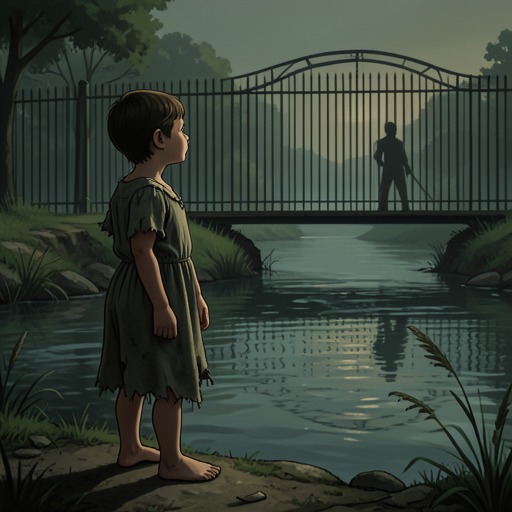
Inasa is close enough to be visible from Etsuko’s apartment window, yet in a time when outings of any kind are rare, the journey feels like a major excursion. Etsuko looks forward to it for days. The group crosses to the hills by ferry on a hot afternoon, with the harbor’s clang of hammers, whine of machinery, and occasional ship’s horn accompanying them. In Etsuko’s recollection, these working sounds are not merely noise: they are signs of recovery, still capable of lifting the spirits.
After crossing the water, the sea breeze makes the day feel less oppressive. At the cable-car station, the open concrete forecourt offers little shelter from the sun and, crowded with children and mothers, resembles a school playground. Etsuko, Sachiko, and Mariko watch the cars climb into the trees and descend toward the platform, one shrinking against the sky as its companion grows larger. The ordinary movement of the cable cars and the families gathered nearby give the excursion a quiet, everyday character.
The Viewpoint
At a lookout, the path opens onto a square patch of ground bounded by large boulders. A fallen tree trunk, its upper surface smoothed flat, serves as a bench. Mariko walks out among the rocks with binoculars to look at the view, while Sachiko warns her not to go too near the edge. Etsuko and Sachiko sit to catch their breath.
From this precarious perch, the harbor far below looks to Etsuko like a dense piece of machinery left in the water. Across it, hills rise toward Nagasaki; houses and other buildings crowd their lower slopes, while the harbor opens to the sea on the right. The height makes the view expansive, but Etsuko also registers the danger of sitting at the mountain’s edge. The scene holds beauty and unease together rather than turning the landscape into a purely comforting refuge.
Reconstruction and Memory
Looking down from Inasa, Etsuko remarks on how full of life the city seems, then points out that the area below was badly hit when the bomb fell. The contrast gives the view its historical force: the buildings, harbor activity, and visible signs of recovery coexist with the memory of catastrophic destruction. Inasa is therefore both a scenic overlook and a vantage point from which the changed city can be measured.
The outing also matters as a remembered interval of companionship. Etsuko identifies it as one of the better memories she has from those times, and Sachiko responds to her unexpectedly cheerful mood. The landscape does not erase what happened in Nagasaki; it makes recovery visible without making the past disappear.