Mariko disappears and is found injured on the riverbank
A Pale View of HillsMariko disappears and is found injured on the riverbank in a nighttime search that shifts abruptly from reassurance to alarm, then ends with an explanation that leaves the circumstances unresolved. Recalled by Etsuko, the episode brings her and Sachiko together in practical concern for Mariko, while the gap between the child’s discovery and Sachiko’s later account makes the event more uncertain than its simple explanation suggests.
The Search Begins
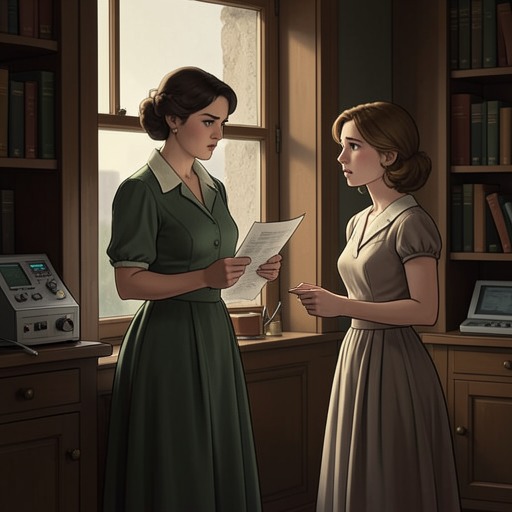
Sachiko comes to Etsuko’s apartment looking for Mariko. She is dressed carefully, with a shawl around her shoulders, and initially presents the problem as limited: Mariko was not at the cottage when Sachiko returned, but Sachiko expects to find her soon. Etsuko asks whether Mariko is there, learns that she is missing, and immediately offers to help look. Sachiko tries to calm her, laughing and touching her arm, but Etsuko’s quick response shows that she does not share Sachiko’s confidence.
The search begins in the housing precinct. Etsuko asks whether Mariko might be with friends; Sachiko says she does not think so. In the same conversation, Sachiko reveals that her plans have been settled and that she and Mariko will leave for America within days. Etsuko stops at the news. The announcement does not resolve the immediate question of Mariko’s whereabouts: the prospect of an imminent departure and the search for a missing child now occupy the same walk, without Sachiko treating them as equally urgent.
From the Cottage to the Riverbank
Etsuko and Sachiko continue across muddy ground, avoiding puddles, and approach the cottage. Sachiko initially rejects the idea of searching the woods, saying Mariko would not be there, and suggests that they look inside instead. The cottage has no electricity and is dark. Etsuko waits in the entryway as Sachiko steps onto the tatami, calls for Mariko, and slides open the partitions to the two adjoining rooms. She returns without finding her daughter. Only then does she agree that they should search the opposite bank.
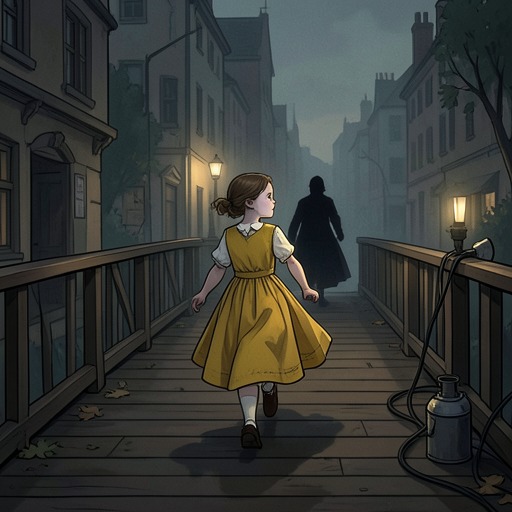
Their route takes them along the river toward a small wooden bridge and the woods on the far side. Etsuko later identifies this as the first time she had crossed to that bank. She remembers the ground there as soft and marshy, and recalls an unease that she cannot confidently distinguish from hindsight: she allows that the feeling may be her fancy, while also remembering that it made her walk more urgently toward the trees. The remembered approach is shaped by this uncertainty. Before either woman knows what lies ahead, Etsuko’s account places bodily apprehension beside the ordinary, purposeful task of searching.
Finding Mariko
Sachiko stops Etsuko and looks toward a dark shape on the grass near the river’s edge. Etsuko’s first impulse is to run toward it, but she sees Sachiko standing still and gazing at the object. Sachiko identifies it as Mariko. Etsuko remembers that they then ran together, with Sachiko reaching the child first because Etsuko’s pregnancy slowed her. Mariko is lying curled on her side with her back toward them. Her eyes are open; at first Etsuko thinks she may be dead, then sees that they move and that Mariko is looking up at them.
Sachiko kneels and lifts Mariko’s head. Mariko does not answer Etsuko when she asks whether she is all right. Sachiko examines and turns her daughter in her arms, while Etsuko notices blood on Sachiko’s sleeve and realizes that Mariko is bleeding. Etsuko proposes calling someone. Sachiko instead describes the injury as a small cut and says it is not serious. The exchange establishes the immediate physical outcome but not what happened before the women arrived: Mariko remains silent, and the search has produced no account from her.
Explanation and Uncertainty
Later, Etsuko asks whether they should report the matter to the police. Sachiko questions what there is to report, explaining that Mariko says she was climbing a tree and fell, and presents that as the cause of the cut. When Etsuko asks whether Mariko was with anyone that night, Sachiko says no and asks who she could have been with. Her response closes down the possibility of further inquiry in the conversation, but the evidence available in the episode remains limited: Etsuko has witnessed the search and the discovery, while the explanation comes through Sachiko’s account of what Mariko said.
Etsuko frames the recollection with an explicit reservation that time may have made it hazy and that events may not have happened exactly as she remembers them. She nevertheless recalls distinctly the spell of stillness before the women recognize the shape, followed by their sudden run toward it. That contrast gives the episode its structure: a missing child is at first treated as a problem likely to resolve itself, then found alone and hurt, and finally accounted for through a fall that Sachiko regards as requiring no report. The event brings the women into shared action, but it ends without a fuller account of Mariko’s disappearance or of what occurred on the riverbank.