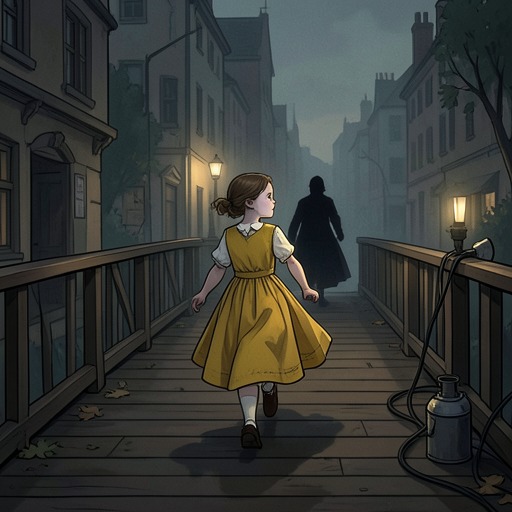
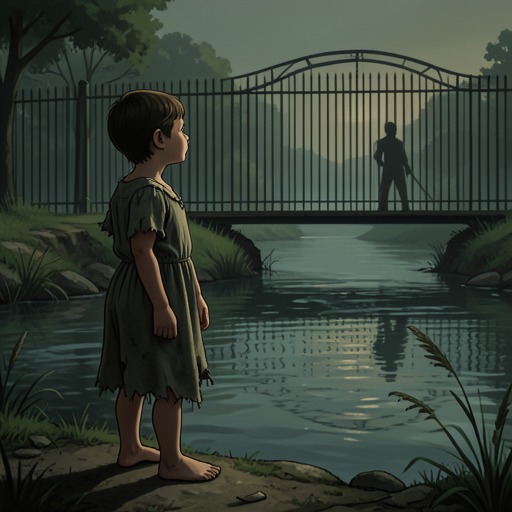
Mariko witnesses the woman and baby by the canal
A Pale View of HillsMariko’s encounter with the woman and baby by the canal is a remembered wartime episode that gives shape to her later, persistent recollection of the woman. In Sachiko’s account to Etsuko, an early-morning chase through Tokyo ends at a canal, where Mariko sees a stranger holding a baby beneath the water. Sachiko leads her away, but the scene returns indirectly weeks later, when Mariko says the woman is watching them from the doorway of their shelter.
Setting and Circumstances
The encounter belongs to Sachiko’s account of life in wartime Tokyo, a period she describes as prolonged and destructive. She recalls that people lived in tunnels and derelict buildings amid rubble, and that Mariko, like other residents, saw terrible things. Sachiko distinguishes this experience from the devastation in Nagasaki, while emphasizing that the Tokyo years also exposed Mariko to frightening events. The canal episode emerges from that broader setting of displacement and danger, rather than as an isolated incident with a fully explained cause.
On the morning in question, Mariko runs into the streets. Sachiko cannot remember what had upset her, and does not claim to know why the child ran off. She follows her daughter, who goes down an alley toward a canal. The uncertainty about the immediate trigger matters: Sachiko can reconstruct the route and what they saw, but not the reason the morning began with Mariko fleeing. Her recollection is precise about the encounter’s central details and incomplete about its lead-up.
The Canal Encounter
At the end of the alley, Sachiko sees a young woman kneeling at the canal with her arms in the water. She recognizes that something is wrong, and notices the woman turn and smile at Mariko. The woman then brings her arms out of the water and reveals a baby she had been holding beneath the surface. Sachiko does not know the woman and offers no account of her identity or circumstances. The scene is defined by that sudden disclosure: Mariko has run ahead of her mother and is present when the woman reveals what she has been holding.
Sachiko takes hold of Mariko and leads her out of the alley. The account gives no further description of what happened to the baby, so its fate remains unstated. Nor does Sachiko present the woman’s action as something she can explain; the encounter is reported through what she witnessed and what she learned afterward, not through knowledge of the woman’s intentions. A few days later, Sachiko hears that the woman has died by suicide. She did not know the woman, and the report is second-hand, a distinction that keeps the episode’s confirmed observations separate from what Sachiko was told.
A Memory That Returns Later
Mariko is almost six at the time. Sachiko says that her daughter saw other terrible things in Tokyo, but continued to remember this woman in particular. At first, Mariko says nothing about the canal encounter and does not seem especially upset. About a month later, while they are sleeping in an old building, Sachiko wakes and finds Mariko sitting upright and looking toward the doorway. The building has no door to prevent someone from entering.
Mariko tells Sachiko that a woman is standing there watching them, and identifies her as the woman they had seen by the canal. Sachiko gets up to check and finds no one. She nevertheless acknowledges that an actual woman could have entered the building, since it was open to anyone. The episode therefore does not settle whether Mariko is remembering the dead stranger, mistaking another person for her, or responding to a presence Sachiko did not see. What it establishes is that the canal scene has returned in Mariko’s account, now attached to the exposed doorway of their temporary shelter.
Narrative Significance
The memory’s delayed appearance is central to the episode. Mariko does not explain or discuss what she witnessed at the time; only weeks later does she connect the woman to a nighttime sighting. Sachiko’s measured recollection preserves that gap instead of supplying a definitive psychological explanation. The child’s silence, the later report of the woman’s death, and the open doorway remain distinct parts of the story, linked by Mariko’s identification of the figure.
The scene also reveals the limits of Sachiko’s knowledge. She can describe following Mariko, seeing the woman and baby, and taking her daughter away, but cannot say why Mariko ran, who the woman was, or what ultimately happened to the baby. Her account to Etsuko makes the encounter an act of testimony as well as a family memory: it conveys what Mariko saw while keeping uncertainty around what neither mother could know. The woman’s later appearance in Mariko’s recollection gives the incident an afterlife, showing how an event witnessed in childhood can persist without being immediately spoken or fully understood.