Mariko's recurring fixation on the woman and baby in Tokyo
A Pale View of HillsMariko’s recurring fixation on the woman and baby in Tokyo is a pattern of delayed and returning recollection: an encounter witnessed amid wartime devastation surfaces in her speech weeks later, then reappears as reports that the woman has come to find her. Sachiko connects these episodes to what Mariko saw in Tokyo, but her account does not settle whether the later woman is present or imagined. The distinction between witnessed event, remembered image, and possible apparition remains unresolved, making the fixation both a consequence of Mariko’s childhood experience and a limit on what the adults around her can confidently know.
The recurring reports
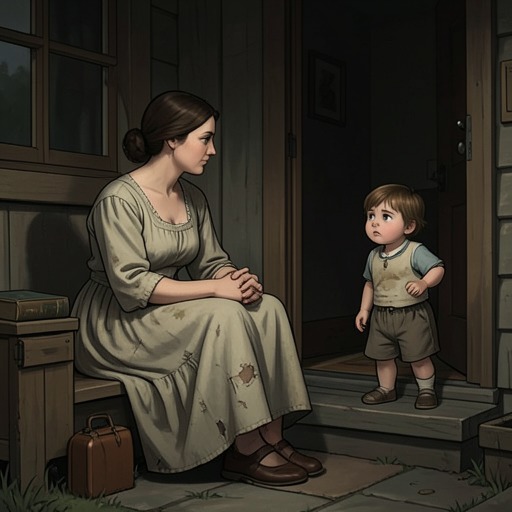
Mariko first tells Etsuko that the woman from across the river came to the house the previous night while Sachiko was away. The woman offered to take Mariko to her home. Although she proposed taking a lantern, Mariko says she refused because it was dark. The lantern on the wall gives the child’s account a concrete detail, while her stated reason for staying makes the darkness central to the memory: the woman’s invitation is remembered alongside the choice not to follow.
The report returns in a later exchange with Sachiko. Mariko again says that the woman came the previous night, this time while Etsuko was gone, and repeats that the woman said she would take her home. Sachiko does not ask her to explain further. Instead, she tells Mariko to go inside and says she will show her what to do. The repeated claim therefore meets an adult response that redirects the child rather than investigating whether the visit occurred. The recurrence is clear; its cause and the woman’s presence are not.
The remembered encounter in Tokyo
Sachiko eventually explains to Etsuko that the woman Mariko talks about is connected to something she witnessed in Tokyo. She describes the city’s wartime conditions as prolonged and ruinous, with people living in tunnels and derelict buildings amid rubble. Mariko saw other terrible things there, Sachiko says, but this particular woman remained in her memory. The account places the fixation within the dislocation and exposure of a child’s wartime surroundings rather than treating it as an isolated tale.
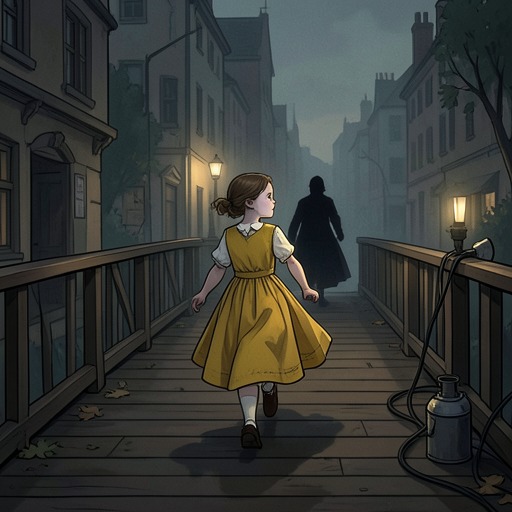
Sachiko recalls that Mariko ran into the streets one early morning and that she followed her. Mariko went down an alley to a canal, where a young, very thin woman was kneeling. Sachiko sensed that something was wrong when the woman turned and smiled at Mariko. The woman then revealed a baby she had been holding beneath the water. Sachiko took Mariko away from the alley. She later heard that the woman had died by suicide, although she had never known the woman herself. The account thus distinguishes what Sachiko says she witnessed from what she learned afterward; the woman’s identity and history remain unknown.
Delayed memory and uncertainty
Mariko did not speak about the encounter immediately and did not seem particularly upset at the time. About a month later, while she and Sachiko were sleeping in an old building without a door, Sachiko woke to find Mariko sitting upright and watching the doorway. Mariko said that a woman was standing there and watching them, identifying her as the woman from the morning by the canal. Sachiko looked around and found no one, but acknowledges that the open building would not have prevented someone from entering. Her recollection preserves both the absence of confirmation and the possibility of an actual visitor.
Sachiko supposes that Mariko mistook some woman at the doorway for the figure they had seen earlier. She identifies this episode as the beginning of Mariko’s fixation, but presents the explanation as a likelihood, not a certainty. The sequence is important: the original encounter is followed by silence, then a nighttime report that attaches the remembered woman to a new setting. The later claims that the woman visits Mariko repeat this pattern of return without supplying independent confirmation.
Sachiko’s response and the fixation’s significance
Sachiko tells Etsuko that she had thought Mariko had outgrown the fixation, only for it to begin again recently. She asks Etsuko not to pay attention if Mariko speaks about the woman that night, and explains the episodes through children’s confusion between make-believe and reality. This response offers a practical way to contain the subject, but does not resolve it. Sachiko’s own account has already admitted uncertainty about the figure at the doorway, and her explanation does not erase the disturbing event Mariko witnessed in Tokyo.
The fixation is therefore marked by a tension between adult interpretation and the child’s repeated insistence. Sachiko links the woman in Mariko’s later reports to the woman beside the canal, while also suggesting that the later figure may have been a mistaken identification or fantasy. Mariko’s descriptions recur across different moments when her mother is absent, but the evidence does not establish why that circumstance matters to her or whether any later visit truly occurred. What can be traced is the persistence of one remembered image: an encounter that Mariko initially did not discuss, that returned in a nighttime account, and that continues to shape how she speaks about the woman. The narrative keeps the memory’s emotional force distinct from certainty about its supernatural or literal continuation.