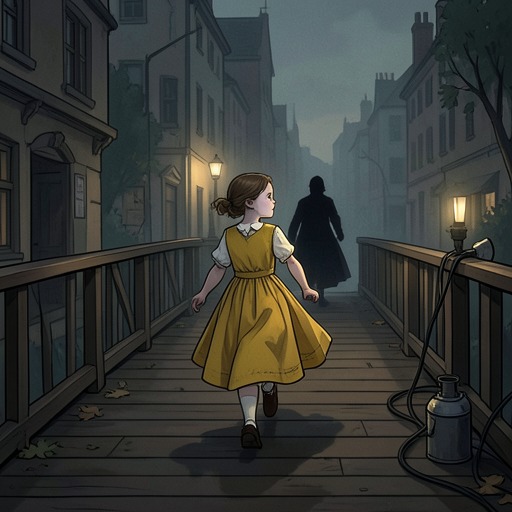
Mariko’s encounter with the woman by the canal
A Pale View of HillsMariko’s encounter with the woman by the canal is a formative childhood episode whose meaning emerges only in retrospect. During the family’s time in a devastated Tokyo, Mariko sees a young woman at a canal holding a baby beneath the water. Sachiko takes her away, but the image returns later in Mariko’s memories and becomes the focus of an obsession that Sachiko thought had faded. The event is preserved not through Mariko’s direct account but through Sachiko’s recollection, told to Etsuko, with uncertainty about what Mariko understood and what she later remembered.
Background and circumstances
Sachiko frames the encounter within the hardship of life in Tokyo. She recalls weeks of severe conditions, with people living in tunnels and derelict buildings amid rubble. Mariko, still a very young child, had seen other disturbing things there, but Sachiko says she continued to remember this particular woman. The account makes the canal episode one experience among many in a period of upheaval, while also distinguishing it as the image that persisted.
The encounter took place when Mariko was almost six. One early morning, Mariko ran out into the streets. Sachiko could no longer remember what had upset her or why she had run off, so the reason for the flight remains uncertain. Sachiko went after her, following her down an alley that led to a canal. This small gap in the account matters: the event’s immediate cause is missing, while its visual impression and later consequences are remembered in detail.
The encounter at the canal
At the end of the alley, Mariko and Sachiko came upon a young, very thin woman kneeling at the canal. Sachiko sensed that something was wrong. The woman turned toward Mariko and smiled; Mariko stopped running. Sachiko’s recollection stresses the pause between the child’s flight and the stranger’s gesture, a sudden stillness in the pursuit that brings them face to face.
The woman then brought her arms out of the water to show what she had been holding: a baby. The account does not establish what happened to the baby, nor does it describe an exchange between the woman and Mariko. Sachiko took hold of Mariko and led her out of the alley. That action ended their direct encounter, but did not prevent the image from remaining with Mariko.
Aftermath and recurring memory
Sachiko says she later heard that the woman had died by suicide, a few days after the encounter. She had not known the woman herself, and the death reaches her as information learned afterward rather than as something she witnessed. The distinction separates the brief scene at the canal from its later reported consequence: Mariko sees the woman and baby, while Sachiko subsequently learns how the woman’s story ended.
For a time, Mariko did not speak about what she had seen and did not appear especially upset. About a month later, while they were sleeping in an old building, Sachiko woke during the night and found Mariko sitting upright and looking toward the doorway. Mariko said that a woman was standing there watching them and identified her as the woman from the canal. Sachiko looked around but saw no one. She allows that someone could have been at the doorway, since the building had no door to prevent anyone from entering, but cannot confirm Mariko’s identification. The episode therefore adds a second uncertainty to the first: Sachiko cannot tell whether Mariko saw the same woman again, or whether the remembered figure shaped what she thought she saw.
Significance in the account
Sachiko identifies that night as the beginning of Mariko’s obsession with the woman. She had believed Mariko had grown out of it, but says it has recently returned. She asks Etsuko not to encourage Mariko if she speaks about the woman that evening. Her request shows that the memory is not merely a past incident in the family’s account; it remains a present concern that affects how Sachiko expects Etsuko to respond to her daughter.
The episode’s force lies partly in what the account cannot settle. Sachiko remembers the child’s age, the early-morning flight, the alley, the canal, and the woman displaying the baby, but not why Mariko ran away. Mariko’s initial silence leaves her understanding unknowable, while the later nighttime account makes clear that the scene stayed with her. Told by Sachiko to Etsuko, the encounter is at once a remembered event and a story about the uncertain passage from witnessing to recollection: the woman’s death is reported after the fact, and the identity of the figure at the doorway remains unresolved.