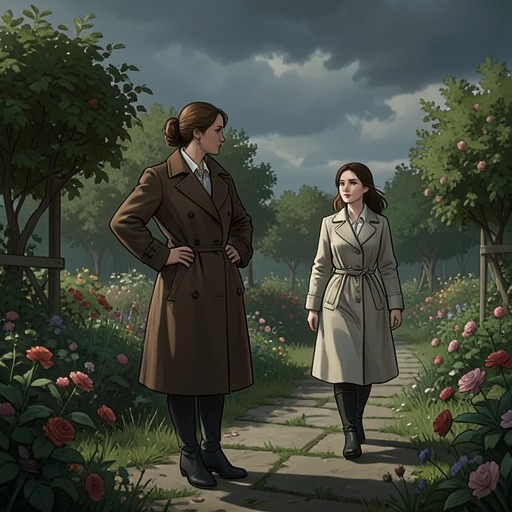
Nagasaki’s post-atomic-bomb reconstruction
A Pale View of HillsNagasaki’s post-atomic-bomb reconstruction is presented as an uneven transformation: the city has regained movement and life, but the rebuilding visible from Etsuko’s apartment ends at a wasteground of stagnant ditches, and the people living among the new buildings seem to regard their homes as temporary. The contrast between renewed urban life and what remains unrepaired gives the landscape a lasting presence in the novel’s recollections of postwar Nagasaki.
The rebuilt district and its unfinished edge
Etsuko and her husband live east of the city, a short tram ride from the centre, near a river once bordered by a small village. After the bomb, only charred ruins remained there. Rebuilding eventually produced four concrete apartment buildings, each divided into about forty apartments. Etsuko’s block was the last to be built, marking the point at which the programme stopped; between the buildings and the river lay several acres of dried mud and ditches. The wasteground makes the limits of reconstruction concrete. Its drainage is poor, and craters hold stagnant water throughout the year. Officials sometimes measure the area or make notes, but months pass without any work being done. The new housing thus stands beside an unresolved public problem: construction has reached the district, but the ground beyond it has not been made safe or usable.
Housing, environment, and the expectation of moving on
The apartment residents are mostly young married couples whose husbands have found work with expanding firms. Many flats are company-owned and rented to employees at generous rates. Their interiors combine tatami floors with Western-style kitchens and bathrooms. Though small and difficult to keep cool in warmer months, the apartments offer their occupants a degree of satisfaction. That satisfaction coexists with a sense of impermanence. Etsuko remembers the residents as seeming to wait for the opportunity to move somewhere better. The buildings provide a newly established domestic life, but do not necessarily feel like a final home. In summer the surrounding ground becomes increasingly unpleasant: dried, cracked earth and water-filled ditches breed insects, especially mosquitoes. Neighbours complain, but their anger has settled into resignation and cynicism. Etsuko’s regular walks across the wasteground to Sachiko’s cottage make this neglected strip part of the ordinary geography of postwar life.
A landscape between ruin and renewed life
From a mountain overlooking the harbour, Etsuko sees a cityscape that appears full of life. Across the water, hills rise behind houses and buildings; the harbour opens toward the sea. She reflects that the bomb had badly damaged the area below, yet the view now seems to show no trace of what happened. The landscape holds both facts at once: devastation belongs to its history, while visible activity testifies to what has been rebuilt. Etsuko connects this view with the possibility of looking forward. She recalls Mrs. Fujiwara urging her to keep looking ahead, and treats the renewed city as evidence that life can return where there had been rubble. The optimism is significant, but it does not erase the other images the novel places beside it: the unfinished wasteground near her home and the remembered destruction that remains part of how she sees Nagasaki.
Reconstruction and private futures
The city’s renewal forms a backdrop to characters’ efforts to imagine lives elsewhere, although the novel does not present their plans as a direct consequence of reconstruction. Sachiko tells Etsuko that she and Mariko will leave Nagasaki for America within days; later she says they will first go to Kobe, with America still intended as the next destination. Her confidence in departure sits alongside a precarious history: she recalls that Frank previously disappeared after spending the money she had earned while working as a hotel maid, and concludes that her daughter’s future cannot be entrusted to him. Etsuko’s later reflections make the distance between outward movement and private recovery more difficult to ignore. She regrets opposing Keiko’s wish to leave home, believing at the time that she was protecting her; Keiko eventually left for England and severed her ties with her mother. In England, Etsuko remembers being pleased by a house and fields that matched her imagined picture of the country. Such recollections extend the novel’s concern with rebuilding beyond the city itself: new surroundings and hopes for a future do not by themselves resolve loss, estrangement, or responsibility.