Seiji Ogata
A Pale View of HillsSeiji Ogata is Etsuko’s father-in-law, a robust and generous man whose confident manner contrasts with his son Jiro’s reserve. In Etsuko’s recollections, he embodies the older ideals of discipline, loyalty, and duty that he believes postwar Japan is abandoning. His visit also brings into view the tension between those ideals and the changing political and educational climate.
Identity and Presence
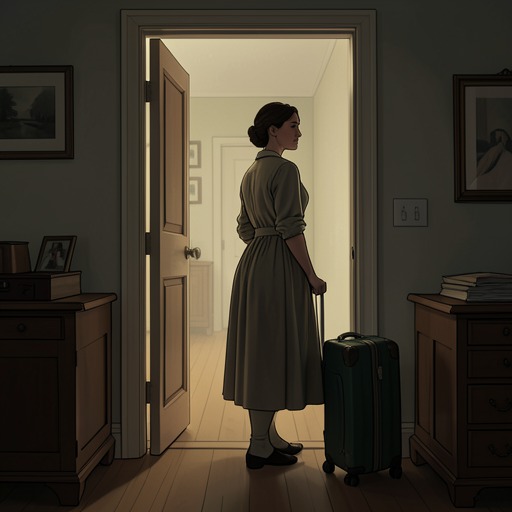
Seiji Ogata visits Etsuko and Jiro in early summer, his first visit since moving away from Nagasaki earlier that year. Etsuko remarks that she had known him by the familiar honorific Ogata-San long before meeting Jiro, and that she never grew accustomed to calling him Father. The form of address reflects a long-standing familiarity that does not fit neatly into the conventional language of family roles.
During the visit, Seiji stays for several days in a small square room and appears comfortable enough to prolong his stay. Etsuko remembers him in excellent health, with a well-built physique and the energy of a much younger man. His relaxed, generous manner is conveyed physically: he sits with his shoulders thrown back, in marked contrast to Jiro’s habitual forward hunch.
Family Relationships and Manner
Etsuko’s recollection sets father and son side by side without suggesting much physical resemblance. She pictures Jiro as a small, stocky man with a stern expression, fastidious about his appearance and often dressed in a shirt and tie even at home. He tends to hunch over meals or as he stands and walks. Seiji, by contrast, carries himself openly and easily. The difference in posture gives a visible shape to their contrasting temperaments.
A light exchange with Etsuko reveals Seiji’s self-deprecating humor. When she considers naming a possible boy after him, she hesitates because she dislikes his first name, Seiji. He turns the remark into a joke at his own expense, recalling that a class of pupils once thought he resembled a hippopotamus, then tells her not to be deterred by outward appearances. The exchange presents him as comfortable enough with Etsuko to meet teasing with teasing rather than offense.
Education, Politics, and Generational Conflict
Seiji first brings up Shigeo Matsuda over breakfast, after he has spent several days at the house. At the library in Nagasaki, he had found a teachers’ periodical that did not exist during his own professional years. Matsuda had written an article in it and mentioned Seiji by name, a discovery that surprised him because he did not consider himself noteworthy. Seiji reads the publication as evidence of a changed intellectual climate, remarking on what he sees as the growing influence of communism among teachers.
His wider political argument is that democracy has become an excuse for people to evade obligations. He complains that a wife may disregard loyalty to the household, act as she pleases, or vote for another party, and treats such behavior as characteristic of changes in Japan. In his account, discipline and loyalty once held the country together by binding people to duties toward family, superiors, and country. He insists that outsiders had never understood how Japan worked and that values suitable elsewhere could not simply be applied to Japanese life.
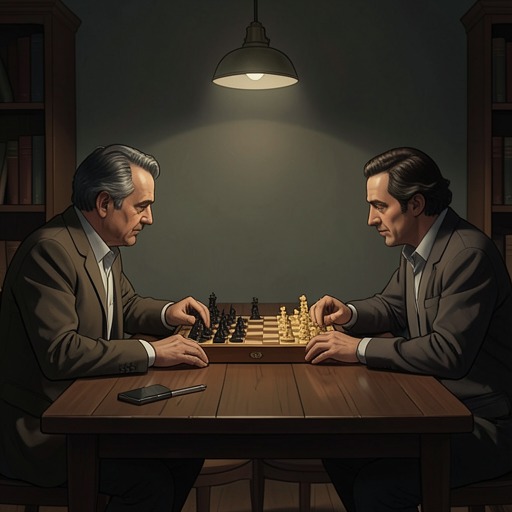
Jiro answers with formal agreement but qualifies Seiji’s criticism, asking whether Americans might nevertheless have brought some good. Seiji continues his argument; Jiro returns his attention to the paper, later yawning and scratching his face. Their exchange conveys a restrained disagreement: Seiji speaks with conviction about the loss of an older order, while Jiro neither openly confronts him nor fully endorses his view.
Narrative Significance
Seiji’s account of social change makes him a voice for duty and continuity, but the narrative also shows the limits of that certainty through Jiro’s mild challenge and disengaged gestures. His comments connect the family’s private conversation to larger postwar debates about democracy, education, and the obligations inherited from an earlier Japan. Etsuko’s portrait holds these positions alongside his physical warmth, humor, and familiar place in the household, making him more than a spokesman for old values.