Shigeo Matsuda
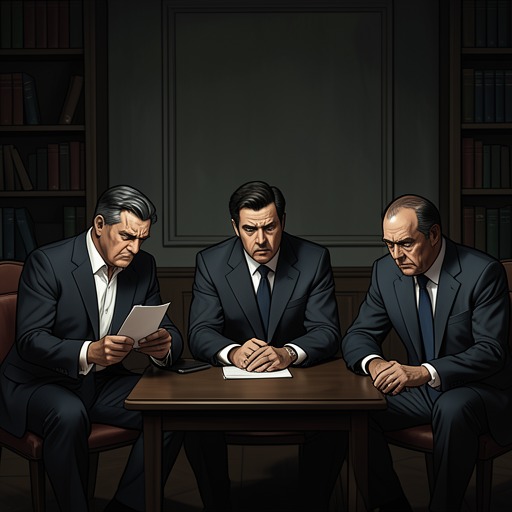
A Pale View of HillsShigeo Matsuda is a teacher, writer, and former pupil of Ogata-San whose public criticism of his old teacher brings a private history of friendship into conflict with postwar arguments about education and responsibility. Once a boy welcomed into Ogata-San’s home to play with Jiro, he later argues that the values their teachers passed on helped lead Japan toward disaster. His confrontation with Ogata-San is brief, but its central disagreement is not resolved: devotion to a cause, Matsuda insists, does not make that cause right.
Identity and Background
Matsuda’s connection to the family reaches back to childhood. Ogata-San remembers him coming to their house to play with Jiro, and recalls that Jiro’s mother spoiled him. He had attended Kuriyama Highschool, and Ogata-San had once introduced him to the principal at his school. These recollections place Matsuda within the former teacher’s intimate circle of pupils, not merely among the names of people he later criticizes in print.
As the boys grew older, their paths diverged. In conversation with Ogata-San, Jiro says that he and Matsuda have gone their separate ways and do not see one another often. Ogata-San treats such distance as a reason to preserve old allegiances through reunions and renewed contact. The gap between them becomes tangible when Ogata-San asks whether Jiro has written to Matsuda: Jiro says he has not, explaining that he has been busy. The letter remains an intention rather than an action, and Ogata-San eventually decides to visit Matsuda himself.
The Article and the Intended Visit
Matsuda re-enters the family’s attention through a teachers’ periodical that Ogata-San finds in a library in Nagasaki. Ogata-San has never encountered the publication before and is surprised to find his own name in Matsuda’s article. The piece discusses Ogata-San and Dr Endo in connection with their retirements, and, as Ogata-San understands it, argues that the profession would have been better off without them and that they should have been dismissed at the end of the war. The criticism is not an abstract disagreement between strangers: its author is the boy Ogata-San remembers from his home.
Ogata-San tells the family that he wants to speak to Matsuda and later chooses to call on him, hoping to catch him at home rather than disturb him at school. When Matsuda appears at the gate, he is a thin young man in shirt sleeves, wearing spectacles and carrying a small briefcase. He searches through the case, then walks past Ogata-San and Etsuko without recognizing them. The scene registers the distance that time has put between former acquaintances before their conversation begins to test whether anything of their earlier bond remains.
A Meeting Across Generations
Ogata-San introduces the visit as a chance to recall Matsuda’s childhood friendship with Jiro. Matsuda responds with the observation that time passes quickly. The courteous exchange gives way when Ogata-San explains that the article has troubled him. He says he had meant to come for several days but had forgotten, and asks Matsuda to explain honestly whether he believes what he wrote. Ogata-San presents the question as a source of worry: he wants an answer before returning to Fukuoka with his mind at rest.
Matsuda does not soften his position to protect the older man’s feelings. He says that he believed the article when he wrote it and still believes it. In his view, children in Japan were taught terrible things and damaging lies; more gravely, they were taught not to see or question. He links that education to the country’s descent into what he calls its most evil disaster. His argument makes the former pupil’s criticism larger than an accusation about two retired teachers: it concerns the consequences of an educational system that discouraged scrutiny.
The Dispute Over Responsibility
Ogata-San answers by defending the sincerity and effort of himself and men such as Dr Endo. He rejects the implication that their work should be judged as a failure simply because Japan lost the war, arguing that the country lacked guns and tanks rather than courage or social depth. He says they cared deeply about the country and worked to preserve and pass on what they believed were the correct values. His defense rests on their intentions and service; Matsuda’s criticism rests on what those efforts helped teach.
Matsuda distinguishes intention from consequence. He tells Ogata-San that he does not doubt that he and Dr Endo were sincere or hardworking, and says that he has never questioned their personal devotion. But, he argues, their energies were directed toward something misguided and evil. He presents this judgment as painful truth rather than evidence of personal malice: the teachers could not have known then what he believes is clear in retrospect. The disagreement therefore cannot be settled by Ogata-San’s appeal to honorable motives, because Matsuda accepts those motives while denying that they vindicate the work.
Matsuda also answers Ogata-San’s challenge about his authority to judge the past. When Ogata-San asks how a boy could know what the older men achieved, Matsuda cites the sacking and imprisonment of five teachers at Nishizaka, specifying April while the year is left incomplete in the exchange. He says those men are free now and will help bring about a new dawn. The example shifts the argument from general claims about patriotism to a concrete episode of repression, and reveals that Matsuda’s assessment is informed by a particular history of teachers punished under the old order.
Departure and Significance
Matsuda ends the exchange because he must leave and says there is not time to discuss the whole matter. He bows to Ogata-San and Etsuko, asks them to give his regards to Jiro, picks up his briefcase, and walks away. Ogata-San watches him disappear down the hill, then remarks on the confidence of young men and reflects that he was once similarly certain of his opinions. The older man’s smile does not erase the disagreement; it leaves the encounter suspended between affection for a former pupil and the unsettling force of what that pupil has said.
Matsuda’s role is thus both personal and historical. His childhood association with Jiro and Ogata-San gives the confrontation the shape of a broken continuity: the former pupil returns not to reaffirm inherited loyalties but to question the teaching that formed them. At the same time, his argument refuses a simple division between sincere elders and blameworthy history. He acknowledges their devotion while insisting that good intentions cannot excuse damaging instruction. The meeting closes without reconciliation or retraction, leaving Matsuda’s challenge—and Ogata-San’s unsettled response—as the lasting consequence of their reunion.