Blanche DuBois
A Streetcar Named DesireBlanche DuBois is the central figure of Tennessee Williams's A Streetcar Named Desire, a woman whose desperate clinging to the illusions of a vanished aristocratic past brings her into fatal conflict with the brute force of the modern world. Her arrival at the cramped French Quarter apartment of her sister, Stella Kowalski, and brother-in-law, Stanley Kowalski, initiates a psychological war that strips away every pretense and leaves her broken, removed at last by a doctor and a matron from a state institution. Blanche embodies the play's deepest tensions: between the old South and the industrial present, between the need for magic and the demand for realism, between the desire for tenderness and the inescapable pull of raw sexual force.
Identity and Background
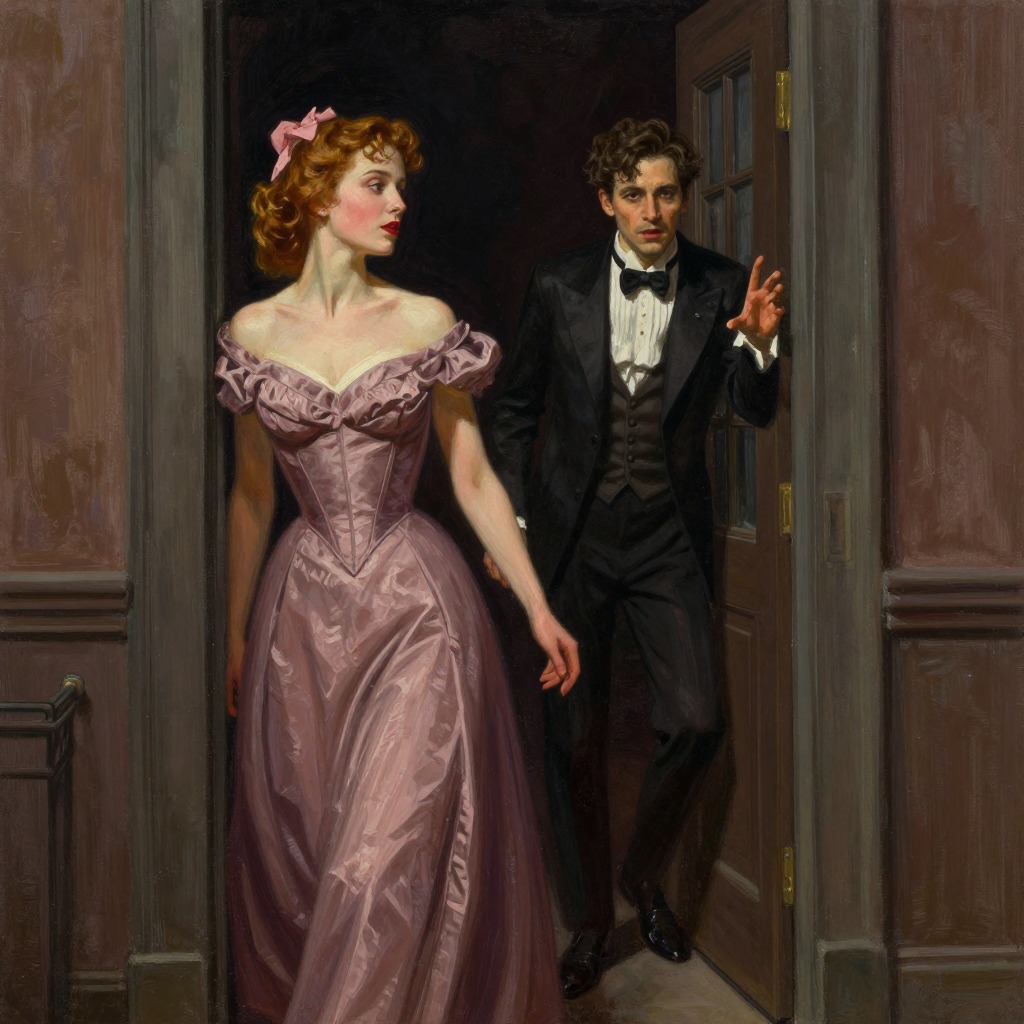
Blanche DuBois arrives at the corner of Elysian Fields in New Orleans carrying a valise and dressed in a white suit with a fluffy bodice, necklace and earrings of pearl, white gloves and hat—an outfit that looks as if she were attending a summer tea in the garden district, utterly incongruous with the poor, raffish neighborhood where her sister lives. She is about five years older than Stella, and her delicate beauty must avoid a strong light; there is something about her uncertain manner, as well as her white clothes, that suggests a moth. She comes from Belle Reve, the DuBois family plantation in Mississippi, a great big place with white columns that has now been lost. Blanche had stayed at Belle Reve and struggled to hold it together while Stella left for New Orleans, and the burden of all the family deaths—father, mother, Margaret, old Cousin Jessie—descended on her shoulders. The long parade to the graveyard was paid for out of the estate, and Blanche insists that death is expensive: "Belle Reve was his headquarters!" She worked as a high school English teacher in Laurel, but her nerves broke and the superintendent, Mr. Graves, suggested she take a leave of absence. In truth, she was asked to leave because of an involvement with a seventeen-year-old boy, and the town of Laurel had effectively passed an ordinance against her.
Life and Plot Trajectory
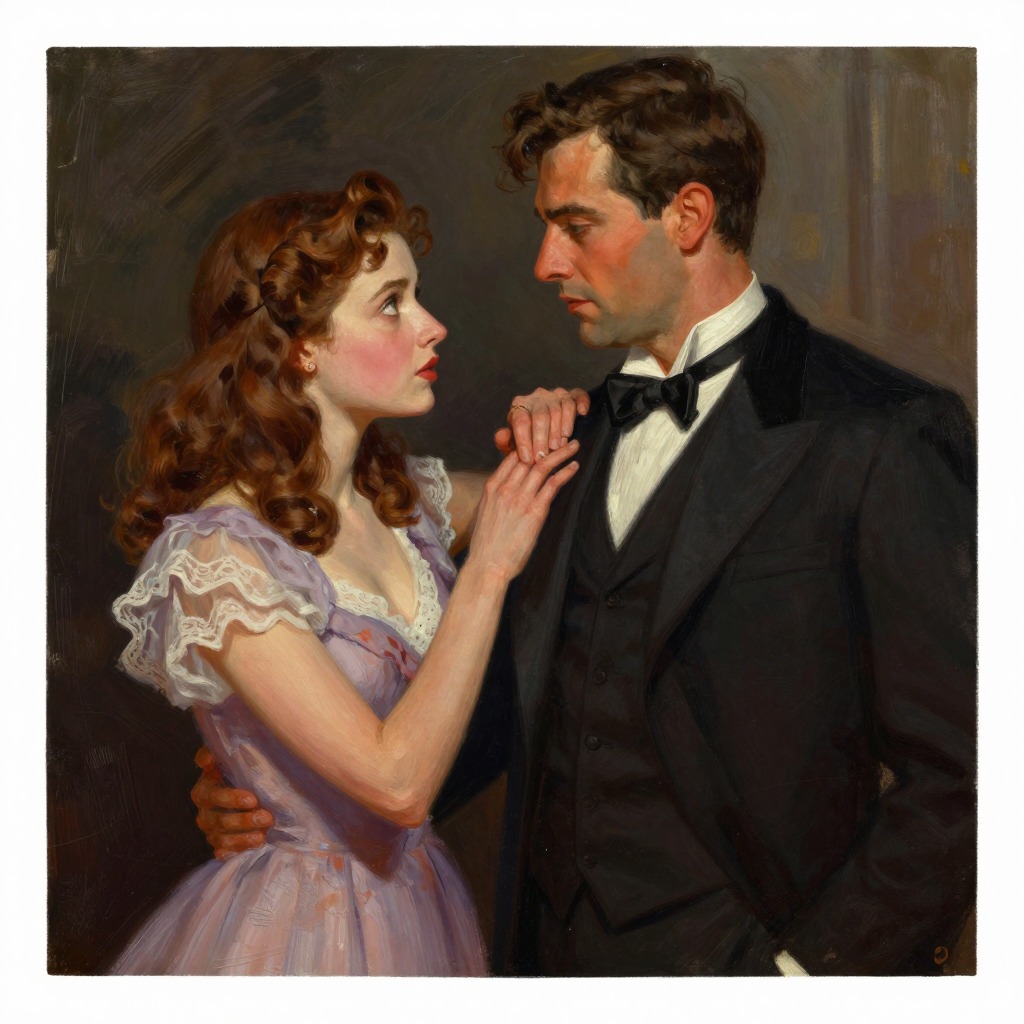
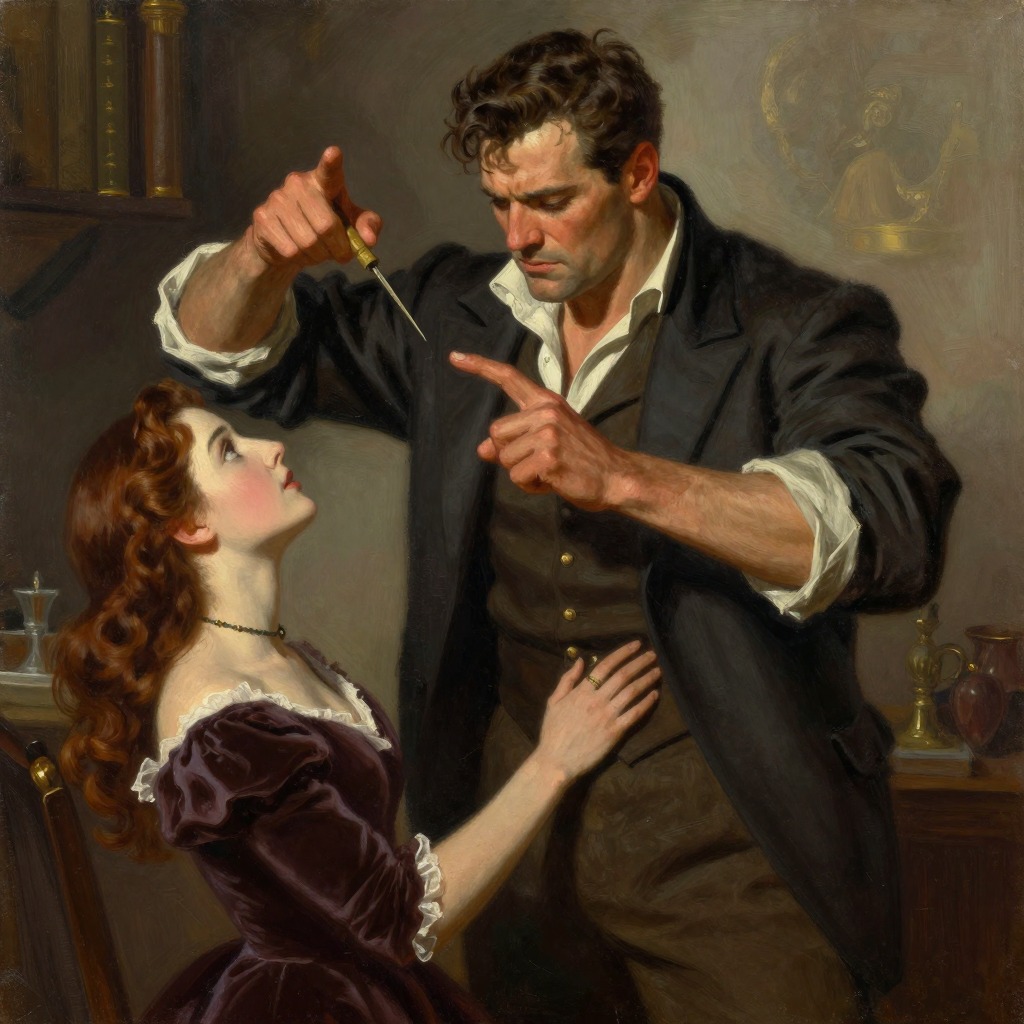
Blanche's trajectory in the play is a steady, accelerating descent. On her first evening, she drinks a half tumbler of whiskey she finds in the closet, carefully washes the glass, and resumes her seat, muttering "I've got to keep hold of myself!" She is horrified by the two-room flat with no door between the rooms and worries about decency with Stanley present. She flirts with Stanley's friend Harold Mitchell (Mitch) during the poker night, and a tentative romance develops: she tells him about her dead husband, Allan Grey, and he responds with tenderness, saying "You need somebody. And I need somebody, too." But Stanley, having learned from a supply-man about Blanche's reputation at the Flamingo Hotel and her dismissal from the school, reveals everything to Stella and then to Mitch. On Blanche's birthday, Stanley gives her a bus ticket back to Laurel on the Greyhound, and Mitch confronts her, tearing the paper lantern off the light bulb to see her clearly in the harsh light. After Mitch leaves, Stanley, alone with Blanche while Stella is in the hospital giving birth, rapes her. Weeks later, a doctor and a matron arrive to take Blanche away; she goes with the doctor, saying, "Whoever you are—I have always depended on the kindness of strangers."
Key Actions and Objectives
Blanche's primary objective is survival through the construction of an alternate reality. She lies about her age, telling Stanley she is twenty-seven when she is older; she claims to have taken a leave of absence from teaching when she was actually fired; she invents a telegram from an old beau, Shep Huntleigh, inviting her on a Caribbean cruise; she tells Mitch that she has never been more than kissed by a fellow. She covers the naked light bulb with a colored paper lantern, saying "I can't stand a naked light bulb, any more than I can a rude remark or a vulgar action." She bathes repeatedly to soothe her nerves, drinks heavily to quiet the polka tune—the Varsouviana—that plays in her head, the music that was playing when her husband shot himself. She kisses a young collector who comes to the door collecting for The Evening Star, then sends him away, saying "I've got to be good—and keep my hands off children." She attempts to send a telegram to Western Union with the message "In desperate, desperate circumstances! Help me! Caught in a trap," but Stanley intercepts her. When Mitch confronts her, she declares, "I don't want realism. I want magic!"
Relationships and Conflict
The central conflict is between Blanche and Stanley, whom she immediately recognizes as her antagonist. On first sight she thinks to herself, "that man is my executioner! That man will destroy me." She calls him common, an animal, an ape, a survivor of the stone age, and tells Stella that what such a man has to offer is "animal force." Stanley, in turn, resents her pretensions and her interference in his marriage; he tells Stella, "That girl calls me common!" and sets out to expose her lies. Her relationship with Stella is fraught with tension: Blanche accuses Stella of abandoning Belle Reve and sleeping with a Polack, while Stella defends her husband and tells Blanche she is "taking entirely too much for granted." With Mitch, Blanche finds a brief hope of rescue—she wants to rest, to breathe quietly again, to leave and not be anyone's problem—but when he learns the truth, he tells her she is "not clean enough to bring in the house with my mother." The relationship with her dead husband, Allan Grey, haunts her: she married him when she was very young, discovered him with an older man, and at the Moon Lake Casino told him "I saw! I know! You disgust me," after which he ran out and shot himself in the mouth.
Change and Ending
Blanche changes from a woman who still attempts to maintain the appearance of gentility and control into a shattered figure who has lost all grip on reality. After the rape, she dresses in a soiled white satin evening gown and a rhinestone tiara, speaking to spectral admirers about a moonlight swim. When the doctor and matron arrive, she initially panics, scratching at the matron and crying out, but the doctor's gentle manner calms her. She leaves the apartment with him, walking as if blind, and does not turn when Stella cries out her name from the porch. The play ends with Stanley kneeling beside Stella, his fingers finding the opening of her blouse, while the blue piano music swells and Steve says, "This game is seven-card stud." Blanche has been removed from the world of the play, her fate sealed by the institution that will take her in.
Narrative Role and Evaluation
Blanche functions as the tragic heroine of the play, a figure whose downfall is both inevitable and deeply moving. Arthur Miller, in his introduction to the play, wrote that Streetcar "approaches tragedy and its dark ending is unmitigated." Blanche's story is one of a woman destroyed by the collision between her own fragile illusions and the brutal honesty of a world that will not permit them. She is also a figure of profound ambivalence: she lies, she drinks, she has used sex as a currency, but she also possesses a genuine longing for beauty and tenderness. The play's most famous line, "I have always depended on the kindness of strangers," captures her final, heartbreaking self-deception—she is being led away by a doctor from a state institution, not by a gentleman caller from Dallas. Blanche is the embodiment of Williams's theme that the world is a place where the delicate and the sensitive are crushed by the coarse and the powerful, and her story remains one of the most powerful in American drama.