Elysian Fields
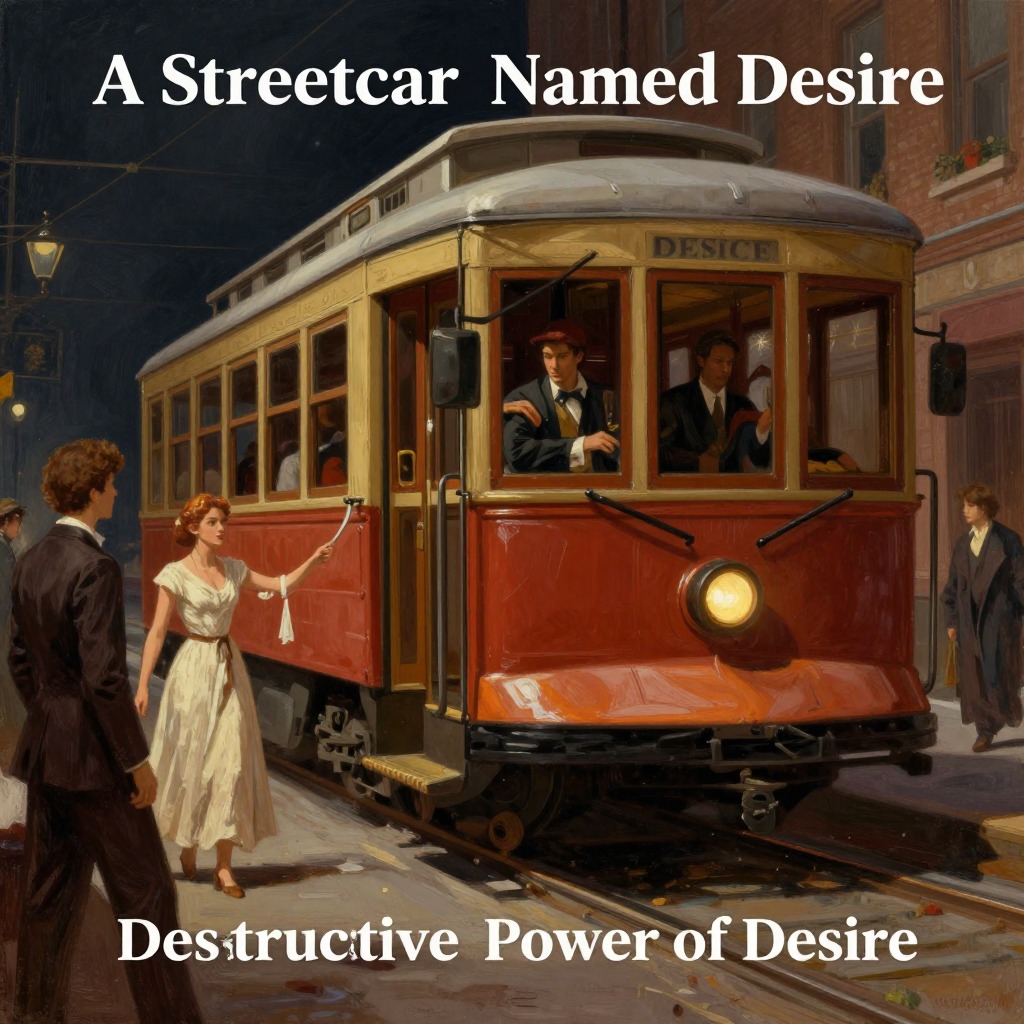
A Streetcar Named DesireElysian Fields is the street in New Orleans's French Quarter where the Kowalski apartment is located, the single, claustrophobic stage on which nearly all of A Streetcar Named Desire takes place. The address, 632 Elysian Fields, is the destination Blanche DuBois reaches after riding the streetcar named Desire and transferring to one called Cemeteries—a journey that maps the play's arc from longing to death. The building itself, a two-story corner structure of weathered grey wood with rickety outside stairs and quaintly ornamented gables, sits between the L&N tracks and the river, in a poor but raffishly charming section of the city. The sky around the dim white building is a peculiarly tender blue, almost turquoise, which invests the scene with a kind of lyricism and gracefully attenuates the atmosphere of decay. The warm breath of the brown river beyond the warehouses, with faint redolences of bananas and coffee, mingles with the tinny "blue piano" from a barroom around the corner, music that expresses the spirit of the life that goes on here. This is a cosmopolitan neighborhood where there is a relatively warm and easy intermingling of races, and the building contains two flats: the downstairs flat occupied by Stanley and Stella Kowalski, and the upstairs flat occupied by Eunice and Steve Hubbell.
The Kowalski Apartment as a Space of Conflict
The Kowalski flat consists of two rooms, not too clearly defined: the first entered is primarily a kitchen but contains a folding bed to be used by Blanche, and beyond it is a bedroom with a narrow door to a bathroom. There is no door between the two rooms, only portieres, a fact that Blanche immediately recognizes as a threat to decency. The kitchen is dominated by a yellow linoleum table, over which hangs an electric bulb with a vivid green glass shade. The bedroom is relatively dim, with only the light that spills between the portieres and through the wide window on the street. This cramped, exposed layout makes privacy impossible and forces the characters into constant, intimate proximity. The apartment is the site of the poker night, where the raw colors of childhood's spectrum and the coarse, direct power of the men at the table create a lurid nocturnal brilliance. It is here that Stanley, in a drunken rage, strikes Stella and hurls the radio out the window, and here that Stella, after a night of violence, returns to him with a blind tenderness. The apartment is also where Blanche, feeling trapped, declares, "this place is a trap!"
The Setting as a Symbol of Class and Cultural Conflict
The address Elysian Fields is a bitterly ironic name for the Kowalskis' poor, cramped neighborhood. In Greek mythology, the Elysian Fields are the paradise of the blessed dead, but Blanche's arrival at this address is the beginning of her destruction, not her salvation. The street name itself, combined with the streetcar names Desire and Cemeteries, forms a symbolic geography of Blanche's journey: desire leads to death, and death leads to a false paradise. The apartment's physical condition—its two rooms, its lack of privacy, its location in a poor, mixed-race neighborhood—is a constant source of shock and dismay for Blanche, who comes from the lost plantation of Belle Reve. She cannot reconcile her sister's life in such a place with the world they once shared. The apartment becomes the physical embodiment of the gulf between the DuBois world of old Southern gentility and the Kowalski world of raw, industrial, immigrant America. Stanley, who proudly declares himself "a one hundred percent American, born and raised in the greatest country on earth," sees the apartment as his kingdom, and he defends it against Blanche's intrusions. The Napoleonic code, which Stanley invokes to assert his right to Blanche's property, is the legal framework that governs this domestic space, turning the apartment into a battleground over economic and sexual control.
The Apartment as a Site of Blanche's Destruction
The apartment is the stage for every major confrontation that leads to Blanche's breakdown. It is where Stanley exposes her past to Stella, revealing her stay at the Flamingo Hotel and her dismissal from the school for an affair with a seventeen-year-old boy. It is where he gives her a bus ticket back to Laurel on her birthday, a cruel gift that shatters her last hope of a new life with Mitch. It is where Mitch tears the paper lantern off the light bulb, forcing Blanche to confront the harsh reality of her age and her lies. And it is in the bedroom of this apartment that Stanley rapes Blanche, an act of sexual violence that completes her destruction. The final scene takes place in the same kitchen, where the poker game resumes as if nothing has happened, while the Doctor and Matron come to take Blanche away. The apartment, which was meant to be a temporary refuge, becomes the place where Blanche is stripped of her illusions, her dignity, and finally her freedom. As she is led away, she speaks her famous line, "Whoever you are—I have always depended on the kindness of strangers," a final, ironic commentary on the unkindness she has found in her sister's home.