Mexican Woman
A Streetcar Named DesireThe Mexican Woman is a minor but symbolically charged character in Tennessee Williams's A Streetcar Named Desire, appearing only once in Scene Nine to sell funeral flowers. Her haunting cry of "Flores para los muertos" (Flowers for the dead) transforms a brief street encounter into a moment of profound thematic resonance, linking Blanche DuBois's personal history of loss and her present psychological collapse to the inescapable presence of death.
Appearance and Context
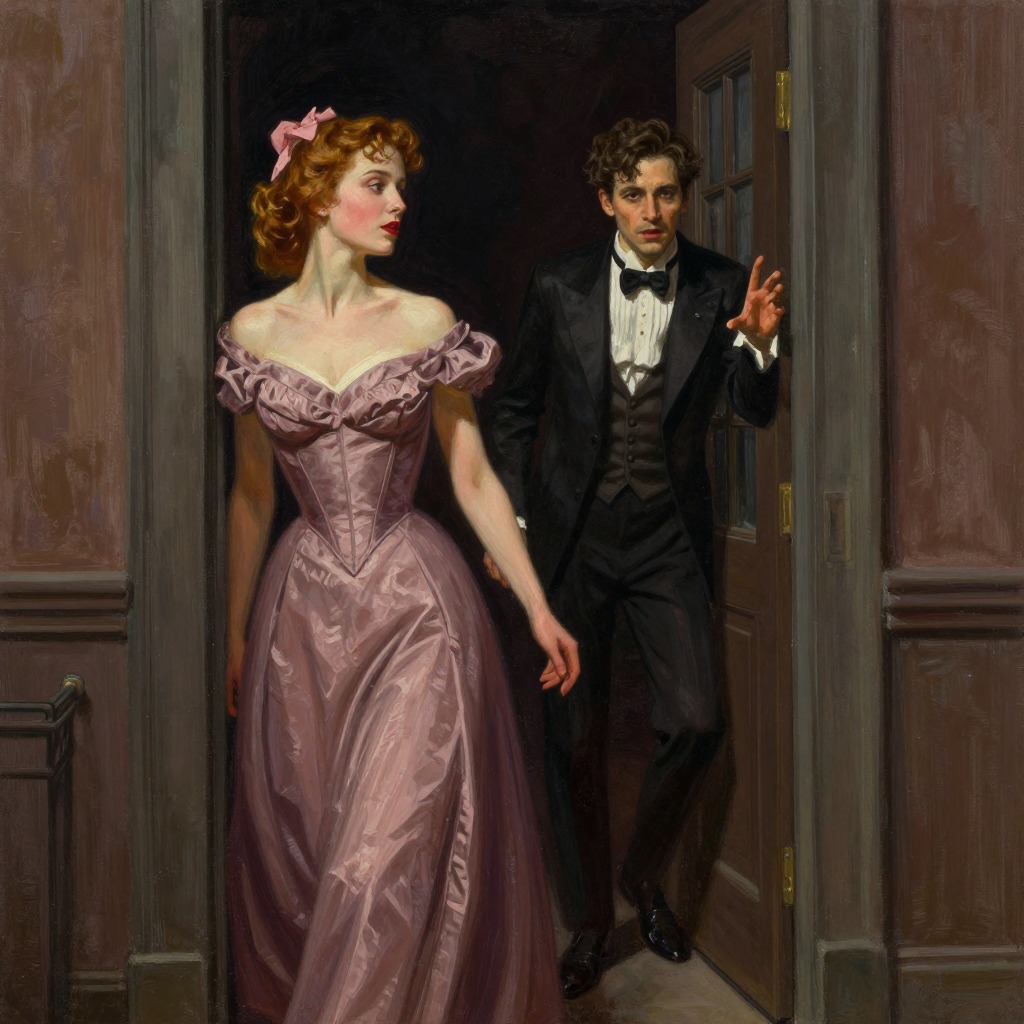
The Mexican Woman appears late in Scene Nine, shortly after Mitch has confronted Blanche with the truth about her past and left her alone. She is described as a blind woman in a dark shawl, carrying bunches of gaudy tin flowers that lower-class Mexicans display at funerals and other festive occasions. Her figure is only faintly visible outside the building, and she calls barely audibly. The timing of her arrival is crucial: Blanche has just been rejected by Mitch, who told her she was "not clean enough to bring in the house with my mother," and the polka tune known as the "Varsouviana"—the music that played on the night of her young husband Allan Grey's suicide—has begun to play in her mind. The Mexican Woman's presence externalizes the death-haunted interior landscape Blanche is trying to escape through drink.
The Encounter and Its Dialogue
When Blanche opens the door, the Mexican Woman offers her flowers and repeats her refrain: "Flores? Flores para los muertos?" Blanche reacts with frightened denial, crying "No, no! Not now! Not now!" and slams the door. But the woman's voice continues from the street, calling "Flores para los muertos" and then "Corones para los muertos. Corones..." (Crowns for the dead). Inside, Blanche begins to speak as if to herself, her words tumbling out in a stream of fragmented memories: "Crumble and fade and—regrets—recriminations..." She recalls the deaths at Belle Reve, the bloodstained pillow-slips, the way "death was as close as you are." The Mexican Woman's chant becomes a counterpoint to Blanche's confession, each line of "Flores" punctuating a new layer of remembered loss. Blanche then reveals that before Belle Reve was lost, a training camp for young soldiers stood nearby, and on Saturday nights the soldiers would stagger onto her lawn and call her name—a confession that links her sexual history directly to the proximity of death. The Mexican Woman turns slowly and drifts back off with her soft mournful cries, leaving Blanche alone with the weight of what she has admitted.
Thematic Significance
The Mexican Woman functions as a figure of death made manifest, a street-level embodiment of the "Grim Reaper" Blanche earlier described as having "put up his tent on our doorstep" at Belle Reve. Her blind, wandering presence suggests that death is indiscriminate and inescapable, arriving unbidden at the door of a woman already besieged by memory and despair. The flowers she sells—tin flowers, artificial and gaudy, used for funerals—mirror Blanche's own reliance on illusion and decoration to mask decay. Just as Blanche has covered the naked light bulb with a paper lantern, the Mexican Woman offers artificial blooms for the dead: both are attempts to beautify what is fundamentally grim. The woman's cry of "Flores para los muertos" also echoes the play's larger structure, in which Blanche's arrival on a streetcar named Desire and her transfer to one called Cemeteries has already mapped her trajectory from desire to death. The Mexican Woman is the final stop on that route made audible.
Narrative Role and Symbolic Weight
Though the Mexican Woman speaks only a few lines and appears in a single scene, her role is structurally pivotal. She arrives at the precise moment when Blanche's last hope—marriage to Mitch—has been destroyed, and when the "Varsouviana" polka, the musical signature of Allan Grey's suicide, has begun to play uncontrollably in Blanche's mind. The Mexican Woman's chant externalizes the internal music of death that Blanche cannot silence. Her presence also prefigures the arrival of the Doctor and Matron in Scene Eleven, who will come to take Blanche away to a state institution—another kind of death, a social and psychological one. The Mexican Woman's blindness, her dark shawl, her funereal wares, and her mournful, repetitive cry all combine to create a figure who is less a realistic character than a symbolic apparition, a reminder that in the world of the play, death is never far from desire, and that the flowers for the dead are always already being prepared.