Paper lantern
A Streetcar Named DesireThe paper lantern is a small, colored paper shade Blanche DuBois places over the bare light bulb in the Kowalski apartment, serving as her central symbol of illusion, magic, and the willful softening of harsh reality. Throughout the play, it represents her attempt to create a dim, forgiving atmosphere that conceals her age, her past, and the brutal truths she cannot face, and its destruction by Mitch and Stanley marks the violent collapse of her carefully constructed world.
Origin and Purpose
Blanche purchases the paper lantern at a Chinese shop on Bourbon Street during her first evening in New Orleans. She asks Harold Mitchell (Mitch) to put it over the light bulb, explaining, "I can't stand a naked light bulb, any more than I can a rude remark or a vulgar action." The lantern is a deliberate instrument of concealment: Blanche later tells Stella that soft people "have got to put on soft colors, the colors of butterfly wings, and put a—paper lantern over the light." It is not merely decorative but a tactical device for managing how others perceive her, dimming the merciless glare that would expose her fading beauty and her age.
The Lantern as a Symbol of Illusion
The lantern embodies Blanche's philosophy of magic over realism. When Mitch tears it off the bulb to see her plainly, she cries out, "I don't want realism. I want magic!" She admits she misrepresents things to people: "I don't tell truth, I tell what ought to be truth." The lantern is the physical manifestation of this principle—a cheap, fragile screen that transforms a harsh electric bulb into something soft and romantic. It is the same impulse that leads her to bathe in dim light, to avoid afternoon dates, and to lie about her age and her past. The lantern is the stage property of her entire performance of self.
Destruction by Mitch
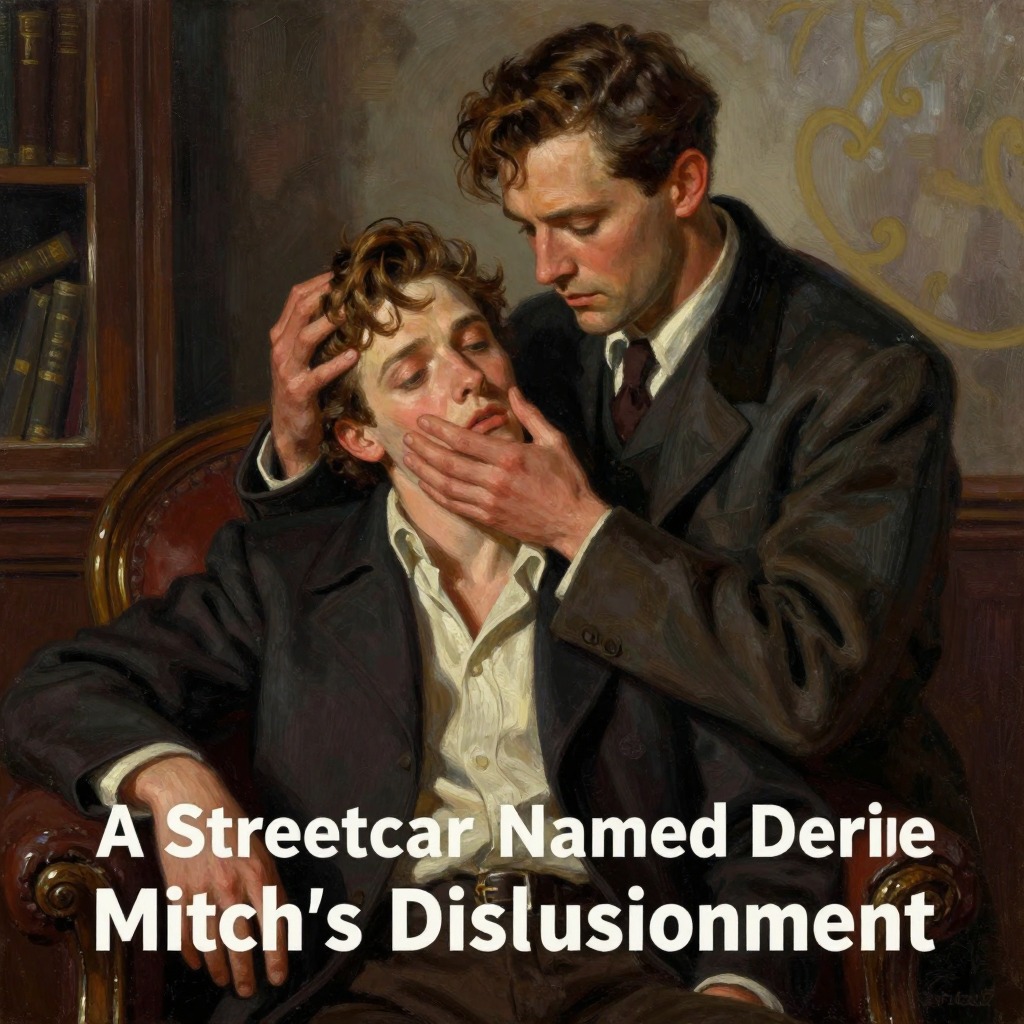
The lantern's first destruction comes during Mitch's confrontation in Scene Nine. After learning from Stanley and others about Blanche's past at the Flamingo Hotel and her affair with a seventeen-year-old boy, Mitch arrives unshaven and hostile. He tears the paper lantern off the light bulb, saying, "So I can take a look at you good and plain!" The act is a brutal unmasking: he turns on the light, stares at her, and she cries out and covers her face. The lantern's removal is the literal and symbolic stripping of her protective illusion, exposing her to the unforgiving light of truth. Mitch then tells her, "You're not clean enough to bring in the house with my mother," and leaves.
Final Destruction by Stanley
Stanley completes the lantern's destruction in the play's final scene. As the Doctor and Matron arrive to take Blanche away, Stanley seizes the paper lantern from the dressing table, tears it off the light bulb, and extends it toward her. She cries out "as if the lantern was herself." The gesture is a final, contemptuous dismissal of everything Blanche has tried to create. Stanley, who has from the beginning seen through her illusions—he earlier mocked her for covering the light bulb with a paper lantern and turning the place into "Egypt" where she is "the Queen of the Nile"—now literally hands her the shredded symbol of her failed magic. The lantern, like Blanche, is discarded, torn, and useless.
Thematic Significance
The paper lantern is the play's most concentrated emblem of the conflict between illusion and reality. It is a fragile, artificial object that Blanche uses to transform a squalid apartment into a space of romance and possibility. Its destruction by both Mitch and Stanley represents the violent triumph of brutal truth over delicate fiction. The lantern also connects to Blanche's traumatic past: the "Varsouviana" polka that plays in her mind after her husband Allan Grey's suicide, and the shot that always stops it, are the aural equivalent of the lantern—a mechanism for managing unbearable memory. Just as the lantern softens light, the polka and the shot structure her trauma into a repeatable, containable pattern. When the lantern is destroyed, the protective structure of her psyche collapses with it. The object thus functions as a narrative prosthesis for Blanche's psychological state: its presence signals her fragile equilibrium, its removal her disintegration. In the end, the lantern is not just a stage prop but the physical form of Blanche's desperate, doomed attempt to live by magic in a world that insists on realism.