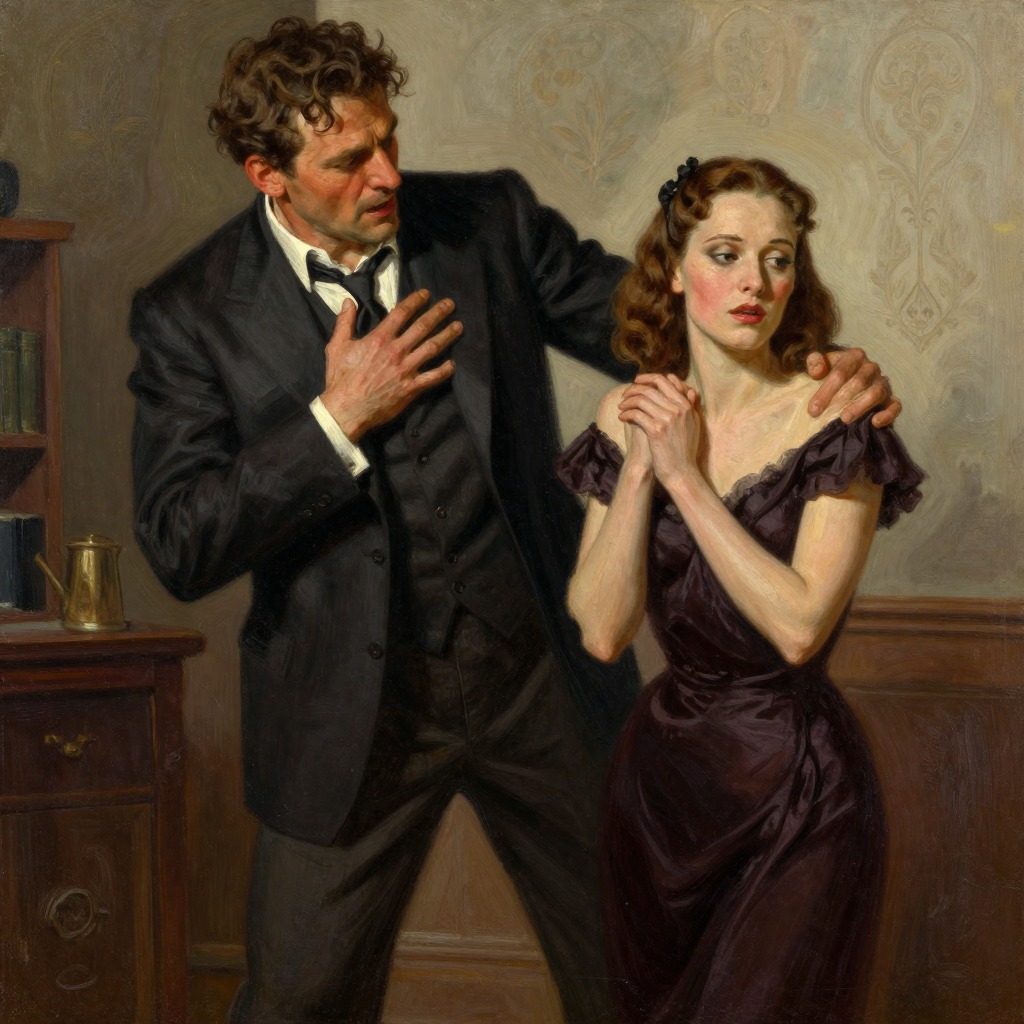
Stanley Rapes Blanche
A Streetcar Named DesireStanley Rapes Blanche is the pivotal act of sexual violence in Tennessee Williams' A Streetcar Named Desire, occurring in Scene Ten after Blanche's final defenses have crumbled and Stanley's dominance is fully asserted. This event marks the irreversible destruction of Blanche's fragile psyche and the ultimate triumph of Stanley's brutal, animalistic force over her refined but decaying world, sealing the play's tragic trajectory.
Background and Context
The rape is the culmination of a long-simmering antagonism between Blanche DuBois and Stanley Kowalski, rooted in their fundamentally opposed worldviews. Blanche represents a dying aristocratic order of illusion, poetry, and gentility, while Stanley embodies a raw, primal masculinity that values power, pleasure, and possession. Throughout the play, Stanley has systematically dismantled Blanche's lies and pretenses, exposing her past as a prostitute at the Flamingo Hotel and her affair with a seventeen-year-old student that led to her dismissal from teaching. He has also destroyed her chance at marriage by revealing her history to Harold Mitchell (Mitch), who confronts and rejects her in Scene Nine. By the time of the rape, Blanche is utterly isolated: Stella Kowalski is in labor at the hospital, Mitch has left in disgust, and Blanche's last desperate fiction—a telegram from the wealthy Shep Huntleigh inviting her on a Caribbean cruise—has been exposed as a lie. Stanley, returning home alone with Blanche, finds her dressed in a soiled white satin evening gown and a rhinestone tiara, drunkenly performing for imaginary admirers. He immediately recognizes her vulnerability and the opportunity to assert total control.
The Assault
Stanley enters the apartment in his vivid green silk bowling shirt, having had several drinks, and brings quart beer bottles. He taunts Blanche about her invented millionaire, mocking her pretensions and her "worn-out Mardi Gras outfit." When she tries to call Western Union for help, he deliberately replaces the telephone receiver, cutting off her last link to the outside world. The stage directions describe the room filling with "lurid reflections" and "grotesque and menacing" shadows, while the "blue piano" music swells into the roar of an approaching locomotive. Blanche, terrified, tries to flee, but Stanley blocks her path. She smashes a bottle on the table and threatens him with the broken end, but he disarms her, catching her wrist and declaring, "We've had this date with each other from the beginning!" He then picks up her inert figure and carries her to the bed. The scene ends with the sound of "hot trumpet and drums from the Four Deuces" as the rape occurs offstage, its horror conveyed through sound and symbolic imagery rather than explicit depiction.
Consequences and Aftermath
The rape shatters Blanche's already tenuous grip on reality. In the weeks that follow, she descends into a complete psychotic break, unable to distinguish between her fantasies and the brutal truth. When the Doctor and Matron arrive to take her to a state institution in Scene Eleven, she initially resists, but the Doctor's gentle manner allows her to leave with a semblance of dignity, uttering her famous line, "Whoever you are—I have always depended on the kindness of strangers." Stella, who has given birth to Stanley's child, chooses to believe her husband's denial of the rape rather than face the truth, a decision that allows her to remain in her marriage but condemns her sister to a life of institutionalization. The play ends with Stanley's sexual reassertion of control over Stella, as he kneels beside her and murmurs "Now, honey. Now, love," while the poker game resumes, signaling the restoration of the brutal, patriarchal order that Blanche's presence had threatened.
Thematic Significance
The rape is the play's most extreme expression of the conflict between illusion and reality, civilization and primal instinct. Stanley's act is not merely a crime of passion but a deliberate assertion of power over everything Blanche represents: art, poetry, refinement, and the possibility of transcendence. By destroying her physically and psychologically, Stanley ensures that his world—one of raw appetite, male dominance, and the survival of the fittest—will prevail. The event also exposes the complicity of those around Blanche: Stella's willful blindness, Mitch's cowardice, and the institutional violence of the state that ultimately confines her. In this sense, the rape is not an isolated act but the logical endpoint of a society that cannot accommodate Blanche's fragility, her sexuality, or her refusal to conform to its brutal realities. Williams presents the assault as both a personal tragedy and a social indictment, forcing the audience to confront the cost of a world that values strength over tenderness and truth over compassion.