Alpha and Luna Succession Ceremony
A Werewolf Thing: A Rejected Mate Werewolf RomanceThe Alpha and Luna Succession Ceremony is the public transfer of pack leadership to Ashton Smith and Saphira Richards. Its decisive significance is that it joins political succession to intimate recognition: Ashton becomes alpha, while his mate is formally announced as Luna. The ceremony therefore does more than replace an older leader. It gives public, collective form to the couple’s restored bond and makes Saphira’s identity part of the pack’s institutional future.
Causes and Background
The succession follows a period in which Saphira and Ashton’s relationship has been unsettled and then repaired. Ashton had rejected Saphira, but later asked her to undergo the full moon ritual, which restores the mate bond when the rejecting mate marks the rejected partner at the height of the closest full moon after the rejection. The ceremony consequently occurs against the background of reconciliation rather than uncomplicated romance. Saphira wants the bond restored, and the later succession gives that private restoration a political consequence.
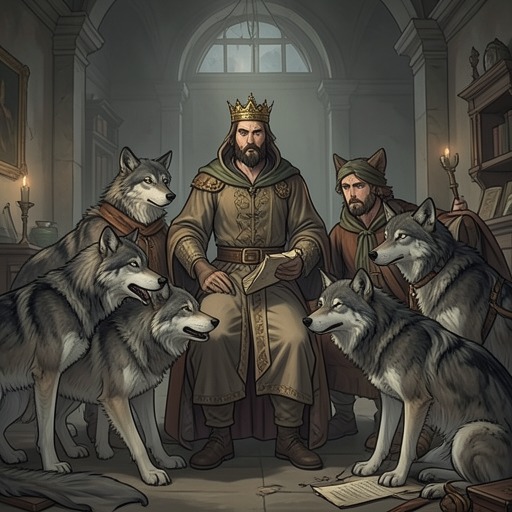
The ceremony is also connected to the wider obligation surrounding Saphira and Trevor Richards. Their grandfather summons both twins to perform the Færy ritual, explaining that they were expected to lead their people when they reached eighteen, but that their mother’s departure changed the circumstances. This parallel inheritance claim places Saphira between several forms of authority: she is a member of the family expected to lead the Færy, Ashton’s mate within the wolf pack, and the woman about to be made Luna. The succession is thus part of a larger story in which family history, supernatural identity, and public leadership repeatedly overlap.
Course of the Ceremony
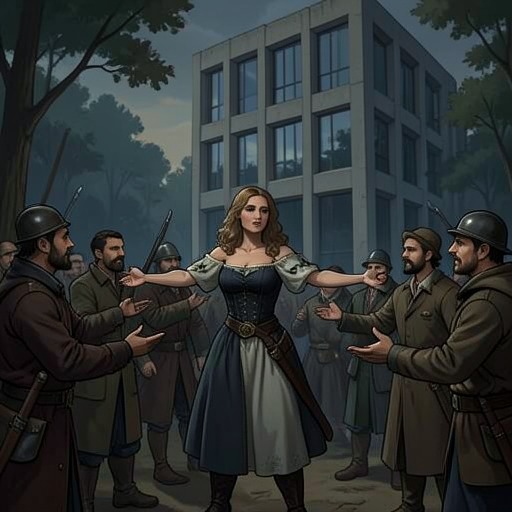
The event takes place on the night of the Luna and alpha ceremony, after Saphira and Ashton have been home for five days. Saphira is more nervous than she expected. She helps Ashton fix his tie, notices that he watches her intently, and then takes his hand as they walk toward the podium in the backyard. The clothing and the movement toward the podium give the scene a carefully prepared public character, while Saphira’s anxiety shows how exposed the transition makes her feel.
As they pass through the assembled pack, Saphira struggles not to panic, phase, and charge into the woods. Her fear is not presented as doubt about Ashton alone; it is fear of being publicly named and required to inhabit an unfamiliar office. She looks toward Trevor, who answers her nervousness with a broad smile and two thumbs up. His silent encouragement gives the ceremony a family dimension and helps connect Saphira’s new position to the twin relationship that has supported her elsewhere in the plot.
David, the current alpha and Ashton’s father, presides over the announcement. He declares that the pack will have a new alpha and Luna, and the crowd answers with cheers and wolf whistles. He then names Ashton Smith as the new alpha and announces that his mate, Saphira Richards, will join him as Luna. The declaration is performative in the strongest sense: the words do not merely describe a change already complete but publicly enact the transfer before the pack’s collective witness.
Participants and Stakes
David’s role as the soon-to-be former alpha makes the succession an orderly generational transfer. Authority moves from father to son rather than being seized in a visible contest. His pride in the announcement also frames Ashton’s elevation as an occasion of communal approval. The crowd’s loud response turns private inheritance into social legitimacy, showing that the new leadership depends not only on bloodline or mate status but also on recognition by the pack.
Saphira’s position is more complicated than the title alone suggests. She is announced as Luna because she is Ashton’s mate, yet the moment requires her to accept a public responsibility she finds nerve-racking. Her reaction reveals that succession is embodied: she must walk beside Ashton, endure the attention of the crowd, and allow a collective institution to redefine how others see her. The ceremony transforms her from a woman negotiating a damaged relationship into a visible partner in rule.
The later consequences clarify that the title does not erase conflict over Saphira’s agency. After her pregnancy is revealed, Trevor warns that she cannot lead an army because she is carrying a child. Saphira responds that she is half Færy and can cast a protective charm, then insists that if she and Trevor are the chosen figures in the prophecy, she will fight whether he approves or not. Her argument shows that becoming Luna does not make her passive or remove her desire to act. Instead, leadership becomes a contested question involving pregnancy, protection, prophecy, and her own authority to decide what risks she will take.
Consequences and Aftermath
The ceremony gives Saphira a new source of confidence through her connection with Ashton. When he is beside her and their eyes meet, she knows she will be all right and believes she can be a good Luna. Her certainty is relational, but it is not merely dependent: the public role becomes imaginable because she interprets their partnership as a basis for her own capacity to lead. She also recognizes the intensity of her feelings for Ashton, describing her love as undeniable, unconditional, and dangerous.
The succession is followed by a period in which care and danger remain intertwined. Saphira’s pregnancy makes the leadership arrangement carry future dynastic implications, while her insistence on participating in the anticipated fight challenges attempts to protect her by excluding her. The protective impulse also appears in Ashton’s later reunion with her: when Saphira throws herself into his arms, he wraps them around her carefully because of her stomach. Affection is therefore expressed through physical caution, but the broader narrative refuses to let caution settle the question of Saphira’s choices.
The ceremony’s importance extends into the family future. Years later, Saphira is shown in a domestic scene with her six-year-old daughter, Crystal. The image of Saphira as a mother does not cancel her earlier public identity as Luna; it places succession, pregnancy, and family continuity within the same long arc. The ceremony becomes one point in a chain linking the pack’s present leadership to the next generation.
Narrative Significance
As an event, the Alpha and Luna Succession Ceremony joins three kinds of transformation: Ashton’s elevation, Saphira’s public acceptance, and the conversion of a restored mate bond into a governing partnership. Its structure moves from private preparation to collective declaration. Saphira fixes Ashton’s tie and walks with him; David speaks before the crowd; the pack answers; and Saphira’s inward panic gives way to confidence when she looks at Ashton. The scene’s value shift is from anxious exposure to publicly affirmed belonging.
The ceremony also establishes a recurring contrast in the story’s treatment of leadership. Rituals promise stability by naming identities and placing them before witnesses, but the people receiving those identities remain physically vulnerable, emotionally changeable, and capable of resisting the roles others assign them. Saphira can be formally made Luna and still argue over whether she may fight. She can be pregnant and still insist on political and military agency. In that tension, the ceremony becomes more than a coronation: it is the moment when public authority is granted, while the struggle over how that authority will actually be lived remains open.