Færy Clan
A Werewolf Thing: A Rejected Mate Werewolf RomanceFæry Clan is the hereditary magical community that gives Saphira Richards and Trevor Richards their most complicated inheritance: they are both half werewolf and half witch, while remaining connected to their mother’s faery lineage. The clan is organized through blood, succession, and ritual rather than ordinary family authority. Its traditions determine who may lead, how moral fitness is judged, and how the community responds when its boundaries meet werewolves, vampires, and Banshees.
Identity and Hereditary Structure
Færy Clan is presented as a community with an inherited leadership structure. Saphira Richards’s mother had been the clan’s leader, but after her death leadership passed to her sister, Rose, whom Saphira and Trevor Richards rarely discussed. Rose is described as two years younger than Saphira’s mother, with black hair and green eyes, and her recognizable faery scent makes her return emotionally immediate for Saphira. The reunion reveals that clan identity is not merely institutional: it is carried through kinship, memory, blood, and a bodily sense of belonging.
Saphira and Trevor are expected to inherit a position that their mother’s death interrupted. Their grandfather explains that they were supposed to lead the clan when they reached eighteen, but that circumstances changed after their mother left them. The clan therefore treats age, descent, and family continuity as political qualifications. At the same time, the siblings’ mixed nature complicates any simple species classification. They are half werewolf and half witch, and the wider story repeatedly places Færy Clan within a world where supernatural peoples are divided into competing categories.
Leadership and the Færy Ritual
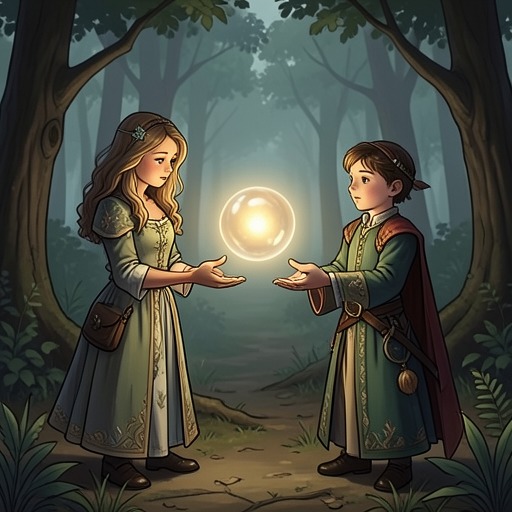
The central mechanism of Færy Clan succession is the færy ritual, through which leadership passes from one person to another. The ritual is not a ceremonial formality alone; it is designed to test whether a prospective leader possesses a pure heart and good intentions toward the community. The ancestors enchanted 100 cups for this purpose, and these vessels later became known as the ancient cups. During the ritual, the original leader or leaders place a drop of blood into an ancient cup, followed by a drop from the new leader.
The cup’s color makes an inward moral judgment visible. If the new leader is pure-hearted and intends the community’s good, the cup glows a piercing blue. If the candidate has a dark heart and dark intentions, it glows a raging red. Blood thus joins ancestry to ethical scrutiny: descent may place someone before the cup, but it cannot by itself guarantee a legitimate succession. The ritual converts leadership into a public test witnessed by the clan, making private character consequential for collective government.
Sondra passes this test when her blood enters the cup and it immediately glows piercing blue. The clan responds with cheers, and Sondra smiles broadly. She is designated the new leader of the clan once she reaches eighteen. Her successful succession confirms that the ritual can authorize a future leader before that leader assumes full office, while also establishing the community’s confidence in her moral character.
Conflict, Boundaries, and Inter-Species Relations
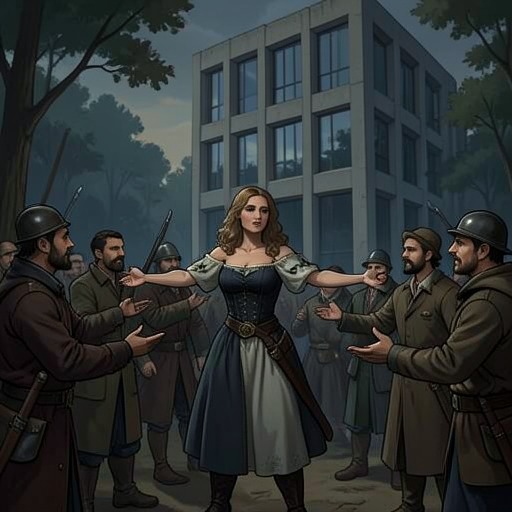
Færy Clan exists within a dangerous interspecies order. The arrival of the Banshees interrupts the celebration of Sondra’s succession, turning a moment of communal continuity into an attack. Screams erupt throughout the village because Banshees and the clan’s people are natural foes. A Banshee’s scream is described as its strongest defense, reaching a pitch that can kill those exposed to it for too long; ordinarily, such a scream is heard before someone dies. The attack therefore places the clan’s ritualized political future against an immediate threat of physical annihilation.
The clan’s boundaries also become visible through its encounters with other species. When a vampire arrives with Saphira’s father and Simon List, Ashton Smith detects her nature and adopts a protective stance. Simon List responds in kind, but protects the vampire, revealing that she is his mate. This encounter challenges the expected hostility between species: the vampire is treated as a danger by one member of the werewolf-centered community, while Simon’s bond gives him a reason to defend her. Færy Clan consequently belongs to a world whose species divisions are repeatedly reinforced and disrupted by intimate relationships.
The community’s inherited identity is also entangled with the larger prophecy of war. The prophecy says that a conflict between vampires and werewolves will occur when the sun is black and stars cross the sky, with the war deciding which race becomes dominant. It further states that two hybrids of the same origin will lead the winning side. Because Saphira and Trevor share a hybrid origin, Færy Clan’s bloodline becomes connected to a conflict extending far beyond its own village. Their mixed ancestry is not simply a private family fact; it may determine the outcome of an interspecies war.
Pregnancy, Leadership, and Personal Agency
Færy Clan’s political inheritance intersects with Saphira’s pregnancy. When Saphira tells Trevor that she is pregnant, she explains that neither of them can afford serious injury because harm to him might affect her baby. Later, Trevor argues that she must not fight because she is pregnant and therefore cannot lead an army. His concern turns pregnancy into a practical restriction on political and military action, especially when the prophecy appears to identify the siblings as the figures who will lead the winning side.
Saphira rejects that restriction. She insists that, if she and Trevor are the chosen hybrids, she will fight whether Trevor approves or not. She also invokes her half-faery identity as a possible source of protection, saying that she can cast a protective charm on herself. The exchange exposes a tension within Færy Clan’s inheritance: the community’s traditions position bloodline as a source of authority, while the circumstances of war and reproduction invite others to regulate the body of the person expected to exercise that authority.
The clan’s future is eventually imagined through family as well as formal succession. Years later, Saphira is living as a mother to her six-year-old daughter, Crystal, whom she addresses affectionately in the kitchen while preparing food. This domestic scene does not erase the clan’s political and species conflicts, but it gives its inherited structures a generational continuation. The future of Færy Clan is represented not only by cups, blood, and leadership titles, but also by a child growing into the next link in a contested lineage.
Narrative Significance
Færy Clan functions as both a political community and a test of whether inherited identity can remain stable in a world built on mixed blood and cross-species bonds. Its ancient cups promise an objective distinction between benevolent and dangerous leadership, yet the clan’s descendants do not fit neatly into a single species. Saphira and Trevor’s werewolf-witch heritage, Simon List’s relationship with a vampire, and the prophecy’s emphasis on hybrid leaders all make biological and social boundaries unstable.
The clan’s rituals give supernatural power a civic form. Succession requires public recognition, blood exchange, and moral evaluation, while its interruption by Banshees demonstrates how fragile institutional continuity becomes under violence. Færy Clan is therefore not background mythology alone. It is the structure through which family history becomes political obligation, through which species conflict enters local life, and through which Saphira’s resistance to restrictions on her pregnancy and wartime role acquires broader significance.