Faery Search Ritual
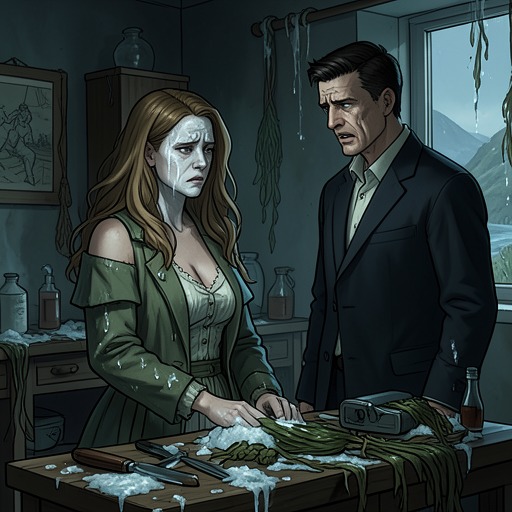
A Werewolf Thing: A Rejected Mate Werewolf RomanceFaery Search Ritual is a dangerous faery practice for locating a member of the faery community. In the crisis surrounding Saphira’s disappearance, Trevor identifies it as the only available way to search for his twin, making the ritual a decisive intersection of supernatural kinship, rescue, and personal sacrifice.
Purpose and Circumstances
The ritual is introduced when Trevor and the others are trying to determine what can be done for Saphira. Trevor explains that she is not merely a blood relative: she is his twin, and their connection extends beyond ordinary family ties. That bond gives the search its urgency and its supernatural logic. The ritual is therefore not a general method of investigation but a practice directed toward finding one of the faery’s own, with Trevor’s twin connection supplying the reason he believes he must undertake it.
The danger is heightened by the surrounding uncertainty. Ashton claims to have seen Trevor only a few minutes earlier, but the statement does not fit what the others understand to be happening, producing confusion rather than reassurance. Against that atmosphere of incomplete information, the Faery Search Ritual offers a possible route to knowledge. It promises direction precisely when ordinary observation has become unreliable, but it also demands that Trevor risk himself to obtain it.
Ritual Operation and Cost
Trevor states that faeries can perform the ritual when searching for one of their own and insists that he must use it. The practice is not presented as effortless magic. Trevor explains that only full faeries have ever performed it, establishing a restriction on who may safely or legitimately carry it out. His explanation also makes the ritual’s cost explicit: it drains the practitioner’s energy and power, and if it continues for too long, it can cause death.
This limitation gives the ritual a threshold quality. It separates those with the necessary faery status from those who cannot perform it, while turning the duration of the search into a direct measure of physical danger. The ritual’s effectiveness is thus inseparable from expenditure. To seek another faery, Trevor must spend the very strength that allows him to continue searching, creating the possibility that success could arrive only after the searcher has been fatally depleted.
Trevor’s Decision and the Twin Bond
Trevor’s response is not tentative. Once Saphira’s absence becomes the central problem, he says that he must perform the ritual. His decision follows from the twin bond rather than from detached duty. He regards Saphira’s location as a personal responsibility that cannot be transferred to someone else, even though the known cost makes the choice dangerous.
The bond also carries a further consequence: Trevor and Saphira are connected so completely that if one dies, the other dies as well. This rule changes the ritual from an act of rescue into a form of shared survival. Trevor is not simply risking his life to bring Saphira home; he is responding to a threat that endangers both twins. His willingness to attempt the ritual therefore combines love, obligation, and self-preservation, while the same connection that gives him a reason to search makes delay increasingly perilous.
Narrative Significance
The Faery Search Ritual expands the story’s treatment of identity beyond individual bloodline. Trevor and Saphira are both described as half werewolf and half witch, while their later crisis also invokes faery inheritance and faery ritual practice. Within that layered supernatural world, the search ritual emphasizes that belonging is recognized through more than ancestry: it is also experienced through bodily connection, communal status, and inherited power.
The ritual further contrasts public ceremonies with private sacrifice. The faery ritual demanded by Trevor and Saphira’s grandfather is connected to leadership and the expectation that they will lead once they reach eighteen. The Faery Search Ritual serves a different purpose. It does not publicly install anyone in authority; it tests whether Trevor will expend himself to recover a threatened member of his own family. Its power is intimate rather than ceremonial, and its consequence is measured not in status but in survival.
As a narrative device, the ritual converts absence into an ethical choice. Saphira’s disappearance cannot be treated as a problem that others solve while Trevor remains safe. Finding her requires a practitioner with the right faery qualification, and Trevor’s twin bond makes him the character most compelled to act. The ritual consequently embodies the story’s recurring idea that supernatural relationships are both sources of power and sources of vulnerability: kinship can reveal where to look, but it can also demand a potentially fatal price.