Impending vampire-werewolf war
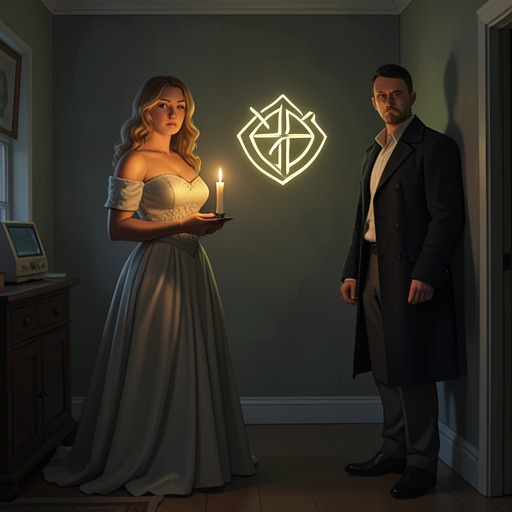
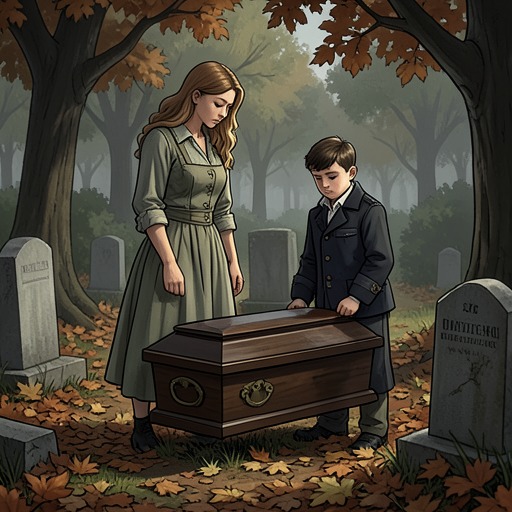
A Werewolf Thing: A Rejected Mate Werewolf RomanceThe impending vampire-werewolf war is the central future crisis implied by the prophecy surrounding Saphira Richards and Trevor Richards. It is presented not merely as a battle between two supernatural communities but as a struggle over which species will become dominant. What begins as information about a remote prediction gradually becomes an immediate political danger, forcing the family to reconsider pregnancy, leadership, protection, and the responsibilities attached to hybrid identity.
Prophecy and Political Background
The prophecy states that a war between vampires and werewolves will occur when the sun is black and stars are crossing the sky. Amanda explains that the conflict is destined to determine which race will become the dominant species. The prophecy therefore gives the war both a supernatural timetable and a political objective: the outcome will not simply settle a personal feud, but establish the hierarchy between two entire peoples.
The prophecy also identifies two hybrids of the same origin as the leaders of the winning side. Amanda tells Saphira that a hybrid is a being of two origins and that Saphira and Trevor fit this description. Their possible status changes the meaning of their family bond. They are not only twins linked by unusual shared sensations; they may be the figures around whom the fate of vampires and werewolves will turn. The prophecy thus converts a private identity into a public and species-wide burden.
The apparent astronomical sign is initially displaced into the distant future. Amanda says that a solar eclipse and meteor shower occurring on the same night should not happen for another thousand years. That explanation offers temporary distance, but it does not remove the danger. She then reveals that a solar eclipse is expected in March and that both councils are discussing the possibility that a powerful sorcerer will deliberately cast down a meteor shower on that night. Natural timing and political intervention consequently become difficult to separate: the event need not be naturally produced for the factions to treat it as the prophecy’s fulfillment or as a reason to begin fighting.
From Distant Prediction to Imminent Threat
Amanda further explains that something very bad will happen to the two hybrids, causing a power increase within them. The event will make them sense that war is coming and help prepare them for it. This condition makes the prophecy self-intensifying. The hybrids are not merely selected to lead after the war begins; a traumatic or disastrous event may awaken the power and knowledge required to recognize their role before the conflict starts.
Saphira’s uncertainty becomes sharper when she realizes that the predicted signs have already been connected to her family’s tragedy. While riding with Trevor, she asks whether the eclipse and meteor shower occurred on the day their father died. Trevor confirms that they did and adds that Saphira was unconscious at the time. The confirmation collapses the boundary between prophecy and established history. The required celestial combination has apparently already occurred, and the terrible event associated with the possible hybrids has also happened. Saphira therefore concludes that Amanda’s statements may all be true and asks whether she and Trevor are the hybrids described by the prophecy.
Trevor does not dismiss the possibility. He says that if Amanda is right and they are the chosen figures, they will fight. His response marks a transition from speculation to conditional commitment. The war remains uncertain in its exact form, but the siblings now treat preparation as a duty rather than an abstract concern. Trevor subsequently apologizes and admits that he is fairly sure they are the hybrids Amanda meant, that war may begin at any moment, and that they will be responsible for an entire species. He asks for Saphira’s help as his sister, turning the prophetic obligation into a shared family undertaking. The narration then gives the crisis its clearest immediate formulation: a war is coming, and it is coming soon.
Pregnancy, Protection, and the Question of Leadership
The impending war is inseparable from Saphira’s pregnancy. When Trevor is preparing to advance against danger, Saphira tells him that she is pregnant and that neither of them can afford serious injury because harm to him might affect the baby. Her confession introduces an unborn child into the prophecy’s chain of consequences. Saphira’s body becomes simultaneously a site of new life, a source of vulnerability, and a possible object of political concern.
Trevor responds by insisting that Saphira must not fight. His argument is direct: because she is pregnant, she cannot lead an army. Protection thus becomes a form of restriction. Trevor’s concern is grounded in the danger to Saphira and the baby, but it also challenges her potential authority if she and Trevor are truly the prophetic hybrids. The war threatens to define her as a leader while her pregnancy is used to define her as someone who must remain outside the battlefield.
Saphira rejects that limitation. She argues that, as half faery, she can cast a protective charm on herself, but Trevor still considers the risk unacceptable. She then declares that if they are the chosen ones, she will fight whether he approves or not. Her position establishes a conflict between bodily protection and political agency. Pregnancy does not erase her claim to participate; instead, it makes the terms of leadership more contested, since the future of the baby and the future of the supernatural species are placed in the same argument.
Species Conflict and Social Boundaries
The war is framed through sharp distinctions among supernatural groups. Amanda describes an organized vampire society governed by a council of elders responsible for vampire safety and the safety of humans living in areas occupied by vampires. The council also protects the secrecy of vampire existence. Its members possess abilities beyond those of ordinary vampires, including the power to erase human memories in order to preserve that secrecy. This institutional background gives the approaching conflict a political infrastructure: the vampires are not an undifferentiated threat or crowd, but a governed community with powerful authorities and rules for managing its relations with humans.
The werewolf side is likewise organized through packs and protective loyalties. During the Banshee attack, Saphira insists that her cousin Sondra is family and that family cannot be left behind or kidnapped. That principle is not identical to the vampire council’s secrecy law, but it shows how collective identity motivates action within the werewolf-centered world. The story also repeatedly places species boundaries under pressure. Saphira takes a protective stance when she realizes that a visitor is a vampire, while Simon List takes the same stance to protect the vampire because she is his mate. Their opposing defensive positions reveal that intimate bonds can cross the hostility dividing species.
The earlier contrast between Saphira and Ashton Smith also helps establish the social pressure surrounding the crisis. Ashton is introduced as a rebellious alpha’s son associated with partying, drug use, and constantly changing girlfriends, while Saphira is shy, privately witty, and burdened by a dark past. Their mate relationship is initially expected to impose love, yet Ashton rejects her and tells her that he will never love her. The rejection demonstrates that supernatural destiny does not automatically create social harmony. Against that background, the prophecy’s demand that hybrids lead a species-wide war makes chosen identity appear as both privilege and coercion.
Consequences and Continuing Future
The impending war changes how Saphira and Trevor understand their immediate choices. Trevor’s promise to fight if necessary acknowledges the scale of their possible responsibility, while Saphira’s insistence on fighting preserves her agency against the protective restrictions imposed by pregnancy. Their exchange does not resolve whether the prophecy is certain, whether the meteor shower will be engineered, or how the two hybrids will lead. It does establish that preparation has become unavoidable in their minds.
Ashton tries to temper the certainty of the prophecy by telling Saphira that everything will turn out all right and that they cannot be sure the prophecy is true. He immediately recognizes the danger if the eclipse and meteor shower occur together: people may come after Saphira and Trevor because no power wants its domain tested. His reassurance therefore contains an acknowledgment of political retaliation. Even uncertainty becomes dangerous when councils and rival species are prepared to interpret celestial signs as proof.
The war’s consequences extend beyond the prospective fighters and into the next generation. Years later, Saphira is raising her six-year-old daughter Crystal and her son Clayton with Ashton. When Saphira tells Crystal that her future mate may be high-ranking and that she might become a Luna, Ashton objects from the doorway. His interruption keeps questions of rank, mating, gender, and succession alive within the family’s ordinary domestic life. The future war is not shown as a completed battle in the available account; instead, its significance persists as a threat that organizes family expectations and the imagined political future of the children.
The state of impending war therefore operates as a pressure on every level of the narrative. It divides vampires and werewolves while exposing the inadequacy of absolute species boundaries; it turns a celestial coincidence into a possible instrument of political violence; and it makes Saphira’s pregnancy a battlefield over protection and authority. Most importantly, it forces Saphira and Trevor to confront a role they have not freely chosen. Whether or not they are the prophetic hybrids, the belief that they may be is already changing their conduct, their family obligations, and the balance of power that surrounds them.