Ravenous Pack Attack on MoonRaiders
A Werewolf Thing: A Rejected Mate Werewolf RomanceThe Ravenous Pack Attack on MoonRaiders is the decisive military rupture in which the hostile Ravenous pack invades Ashton Smith’s territory during a moment of public transition. The attack interrupts the celebration of Ashton’s accession as alpha and Saphira Richards’s installation as Luna, sends the pack into the forest, and turns questions of leadership, loyalty, protection, and survival into immediate physical conflict. Its aftermath is marked by dead and injured werewolves, Simon List’s apparently lifeless body, and a growing sense that the assault belongs to a larger vampire–werewolf crisis rather than to an isolated feud.
Causes and Background
The attack arises from the long-standing hostility between the Ravenous pack and Ashton Smith’s pack. When Ashton arrives at the pack house, he announces that the Ravenous pack has attacked and is already close enough to threaten the territory. The urgency of his warning establishes the attackers as an organized force making a deliberate incursion, not a chance encounter in the woods. The defenders therefore have to act before the invaders reach the heart of their land.
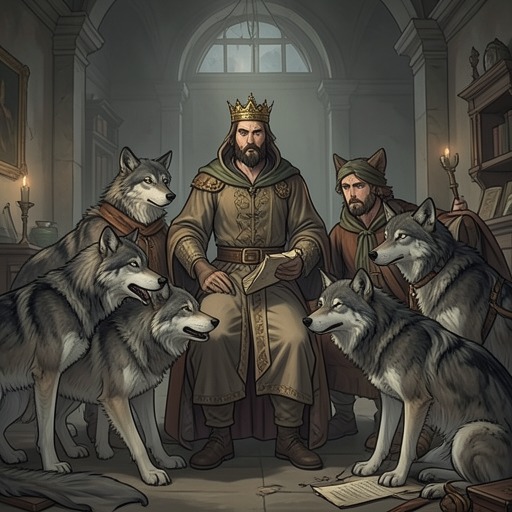
The assault also occurs against the background of a changing political order. Earlier that day, David publicly declares that Ashton Smith will become alpha and that his mate, Saphira Richards, will join him as Luna. The crowd answers with cheers and wolf whistles, making the attack a violent interruption of a communal ceremony. A day intended to confirm continuity and shared allegiance instead tests whether the new leadership can protect the people whose recognition has just been given.
The wider supernatural setting gives the attack additional significance. A prophecy states that a war will occur when the sun is black and stars cross the sky, and that vampires and werewolves will fight to determine which race becomes dominant. The Ravenous assault is not identified as that final war, but it supplies an early, concrete form of the interspecies violence that the prophecy anticipates. The attack therefore connects local pack rivalry with an impending conflict whose stakes exceed one territory.
Course of the Assault
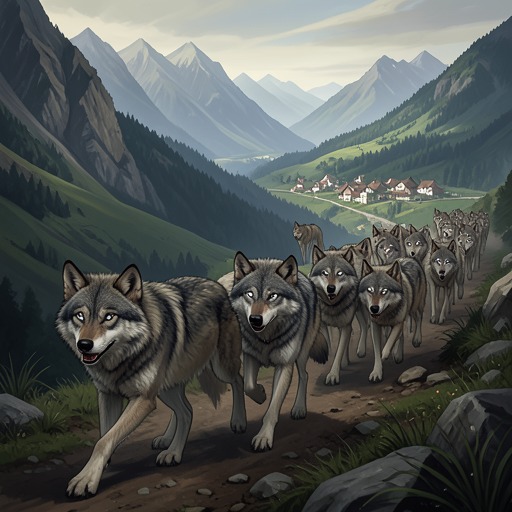
Ashton orders the pack warriors to ready themselves and cut the attackers off in the forest before they can reach MoonRaiders territory. Pack members rush outside, phase into wolves, and charge toward the woods. The collective movement gives the defense a disciplined, almost ritual force: the newly recognized alpha’s command is immediately translated into the bodies of the pack, and the pack’s response becomes proof that his authority is operational rather than merely ceremonial.
Saphira Richards refuses to remain safely behind. She runs toward the area where the attack is taking place, searching for Ashton because she wants both to speak sense into him and to ensure that he does not act recklessly. Her decision places her inside the same danger she is trying to manage. Protection in this scene is reciprocal and unstable: Ashton leads the warriors toward the threat, while Saphira follows in order to protect him and to preserve the bond that links their personal lives to the pack’s political future.
When Saphira reaches the battlefield, the opposing forces are immediately distinguishable. The MoonRaiders wolves appear clean and healthy, while the Ravenous wolves look dirty and sick. Their most striking difference is in the eyes: MoonRaiders wolves retain the eye color of their human forms, whereas the Ravenous wolves have a sickly pale white color regardless of their human appearance. The description turns physical appearance into a visual system of classification. The enemy is presented not only as hostile but as visibly marked as diseased or degraded, a contrast that makes the battle legible before either side attacks.
Ashton charges into the fight. Saphira prepares to lunge, but a wolf beside her gives a deadly growl, leaps onto her, and bites down on her neck before she can turn. The attack thus collapses the distance between battlefield observer and combatant. Saphira is not merely witnessing Ashton’s leadership; she becomes one of the assault’s immediate targets, and the bite makes the danger personal, bodily, and potentially fatal.
Casualties and Immediate Consequences
The battle produces casualties among the werewolves. As the fighting continues, Saphira sees several limp bodies on her way back from the combat zone. The image replaces the earlier public noise of ceremony and mobilization with the unmistakable evidence of loss. The pack’s charge has not produced a clean victory, and the territory is no longer a secure political space: it has become a place where allegiance is measured against the possibility of death.
Saphira also encounters the wolf whose howl drew attention during the retreat. After searching for signs of life, she finds none and recognizes the brown werewolf as Simon List. Simon’s apparent death is especially consequential because his identity is tied to a cross-species relationship. Earlier, Saphira recognizes a vampire as Simon’s mate when Simon instinctively takes a protective stance beside her. His collapse therefore threatens not only a pack member but a bond that challenges the hostility dividing werewolves and vampires. The casualty gives the attack an intimate consequence, turning an abstract species conflict into the possible destruction of a particular relationship.
The attack’s effects continue beyond the battlefield. The surrounding narrative repeatedly returns to injury, care, and uncertainty: an arrow coated in poison leaves Saphira in danger, Trevor Richards lies in a condition severe enough that Carmen has not slept and barely eats, and Saphira later learns that she is pregnant. These details are not all caused by the attack itself, but they show the condition into which the attack thrusts the characters. Leadership now has to operate through wounded bodies, exhausted caregivers, and competing demands for protection.
Leadership, Protection, and War
The assault tests the meaning of Ashton Smith’s new title. David’s announcement makes Ashton alpha before the crowd, but the Ravenous arrival immediately requires him to behave as an alpha: he identifies the danger, issues a tactical order, and personally enters the fight. Authority is therefore presented as an embodied burden. It is not secured by ceremony alone; it must be enacted in the forest, where command exposes the leader to the same violence faced by the pack.
Saphira’s role is equally complicated. As Luna, she is part of the newly declared leadership, yet she enters the battle without waiting for permission and seeks Ashton in the belief that he may endanger himself. Later, Trevor Richards objects that she cannot lead an army because she is pregnant. Saphira answers that her half-faery nature will allow her to cast a protective charm. Her response reveals the conflict between protection as care and protection as restriction. Trevor’s warning recognizes a real physical risk, while Saphira insists that pregnancy does not erase her authority or her capacity to act.
The battle also exposes the limits of species-based judgment. The Ravenous pack is described through unhealthy bodies and pale eyes, while the vampire associated with Simon List is initially met with Saphira’s protective stance. Yet Simon protects the vampire rather than attacking her, revealing that matehood can override inherited species hostility. The attack’s logic is collective and racialized, but the relationships surrounding it are individual and disruptive. They make the categories of ally and enemy less stable than the battle lines suggest.
Narrative Significance
The Ravenous Pack Attack on MoonRaiders functions as both a territorial crisis and a foreshadowing mechanism. It converts the prophecy of a future vampire–werewolf war from distant exposition into lived experience: packs already mobilize, bodies already fall, and supernatural identity already determines who is presumed dangerous. The attack also demonstrates that the conflict cannot be contained by ceremonial unity. The new alpha and Luna are publicly affirmed, but their authority begins under siege.
Its most lasting dramatic effect is the way it binds public history to private vulnerability. Ashton’s accession, Saphira’s position beside him, Simon List’s bond with a vampire, and the future represented by Saphira’s pregnancy all become entangled with the violence of the forest. Even the characters’ later gestures of reunion carry the memory of this danger: when Ashton approaches Saphira, she moves into his arms, and he holds her carefully around her stomach. The tenderness does not erase the attack. It shows what the attack makes newly precious, while Simon’s apparent death warns that not every bond will survive the war gathering around them.