Richards Family’s Return to Rome
A Werewolf Thing: A Rejected Mate Werewolf RomanceRichards Family’s Return to Rome is the turning-point journey in which Saphira Richards and Trevor Richards return to their faery family in Rome after years of separation. What begins with an urgent request from their aunt Rose expands into a reunion with their grandmother and grandfather, the recovery of a family history interrupted by their mother’s death, and the revelation that the twins are expected to perform the færy ritual and assume the leadership for which they were originally destined. Rome therefore functions not merely as a destination but as the place where private grief becomes public inheritance.
The Summons and the Journey
Rose sends word that Saphira Richards and Trevor Richards must visit her immediately because the matter is important. The request is striking because Rose and their father had fallen out after Saphira Richards and Trevor Richards’ mother died, leaving the family divided and communication broken. Rose does not ask their father to come; she specifically requests the twins, while allowing them to bring their mates if they wish. Her invitation thus addresses both blood relation and the new relationships the twins have formed outside Rome.
The practical urgency of the summons reinforces its importance. Rose has already mailed four first-class plane tickets, two for the twins and two additional tickets in case they bring their mates. Saphira Richards is told that the flight leaves the next morning at ten thirty, giving the family little time to deliberate. Ashton Smith agrees to accompany Saphira Richards despite initially being surprised by the Rome trip, while Trevor Richards travels with Carmen. The scene on the airplane, where Ashton Smith examines the small bag of salted peanuts supplied by the attendant, places an intimate, ordinary detail beside the extraordinary family summons: the supernatural inheritance is approached through the familiar machinery of modern travel.
Arrival and Family Recognition
At the Rome airport, Saphira Richards recognizes Rose among the waiting crowd by the sign marked “Richards.” Trevor Richards takes responsibility for the luggage, carrying Carmen’s and his own bags as the group approaches her. Rose is described as two years younger than their mother, with black hair gathered into a messy bun and sparkling green eyes. Her physical resemblance and familiar faerie scent immediately connect the present reunion to the absent mother.
Rose’s first response is physical and unmistakably affectionate. She drops the sign and pulls Saphira Richards into a bone-crushing hug, then embraces Trevor Richards. Saphira Richards relaxes when she realizes Rose is not angry that the twins have failed to contact her for so long. The greeting therefore resolves an anxiety that preceded the journey: the twins are not returning to judgment but to recognition. Rose then turns toward Ashton Smith and Carmen, asking who the two people accompanying the twins are. Their presence makes the reunion relationally wider than a simple restoration of the blood family; the partners are brought into the circle as witnesses and potential participants.
The Faery Village and the Recovery of Memory
Saphira Richards follows Rose into the faery village with Trevor Richards beside her, Ashton Smith holding one hand and Carmen holding the other. The village’s tents initially seem unfamiliar, but Saphira Richards accepts them as a tradition that should not be questioned. This detail presents Rome’s faery community as a culture governed by inherited practices rather than by the standards of the world the twins have inhabited elsewhere.
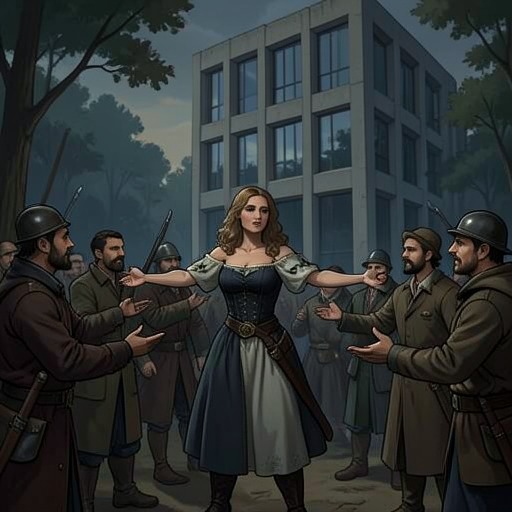
The villagers appear to know that Saphira Richards and Trevor Richards are coming. As they enter, people rush from their tents, and an elderly woman pushes through the crowd. The woman is their grandmother, whose wrinkles and worry lines register both age and the emotional weight of the family’s absence. She pulls the twins into a giant hug and exclaims that her grandchildren have finally come home. Saphira Richards answers her in Italian, saying that she has missed her grandmother greatly, before kissing her cheek. The exchange makes “home” more than a geographic label: it is voiced through language, touch, and the family’s immediate recognition of the twins.
The reunion is not entirely seamless. Their grandmother notices that Ashton Smith and Carmen are confused by the Italian and proposes that everyone speak English. The twins’ return therefore exposes a cultural distance created by their long absence. They belong to the village by descent, but they must still be reintroduced to its people, customs, language, and expectations.
Inheritance, Ritual, and Leadership
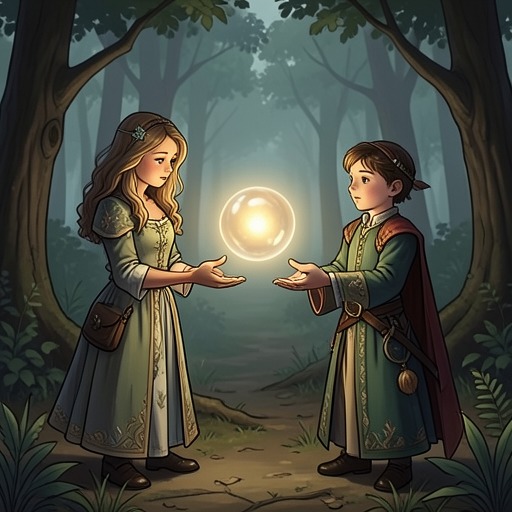
The family’s welcome soon acquires a formal purpose. Their grandfather explains that Saphira Richards and Trevor Richards have been summoned to perform the færy ritual. The twins were supposed to lead their people once they reached eighteen, but their mother’s departure changed that plan. The ritual is consequently tied to a postponed succession: it marks the point at which the family’s interrupted future is restored.
This expectation parallels the other rites surrounding Saphira Richards. During the same broader period, Ashton Smith declares that he wants to undertake the full moon ritual, the ceremony through which a mate accepts a previously rejected mate and restores the mate bond. Later, David announces before a cheering crowd that Ashton Smith will become alpha and Saphira Richards will join him as Luna. These ceremonies place Saphira Richards between two inherited systems of belonging: the faery leadership claimed through her family and the werewolf authority established through her mate bond. Her return to Rome is the moment when the first system becomes explicit.
The journey thus follows a ritual pattern of separation, threshold, and reintegration. Saphira Richards and Trevor Richards leave the world in which their family history has been muted, cross a literal threshold by plane, and enter the village where their identities are publicly confirmed. The tents, the ancestral language, the grandmother’s embrace, and the proposed færy ritual all transform private ancestry into collective status. The return does not erase the years of absence or the damage caused by their mother’s death, but it gives those losses a social setting in which they can be remembered and incorporated.
Memory, Danger, and Renewed Belonging
Saphira Richards recognizes that Rose’s voice resembles their mother’s so strongly that being near her had once been difficult. By the time of the return, she believes she has overcome much of that pain. In Rome, she hopes to learn to handle the resemblance more constructively and to remember her mother without thinking only of the sad parts. The family reunion therefore has an inward consequence as well as a political one: it offers Saphira Richards a way to revise memory from pure bereavement into continuity.
That continuity is tested by the dangers that follow. The arrow that strikes Saphira Richards is revealed to have been coated in poison, turning the return period from a homecoming into a vulnerable stage in the larger conflict. Trevor Richards later lies limp and gravely ill, and Saphira Richards must beg Carmen for more than five minutes alone with him; Carmen has not slept and is barely eating. The family’s restored connections are consequently expressed through care as much as ceremony.
The return also intersects with Saphira Richards’ pregnancy and her continuing determination to act. When Trevor Richards warns that she cannot lead an army because she is pregnant, Saphira Richards answers that she is half faery and can cast a protective charm on herself. Her response shows that the Rome reunion has not made her passive or merely ceremonial. It has placed her within an inherited community while leaving her responsible for deciding how family, pregnancy, leadership, and danger can coexist.
By the later reunion with Ashton Smith, Saphira Richards moves toward him without hesitation and throws herself into his arms; he is careful around her stomach as he says that he missed her. The gesture joins the event’s two central forms of return. Saphira Richards has returned to the family from which she was separated, and she also returns emotionally to the mate relationship that has repeatedly been broken and restored. Rome’s decisive significance lies in this double movement: it reconnects the twins to their lineage while preparing Saphira Richards to carry that lineage forward through ritual, leadership, memory, and chosen bonds.