Saphira Richards
A Werewolf Thing: A Rejected Mate Werewolf RomanceSaphira Richards is the central figure through whom the story connects intimate betrayal, supernatural inheritance, pack identity, and an approaching interspecies war. Initially presented as shy, with a witty humor visible mainly to her friends, she is also a werewolf carrying a dark past and undisclosed secrets. Her decisive significance lies in the contradiction between that guarded beginning and the scale of responsibility eventually placed upon her: she becomes tied to Ashton Smith through a damaged and restored mate bond, belongs to the MoonRaiders pack, inherits a leadership obligation among the Faeries, and is identified as one of the hybrids who may determine the outcome of the vampire-werewolf conflict.
Identity and Background
Saphira is a werewolf, but her identity is not limited to one supernatural lineage. She and her twin brother Trevor Richards are half werewolf and half witch. Their mother had been the leader of the Witches, while her estranged sister assumed that position after her death. This maternal history gives Saphira a political and ritual inheritance that she does not initially discuss openly. When she finally speaks about their powers, the moment is significant because it follows her mother's death and marks a breach in the silence surrounding the twins' heritage.
Her relationship with Trevor is intensified by a twin bond that makes concealment difficult. Trevor can tell when Saphira is lying, senses her sadness, and feels her physical pain when she is injured. Saphira describes the connection as her other half while also admitting that she often dislikes its constant exposure. The bond therefore functions both as emotional protection and as a loss of privacy: even when she claims that nothing is wrong, Trevor can recognize the truth beneath her answer.
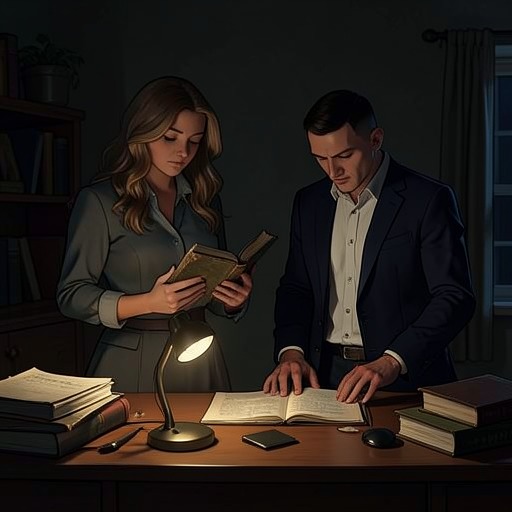
Saphira's first perception of Ashton Smith is filtered through the immediate recognition of her wolf, Tarrina. When their eyes meet, Tarrina howls in joy, identifying him as Saphira's mate. Ashton is presented as the rebellious son of an alpha, someone associated with constant partying, drug use, and a succession of new girlfriends. The contrast between Saphira's reserved character and Ashton's reckless reputation establishes the relationship as a collision between opposites rather than a simple romantic reward.
Rejection, Bond, and Pack Belonging
The recognition of Ashton as her mate does not bring Saphira security. Ashton rejects her with open disgust, telling her that he does not love her and never will before walking away and leaving her alone in the school library. The rejection turns the supernatural promise of destined partnership into a scene of humiliation. Saphira's distress is so visible that she cannot keep it from Trevor, despite trying to lie about being fine.
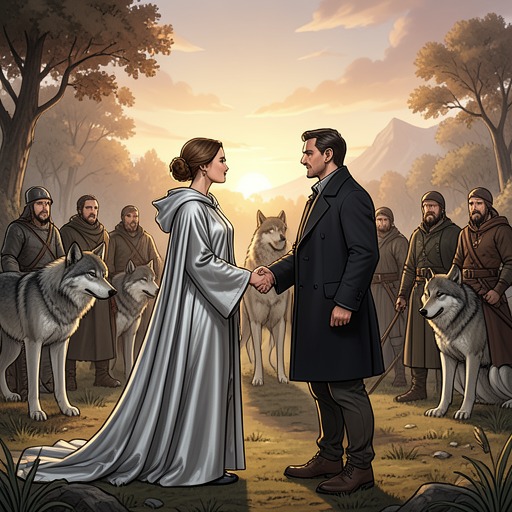
Saphira later accepts membership in the MoonRaiders pack. Alpha David formally asks whether she accepts the role of becoming a pack member after her father and Trevor have completed their vows. The ceremony makes belonging public and institutional rather than merely emotional. She is not simply a solitary werewolf reacting to private romantic pain; she is being incorporated into a collective with its own authority, rites, and expectations.
The relationship with Ashton eventually changes direction. Ashton asks Saphira to undergo the full moon ritual, the prescribed rite by which a mate accepts the mate previously rejected. The ritual must occur at the closest full moon after the rejection, when the rejecting mate marks the other at the moon's highest point, thereby restoring the mate bond. Saphira agrees because she wants the bond restored, and the later account confirms that Ashton marks her. His mark lies just below her collarbone and takes the form of a rose enclosed by spiraling thorn vines, with Ashton's name inside it. The mark turns the earlier rejection into a visible sign of renewed connection, while the thorns preserve the history of pain within the symbol of love.
After the restoration, Saphira is told that she and Ashton must announce their mating to the pack at its next meeting. The private relationship has become a public status carrying communal consequences. Saphira later regards herself as capable of being Luna and recognizes that she is unconditionally and dangerously in love with Ashton. Her confidence is therefore bound to both emotional attachment and political office: she imagines herself as a good Luna because Ashton stands beside her, even as the story continues to test whether that dependence can survive crisis.
Powers, Rituals, and Thresholds
Saphira's supernatural abilities repeatedly determine whether she can endure danger. When a stranger attempts to seize her after she enters another pack's territory, her heightened reflexes allow her to dodge and run. The pursuing pack communicates through a pack mind link, and Saphira phases into her black wolf form as multiple wolves close in. Yet transformation is not always safety. During the Banshee attack on the Faery village, she knows that she cannot phase because her wolf form offers no defense against Banshee shrieks.
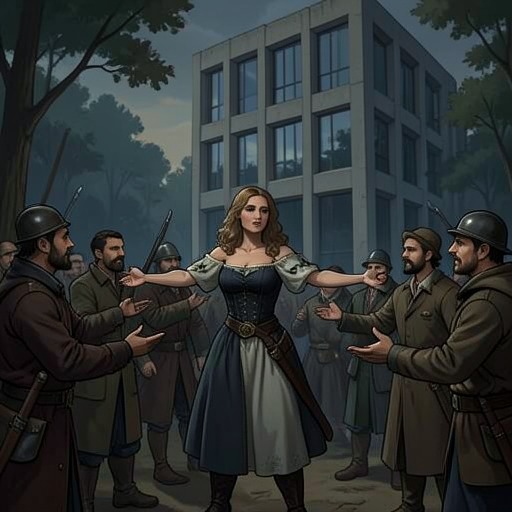
The Banshees are natural enemies of the Faeries, and their screams can reach a pitch capable of killing those exposed to them for too long. Saphira nevertheless advances toward Sondra when a Banshee carries Sondra's body away. The pursuit takes her toward Banshee territory, where the boundaries favor the attackers: Banshees can cross the borders more easily than Faeries can, while a Faery entering their territory would be vulnerable to the shrieks. Saphira's decision to continue without the protection of her wolf form shows courage expressed through constraint. She acts not because the danger is manageable, but because the available forms of resistance are inadequate.
Her mixed inheritance also requires formal recognition. Saphira and Trevor are summoned after a long absence and told that they must perform the Faery ritual. Their grandfather explains that they were supposed to lead the Faery people once they reached eighteen, but their mother's departure changed the succession. The demand places Saphira at the intersection of bloodline, age, grief, and political obligation. Leadership is not presented as a role she casually chooses; it is a claim imposed by ancestry and activated by ritual.
Prophecy, Pregnancy, and Family Crisis
Saphira's personal future becomes inseparable from a prophecy concerning the wider supernatural world. The prophecy states that a war will occur on the night when the sun is black and stars cross the sky, and that the conflict will be between Vampires and Werewolves over which race will become dominant. It further declares that two hybrids of the same origin will lead the winning side. Because Saphira and Trevor share the same mixed origin, the prophecy transforms their unusual family identity into a strategic threat.
Saphira is already pregnant when she asks what will happen if she and Trevor are the hybrids named by the prophecy. She places a careful hand over her stomach while hearing that people will try to kill both twins and anyone who stands in their way. Pregnancy therefore does not remain a private or domestic condition. It becomes part of a political danger involving the unborn child, the twins' survival, and the possibility that entire supernatural populations will mobilize against them.
The story repeatedly expands the definition of Saphira's family. Trevor's twin bond makes his well-being physically and emotionally inseparable from hers; her mother's death leaves behind magical authority; her father remains part of the household until his death; and her attachment to Ashton is formalized through both marking and pack recognition. These relationships make Saphira's obligations cumulative rather than singular. Protecting herself also means preserving a twin, a child, a mate, and communities connected to her bloodline.
Captivity, Loss, and Continuing Journey
Saphira's path repeatedly crosses hostile boundaries and spaces of confinement. After confusion about Trevor's whereabouts, Ashton leads her and Carmen toward the place where he last saw Trevor. Saphira is then found in a storage room: dark, lit only by a flickering bulb on a short cord, with water dripping from the ceiling. The setting converts uncertainty into captivity and forces her story into a more immediate register of bodily danger. The question of where Trevor is becomes inseparable from the realization that Saphira herself has been confined.
Her family also suffers a decisive loss when Trevor announces that their father is dead. Saphira collapses into Ashton's outstretched arms as the knowledge reaches her, and the world disappears. When she opens her eyes again, she is surrounded by bright light and the sound of a heart monitor, briefly wondering whether she has died before the medical evidence disproves it. The transition from death-shock to monitored survival captures the pattern governing her arc: catastrophe repeatedly interrupts her life, but survival demands that she wake into another obligation rather than return to safety.
The final available image places Saphira in an unfamiliar landscape. She feels sand beneath her feet, hears a soft breeze, and looks around while her heartbeat sounds in her ears. The scene offers neither a resolved destination nor a restored ordinary world. Instead, it leaves her at another threshold, physically displaced but still moving forward. From the school library where Ashton abandons her to the pack ceremony, the ritualized mark, the Faery succession, the prophecy, captivity, bereavement, and the sandy unknown, Saphira's trajectory is defined by repeated crossings: between species, families, territories, statuses, and forms of selfhood.