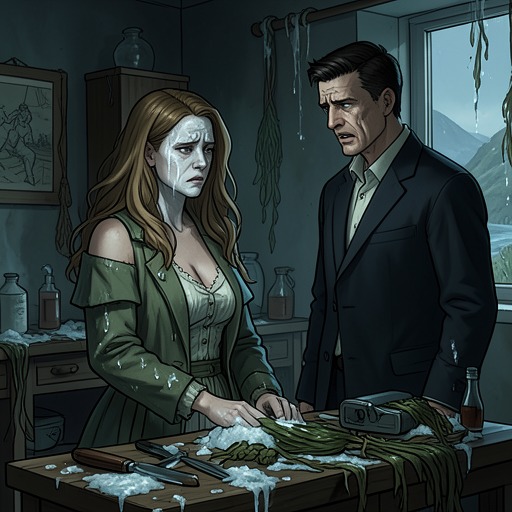
Saphira's Abduction
A Werewolf Thing: A Rejected Mate Werewolf RomanceSaphira's Abduction is a decisive act of violence against Saphira Richards, carried out by a rogue werewolf who enters her home, recognizes her pregnancy, and uses that vulnerability to overpower her. The abduction interrupts domestic security at the moment when Saphira is preparing to protect both herself and her unborn child, and it gives the looming conflict between vampires and werewolves a direct personal target.
Causes and Background
The attack occurs within a world already divided among werewolves, vampires, witches, Faeries, and Banshees. The Banshees are described as natural enemies of the faery kind, while the vampire-werewolf divide is associated with a prophecy of war on the night when the sun is black and stars cross the sky. That prophecy states that the war will determine which race becomes dominant, and that two hybrids of the same origin will lead the winning side. Saphira and Trevor Richards are both half werewolf and half witch, while their family history also connects them to the Faery leadership ritual, making Saphira important not only as a person but as a figure at the intersection of competing supernatural identities.
The immediate political background is the rogue's opposition to war. He tells Saphira that he knows she will lead the werewolves and that he prefers the existing order because war would change everything. His explanation makes the abduction an attempt to influence the coming conflict by removing or controlling a future leader rather than a random attack. The prophecy therefore supplies the larger stakes, while Saphira's pregnancy gives the assault an additional dynastic and emotional dimension.
What Happens
Saphira is at home when she sees a stranger in the doorway. She first notices that he smells like a rogue and responds by stepping back and growling menacingly. Her body becomes defensive before the confrontation is fully explained: she attempts to shield her stomach, and the stranger's attention to her enlarged pregnancy makes the danger unmistakable.
The rogue initially presents himself as harmless. He tells Saphira that he does not intend to hurt her or her baby and advances while she tries to put distance between them. She is eventually cornered and demands to know what he wants. He then identifies her expected role in the werewolf future, saying that she will lead the werewolves, before revealing that he does not want a war.
The apparent reassurance becomes a calculated deception. The rogue reaches behind his back and pulls out a cloth. He tells Saphira that she will be fine, then presses the cloth roughly over her nose and mouth. Her senses blur and panic takes over before she can react. In her last conscious act, she calls for Ashton Smith through the pack mind link, and then falls into the rogue's arms.
Participants and Stakes
Saphira is both the victim and the threatened political subject of the event. Her pregnancy changes the meaning of every defensive gesture: when she tries to shield her stomach, she is protecting a future child as well as herself. The rogue, by contrast, treats her pregnancy and leadership as strategic facts. His speech frames coercion as prevention, suggesting that the proposed abduction is meant to stop a war by controlling the person believed capable of leading the werewolves.
Ashton is absent from the room but remains directly connected to the scene through the pack mind link. Saphira's final call invokes him as protector and witness at the instant her own agency is being taken away. The contrast between her spoken resistance and the abrupt mental appeal emphasizes how quickly the encounter moves from negotiation to physical domination.
Consequences and Significance
The abduction converts prophecy into immediate crisis. Before the attack, the war belongs to a future night marked by a black sun and crossing stars; during the attack, that future is already shaping decisions, fear, and violence. The rogue's claim that Saphira will lead the werewolves confirms that her personal life, pregnancy, supernatural ancestry, and political position cannot be separated.
The scene also exposes the instability of species boundaries and political categories. The attacker is identified as a rogue werewolf, while Saphira's own identity is hybrid, and the surrounding narrative links her family to witches and Faeries as well as werewolves. In this setting, belonging offers protection through pack connection but also makes individuals legible as assets or threats to rival groups. Saphira's final use of the pack mind link shows both sides of that structure: it is a means of seeking help, yet it cannot prevent the rogue from removing her from immediate safety.
Finally, the assault establishes a sharp contrast with the later image of Ashton embracing Saphira carefully around her stomach and telling her that he missed her. The abduction treats her body as a pressure point in a political struggle; the reunion restores intimacy by treating that same body as something to protect. The event's importance lies in that reversal: Saphira is not merely carried away from home, but forced into the center of the war she may be destined to lead.