Vampire Maturity Rules
A Werewolf Thing: A Rejected Mate Werewolf RomanceVampire Maturity Rules establish a two-stage model of vampire existence: the temporary condition of the newling and the more powerful, socially established condition that follows maturity. Explained by Amanda to Saphira Richards, these rules are not merely biological details. They determine whether a vampire can be killed, whether the vampire can sleep, whether the vampire can have a child, and how the vampire is understood within vampire society.
Newling Status and Mortal Vulnerability
A vampire who has not yet matured is called a newling. Newlings possess a wider range of abilities than mature vampires, but their power does not make them invulnerable. The crucial distinction is that a newling can still be killed, whereas maturity brings immortality. The rule therefore creates an unusual reversal: the younger stage is associated with greater flexibility and more varied capabilities, but also with physical danger, while the later stage offers permanence and security.
The newling condition also limits ordinary bodily functions in ways that separate it from mature vampire life. A newling can sleep, but only until maturation. Amanda explains that common beliefs about vampires—that they never sleep and cannot enter sunlight—are only partly true. The rules are conditional rather than absolute: sleep belongs to the pre-maturity stage, and the broader assumptions about sunlight likewise cannot be applied uniformly to every vampire.
Reproduction and Biological Timing
Maturity rules also regulate reproduction. A vampire can have a child only before reaching maturity, making the newling period the sole reproductive window identified in the evidence. This restriction gives maturation a permanent consequence: crossing into immortality does not simply add strength, but closes an essential biological possibility.
The reproductive rule places unusual pressure on time. The stage in which a vampire remains vulnerable to death is also the stage in which the vampire can produce a child. The text thus links mortality, sleep, reproduction, and maturation into one threshold rather than treating them as separate traits. Maturity grants safety and power while removing capacities that belong exclusively to the earlier state.
Transformation Through Maturity
After maturation, a vampire becomes stronger and more confident, and vampires commonly regard the mature state as a better version of themselves. Maturity therefore functions as both a physical transformation and an identity claim. The vampire is not only harder to kill; the vampire is also expected to possess greater self-assurance and a more complete sense of personal power.
That improvement is not presented as uncomplicated. Amanda acknowledges that maturity has disadvantages, even while describing its strength and confidence. Saphira Richards responds skeptically to the costs of becoming mature, and the exchange preserves the ambivalence of the rule: maturation is desirable because it brings power, confidence, and immortality, yet it also ends sleep and reproduction. The process is consequently a gain in status that demands irreversible losses.
Social Authority and Secrecy
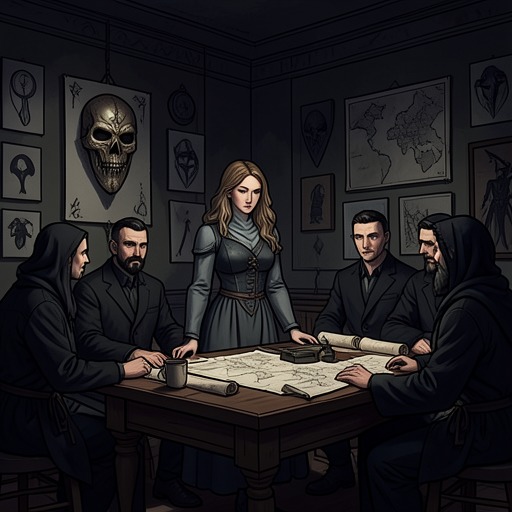
Maturity rules operate within a larger vampire social order governed by the Vampire Council. The council consists of powerful elders who protect vampires and humans in areas occupied by vampires while ensuring that the existence of Vampires remains secret. Its members possess abilities beyond those of ordinary vampires, including the power to erase human memories when secrecy requires it.
This connection makes maturity more than a private bodily milestone. Vampire life is organized through distinctions between ordinary vampires, newlings, mature vampires, and the elders of the Vampire Council. The council’s authority depends on exceptional power, while the maturity system explains why vampire abilities and vulnerabilities differ across stages. Together, the rules produce a hierarchy in which physical development, social confidence, political authority, and control over secrecy reinforce one another.
Narrative and Species Significance
Vampire Maturity Rules complicate the novel’s division among supernatural species. The story also presents Werewolves, Faeries, Witches, and Banshees as distinct kinds with different dangers, loyalties, and social boundaries. Banshees are natural foes of Saphira Richards’s kind, whose lethal screams normally precede death, while Simon List’s protective reaction to a vampire reveals how species identity can govern intimate allegiance as well as hostility. Against this backdrop, vampire maturity supplies an internal classification system: not every vampire occupies the same biological or political position.
The rules also matter because the surrounding prophecy describes a future war between Vampires and Werewolves, fought on the night when the sun is black and stars cross the sky. The war is expected to determine which race becomes dominant, and two hybrids of the same origin are prophesied to lead the winning side. In that setting, the difference between newling and mature vampire becomes potentially strategic as well as personal. Vulnerability, immortality, reproduction, and exceptional ability are all facts that can influence the balance between species.
By making maturation conditional, irreversible, and costly, the rules resist a simple fantasy of advancement. The mature vampire gains strength, confidence, and immortality, but loses sleep and the ability to have a child. Vampire Maturity Rules therefore define maturity as an exchange: increased power and social authority purchased through the closing of earlier forms of life.