Vampires
A Werewolf Thing: A Rejected Mate Werewolf RomanceVampires are a supernatural species whose presence transforms the novel’s understanding of danger, kinship, and political secrecy. Initially introduced through Amanda’s flight from Werewolves, they appear to stand on the opposite side of an entrenched species conflict. Their significance becomes more complicated when Simon List recognizes Amanda as his mate: the supposed enemy becomes part of the family network surrounding Saphira Richards, while the prophecy of a future war makes every cross-species relationship politically consequential.
Identity and First Appearance
Vampires are introduced through Amanda’s perspective during a pursuit in the forest. She identifies herself as a vampire while Werewolves chase her, and she treats the hostility between the species as an established fact rather than an isolated misunderstanding. The scene places Vampires and Werewolves within a pattern of naturalized opposition: Amanda is endangered because of what she is, and the forest becomes a contested space in which species identity determines who may safely move through it.
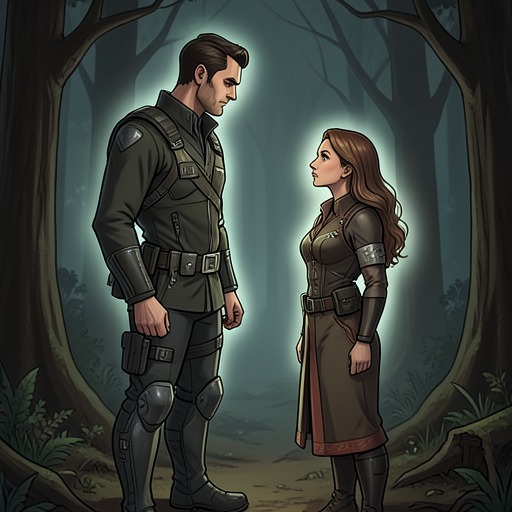
The hostility is not merely social. When Amanda enters the werewolf camp, Saphira Richards smells vampire and immediately rises into a protective stance. Simon List responds in the same way, but his posture protects Amanda rather than confronting her. The moment makes the species boundary visible through bodily reactions—scent, stance, darkened eyes, and a snarl—before anyone explains the relationship. Saphira then realizes that Amanda is Simon’s mate, and the discovery changes the meaning of the encounter: Simon is no longer simply accompanying a vampire but defending a person bound to him by the strongest relationship recognized in the novel.
Amanda is described as having brown wavy hair and matching brown eyes, while Austin, her fifteen-year-old younger brother, has brown hair falling over matching brown eyes. Their physical presentation is ordinary enough to place Vampires within the recognizable social world of families and siblings, even as their abilities and biological rules distinguish them from humans and Werewolves. Amanda’s cautious manner also complicates the assumption that a vampire entering werewolf territory must be an immediate aggressor.
Biology, Maturity, and Gifts
Vampire existence is divided into stages. Amanda explains that immature Vampires are called newlings. Newlings possess more abilities than mature Vampires, but they remain vulnerable to death because they have not yet become immortal. Maturity therefore creates a paradox: it grants greater permanence and strength while reducing the broad range of powers associated with the earlier stage. Once a vampire matures, the species is described as stronger, more confident, and, in the common view, a better version of itself.
Maturity also controls reproduction. A vampire can have a child only before reaching maturity, making age and development central not only to personal identity but also to the continuation of vampire families. The novel therefore treats Vampires as governed by a biological timetable that has social consequences. Their difference from humans is not presented as a single supernatural trait; it is organized through stages of life, changing capabilities, immortality, and a restricted reproductive window.
The species also includes individuals with distinctive gifts. Amanda can know everything about anyone merely by meeting that person’s eyes. Austin can see the future and influence the elements. These abilities make the siblings valuable beyond their family relationship: Amanda can expose knowledge through direct perception, while Austin’s powers connect him to possible future events and material forces. Their gifts reinforce the novel’s division of supernatural peoples into specialized kinds, but the family setting in which those powers are introduced prevents the abilities from reducing them to weapons alone.
Society, Secrecy, and Political Authority
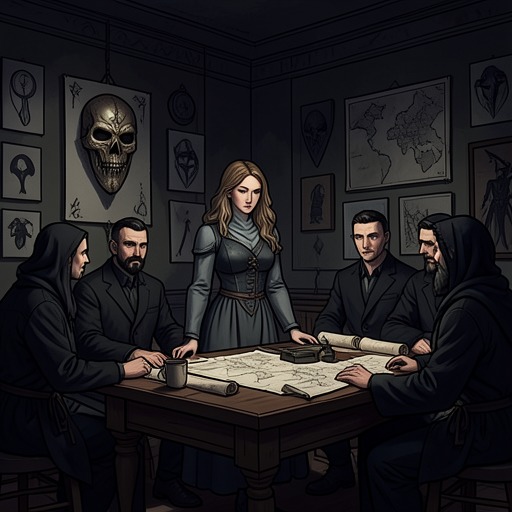
Vampire society is governed by a group of elders known as the Vampire Council. The council is responsible for the safety of Vampires and humans in areas occupied by Vampires, and it ensures that the species remains hidden. Secrecy is therefore not a private preference but an institutional law. The existence of Vampires is treated as knowledge dangerous enough to require organized containment, and the council’s authority extends beyond ordinary administration.
Council members are described as exceptionally powerful and strong, with more abilities than average Vampires. Their most striking power is the ability to erase human memories. This capacity makes secrecy materially enforceable: the council does not merely persuade humans to remain silent but can alter what humans remember. The Vampire Secrecy Law thus depends on supernatural coercion as much as on political discipline, creating a society whose security rests on controlling the boundary between knowledge and oblivion.
The council’s role also reveals an internal contradiction. Vampires occupy a hidden position, yet they exercise significant power over the visible human world. They claim responsibility for the safety of humans as well as their own kind, but the means available to them include involuntary mental intervention. Their protection is consequently inseparable from governance, surveillance, and the ability to decide which truths other people are permitted to retain.
Family, Mate Bonds, and Cross-Species Contact
Amanda’s arrival among Saphira Richards and the Werewolves demonstrates how kinship can cross a species boundary that ordinary politics treats as hostile. Simon List openly identifies Amanda as his mate and positions himself beside her. His protective response makes the relationship legible before the formal introduction, and Saphira understands that the bond has altered Simon’s priorities. The encounter does not erase the danger between Vampires and Werewolves, but it creates a local exception whose emotional force challenges the species-based division.
Amanda is not isolated from her own family within this new connection. Austin follows her into the camp, asks about food, and is introduced as her younger brother. The scene joins a vampire sibling relationship to the werewolf household and turns the camp into a temporary meeting point between groups that are otherwise defined by fear and territorial conflict. Saphira, despite her initial defensive reaction, answers Austin directly and helps him locate the main tent, allowing ordinary hospitality to interrupt the inherited logic of hostility.
The contrast is particularly sharp because Saphira herself belongs to more than one supernatural classification. She and Trevor Richards are half Werewolf and half Witch, and their mother had been the leader of the Witches. Saphira’s mixed heritage makes the vampire-werewolf boundary part of a wider system of contested identities rather than a simple division between two pure species. Her contact with Amanda therefore contributes to the novel’s larger pattern in which bloodline, family, mate bonds, and political allegiance repeatedly overlap.
War Prophecy and Narrative Significance
The conflict surrounding Vampires develops into a prophecy. Amanda explains that a war will occur on the night when the sun is black and stars cross the sky. The opposing sides will be Vampires and Werewolves, and the war will determine which species becomes dominant. The prophecy converts a long-standing hostility into an impending historical crisis: the species boundary is no longer merely a source of personal danger but the front line of a struggle over the future order of the supernatural world.
The prophecy also identifies two hybrids of the same origin as the leaders of the winning side. This detail gives mixed identity a new political meaning. Saphira Richards and Trevor Richards are already established as half Werewolf and half Witch, while the broader narrative repeatedly treats hybrid status as a destabilizing force within inherited categories. The predicted leaders are not defined by uncomplicated membership in either warring species, suggesting that the conflict may be decided by figures whose existence exposes the insufficiency of the categories used to organize it.
Vampires consequently function on several narrative levels at once. They are a species feared by Werewolves, a hidden society protected by a powerful council, a family represented by Amanda and Austin, and one half of a prophecy-driven war. Their presence exposes the limits of species essentialism: Werewolves call Vampires enemies, yet Simon List’s mate bond makes Amanda beloved and protected; Vampires preserve their secrecy through coercive power, yet their society is also structured around family and care; and the future of the species conflict is placed in the hands of hybrids rather than unquestioned representatives of either side. The novel’s treatment of Vampires therefore turns a monster category into a social world whose boundaries are repeatedly crossed, defended, and transformed.