Ashton's substance abuse and intoxication
A Werewolf Thing: A Rejected Mate Werewolf RomanceAshton's substance abuse and intoxication is not a single incident but a sustained pattern attached to Ashton Smith's public identity and private conduct. He is introduced as a rebellious alpha's son who parties constantly, gets high, and moves from one new girlfriend to another. When Saphira Richards becomes his mate, the substance use turns from background characterization into an immediate source of danger and conflict: it compromises his behavior, exposes the gap between his inherited status and his self-control, and helps drive Saphira away from him.
Pattern of Use and Public Persona
Ashton is characterized from the outset by excess. His reputation rests on partying, getting high, and pursuing a succession of girls, making drug use part of a wider pattern of impulsive and unstable behavior rather than an isolated lapse. The contrast is consequential because Ashton is also the son of an alpha and is expected to become the pack's future alpha. His social privilege gives him room to behave rebelliously, but it does not remove the risks attached to intoxication, impaired judgment, or the responsibilities of leadership.
The narrative places this behavior against Saphira's contrasting position. Saphira is shy, though her friends know her witty humor, and she carries a difficult past of her own. Her connection with Ashton therefore does not simply join two romantic opposites; it places a cautious and observant mate beside someone whose lifestyle is marked by volatility. The substance use becomes one of the clearest practical tests of whether the destined relationship can survive the difference between fate and conduct.
The Drug Discovery
The problem becomes concrete in the cafeteria when a small plastic bag, half full of a white powdery substance, falls from Ashton's pocket. Saphira's heightened senses register the sound of the bag hitting the floor, and she bends down to retrieve it. The object transforms suspicion into visible evidence. Ashton initially smiles, but that expression disappears as soon as he sees the drugs in Saphira's hand, revealing that the discovery has exposed something he intended to keep under control.
Rather than explain the substance or acknowledge Saphira's concern, Ashton asks where she found it and then snaps that what he does is none of her business. He snatches the bag from her and pushes it back into his jeans pocket. His response makes concealment part of the pattern: the conflict is not only about taking drugs, but also about reclaiming the evidence, refusing accountability, and asserting private control when his mate challenges the behavior.
Saphira objects because she understands the drugs as harmful, and because Ashton's choices affect the person bound to him as a mate. Ashton answers with indifference, saying that he does not care what she wants. His eyes become much darker as he leans toward her, while Saphira leans back in fear. The scene therefore gives the drug use a physical and relational consequence: the substance is small enough to fit in a pocket, but the confrontation around it alters the emotional safety of the relationship.
Alcohol Intoxication and Escalation
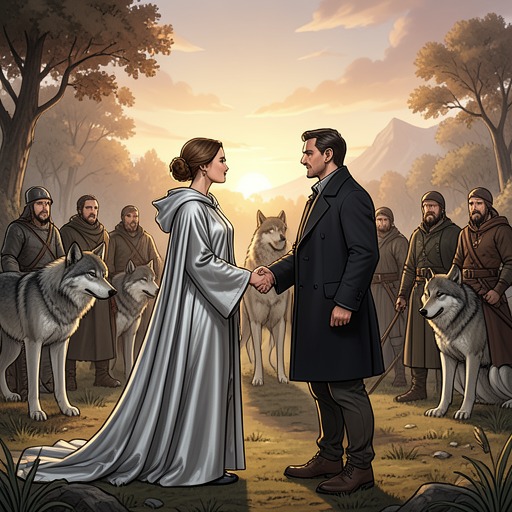
Alcohol produces a parallel episode at the pack gathering. Ashton takes Saphira's hand and places an arm around her waist, but the stench of alcohol is immediately apparent to her. The timing is especially revealing because the gathering has been called to announce that the future alpha has found his mate and that Saphira is the new Luna. Ashton is thus intoxicated at the very moment when his relationship is being converted into a public leadership fact.
Saphira follows him into the pack house after asking whether he has been drinking. Ashton locks the bedroom door, admits that he has been drinking, and responds with a shrug. His condition is visible in his wrinkled shirt, disordered hair, and slightly glazed eyes. The scene does not present intoxication as merely festive behavior. It shows a body and mind altered during a ceremonial moment, when Ashton should be able to appear as the future alpha and stand beside the newly recognized Luna with steadiness.
Saphira also recognizes that drugs and alcohol affect werewolves differently from humans but still have harmful effects when consumed in excess. This distinction does not make Ashton's use harmless; it clarifies the danger in the terms of the supernatural world. His physiology may change the threshold or appearance of impairment, but overuse still threatens his judgment and well-being. Saphira's question about whether he cares what might happen to him turns the confrontation toward self-neglect as well as relationship damage.
Conflict with Saphira Richards
Saphira's response is protective but also confrontational. She tries to reason with Ashton about the drugs and later challenges the way he is living. Ashton interprets the challenge as an attack on his autonomy, and his voice rises as the discussion intensifies. When Saphira admits that she does not like his life at that moment, he tells her to leave. The substance use therefore creates a pursuit-and-withdrawal pattern: Saphira presses for recognition of the danger, while Ashton responds by denying her authority and pushing her away.
The separation is not presented as a calm decision. Saphira reaches the door hoping Ashton will reconsider and take back what he said. Instead, he looks away. She bites her lip to stop herself from sobbing, turns the doorknob, and runs from the pack house. His refusal to soften the command converts intoxication and defensiveness into an actual rupture. The immediate cost is not only hurt feelings; Saphira leaves the place that should have represented her entry into Ashton's family and pack life.
Ashton's position as the future alpha intensifies the contradiction. His status can excuse him from some ordinary consequences, but it cannot make substance use disappear, and it cannot automatically repair the fear and abandonment produced by his conduct. The narrative repeatedly places the privileges of his rank beside the limits of that privilege. He may be protected by lineage, yet his mate can still identify the drugs, smell the alcohol, recoil from his anger, and leave when his behavior becomes intolerable.
Consequences and Narrative Significance
The evidence does not record Ashton completing recovery or abandoning drugs and alcohol. Instead, it leaves the condition as an unresolved pressure on his relationship with Saphira and on his suitability for future authority. That lack of resolution matters: the substance use is not treated as a decorative rebellious trait, because it repeatedly generates secrecy, confrontation, intimidation, and separation. Its consequences are shown through Saphira's fear and departure rather than through a simple moral label.
In the broader narrative, the contrast between Ashton's intoxication and later bodily crises involving other characters underscores how vulnerable supernatural bodies remain. Saphira doubles over when she encounters Trevor Richards's grief, is struck by an arrow during an attack by the Banshees, and later reveals that she is pregnant while warning Trevor that serious injury could affect the baby. Trevor is also shown enduring torture while a leather whip strikes his back, and Saphira instinctively shields her stomach when a rogue appears. These episodes are not evidence that Ashton shares those injuries, but they establish a recurring narrative concern with bodies under threat, care, and responsibility. Against that pattern, Ashton's voluntary intoxication reads as a preventable danger that he repeatedly refuses to treat with the seriousness demanded by his relationships and position.
The state is therefore significant because it turns the mate bond into an ethical conflict rather than a guarantee of harmony. Saphira can love Ashton and still object to what he is doing; being his mate does not give her the power to cure him, and being the future alpha does not give him the right to dismiss the consequences. His substance abuse exposes the distance between romantic destiny and lived trust. Until Ashton accepts responsibility for the drugs, alcohol, anger, and damage they produce, the bond remains vulnerable to the same cycle of concealment, confrontation, and abandonment that defines his intoxicated episodes.