Mate bond
A Werewolf Thing: A Rejected Mate Werewolf RomanceThe Mate bond is a supernatural connection that marks two beings as destined partners, first recognized through scent, bodily sensation, and the involuntary response of the wolf within. Its decisive importance lies in the tension between instinctive certainty and personal choice. The bond identifies Saphira Richards and Ashton Smith at their first meeting, but Ashton Smith’s refusal shows that recognition does not guarantee tenderness, acceptance, or emotional safety. The story therefore treats the Mate bond as both an intimate attachment and a binding social condition whose consequences reach into family life, ritual, identity, and conflict between supernatural communities.
Recognition and First Encounter
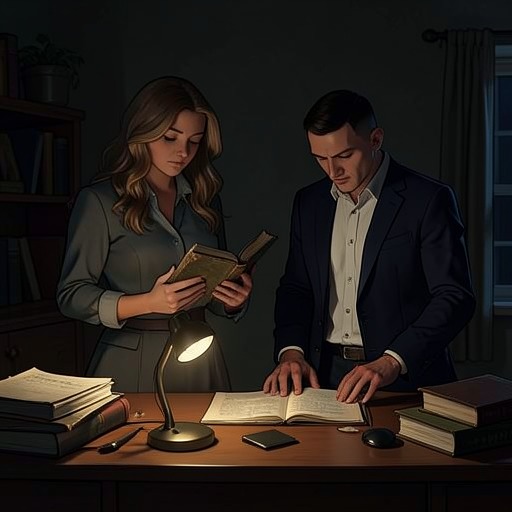
The bond announces itself before either person fully understands it. When Ashton Smith enters school, the scent of strawberries reaches him and makes his wolf howl with joy. He initially tries to dismiss the reaction, continuing toward his locker and presenting himself as a rebellious alpha’s son who enjoys attention, parties, and a succession of girls. Yet the bodily response returns with greater force in history class: strawberries fill his senses, his wolf begins howling, and his eyes snap toward the doorway as Saphira Richards rushes into the room.
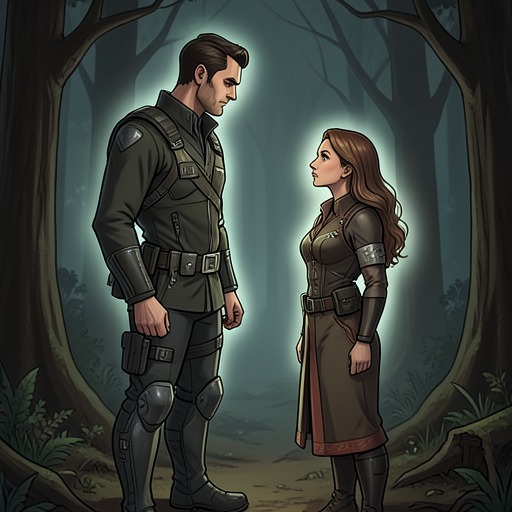
The recognition is reciprocal. Saphira Richards’s wolf, Tarrina, howls in joy when her eyes meet Ashton Smith’s. She registers his brown hair, brown eyes, leather jacket, blue shirt, and jeans, but the physical description is immediately overtaken by the supernatural certainty of the encounter. Both wolves identify the other as a mate before the human characters can rationally process what is happening. The repeated cry of “Mate!” establishes the bond as an instinctive knowledge that precedes explanation.
The classroom then converts private recognition into public proximity. Mrs. Farner introduces Saphira Richards as a new student and assigns her the seat beside Ashton Smith because he has no partner. Saphira Richards experiences shivers at hearing his name and expects some visible sign that he shares her excitement. Instead, Ashton Smith raises his hand only lazily and wears a bored expression. The bond is therefore present from the beginning as an asymmetrical experience: Saphira Richards reads it as a startling destiny, while Ashton Smith treats it as an intrusion into the freedom he believes he has chosen.
Rejection and Its Emotional Cost
Ashton Smith eventually confirms that he knows both Saphira Richards’s species and their relationship. He tells her that he knows she is a werewolf and that she is his mate, but his voice carries disgust rather than wonder. He then formally rejects her as his mate, making the rejection an explicit act rather than a misunderstanding. Saphira Richards’s heart seems to shatter, tears prick her eyes, and her wolf howls in pain. The Mate bond thus operates physically and emotionally: its injury is not merely social embarrassment but a wound experienced by the wolf as well as by the human self.
The rejection exposes the bond’s conflict with Ashton Smith’s prior self-conception. He does not want a mate because he believes a mate would hold him back from his free life. His resistance is consistent with his established identity as a rebellious alpha’s son who parties, gets high, and moves from one girl to another. The bond threatens a lifestyle built around detachment and choice, while Saphira Richards understands it as an obligation of mutual love. Her protest that a mate is supposed to love the other person “no matter what” reveals the expectation attached to the institution; Ashton Smith’s reply denies that expectation completely.
The effects continue beyond the school confrontation. Saphira Richards’s twin brother, Trevor Richards, can tell when she is lying and recognizes that something is wrong even when she claims to be fine. Their twin bond means that sadness in one can be sensed by the other, and physical injury to one is felt by both. Her Mate rejection therefore enters an already dense network of bodily and familial connection. She does not immediately tell Trevor Richards what happened, but the inability to conceal her distress shows how the rejected bond becomes visible through her relationships even when she withholds its story.
Restoration Through Ritual
The Mate bond is not presented as permanently destroyed by rejection. Ashton Smith later asks Saphira Richards to undergo the full moon ritual, and her shock shows how unexpected the request is after his earlier contempt. The ritual is specifically the means by which a mate accepts the person previously rejected. It must occur at the closest full moon after the rejection, and the rejecting mate must mark the other when the moon reaches its highest point. Completion restores the Mate bond.
This procedure gives the relationship a formal structure that personal emotion alone cannot supply. The restoration requires timing, bodily marking, and the visible participation of the rejecting partner. Ashton Smith’s request therefore reverses, without erasing, his earlier declaration. Saphira Richards accepts because she wants their bond restored, and the ritual changes the relationship from a rejected pairing into an acknowledged one. The bond’s rules make reconciliation an embodied act: acceptance is not only spoken but inscribed onto the body under the authority of the full moon.
After Ashton Smith marks Saphira Richards, the restored relationship must also be announced to the pack. Ella reminds Saphira Richards that being mated and marked means the pair must declare the relationship at the next pack meeting. The mark lies just below Saphira Richards’s collarbone and takes the form of a rose wrapped in spiraling thorn vines, with Ashton Smith’s name inside. Her shirt hides it from view at school, but the concealed mark already carries public consequences. The Mate bond has become a status that affects how the pack understands both individuals, not merely a private feeling between them.
Attachment, Family, and Conflict
The bond repeatedly creates a pursuit-and-withdrawal pattern between Saphira Richards and Ashton Smith. Saphira Richards seeks recognition, protection, and restoration, while Ashton Smith alternates between rejection, renewed involvement, and retreat. At one point, after Saphira Richards tells Ashton Smith that she is pregnant, he leaves her; following an attack in which he returns covered in scrapes and bruises, she sleeps in a guest room and avoids him for three days. She interprets his withdrawal as evidence that he does not want their baby. The Mate bond, once expected to guarantee devotion, instead intensifies the uncertainty of the household because his conduct contradicts the security the bond is supposed to provide.
At other moments, the relationship offers immediate shelter. After Saphira Richards explains what Trevor Richards has done, Ashton Smith tells her that she can stay with him for the night because it is Saturday and she may not want to see Trevor Richards. She accepts and snuggles beside him as he pulls the covers around them and turns off the light. The scene places the bond within ordinary domestic care rather than only supernatural ceremony. Yet its comfort remains fragile, because the same relationship that provides refuge also contains rejection, avoidance, and fear of abandonment.
The bond also connects individual romance to wider supernatural divisions. Saphira Richards is a werewolf with a mixed inheritance: she and Trevor Richards are half werewolf and half witch, and their mother had led the witches before her sister took over. Their grandfather later summons them to perform the færy ritual and reminds them that they were meant to lead the Færy Clan at eighteen before their mother’s departure changed the succession. These obligations show that intimate bonds coexist with inherited duties and group identities. A Mate bond may define a couple, but it does not erase bloodline, leadership, or communal expectation.
The surrounding world treats cross-species relationships as politically dangerous. The Banshees are natural foes of the faeries, and their screams can kill those exposed for too long; Saphira Richards and Trevor Richards nevertheless risk themselves to recover their cousin Sondra, because family cannot be abandoned or kidnapped. When a vampire enters with Simon List, Saphira Richards instinctively takes a protective stance, and Simon List mirrors it while protecting the vampire. His snarl reveals that the vampire is his mate. This parallel broadens the meaning of the Mate bond beyond Saphira Richards and Ashton Smith: the same force can cross species boundaries and compel protection even where social hostility would otherwise dictate suspicion.
Social and Narrative Significance
The Mate bond organizes the story’s central romance around the conflict between destiny and agency. Its initial signs are involuntary—scent, howling wolves, shivers, widened eyes—yet its social meaning depends on decisions. Ashton Smith can reject Saphira Richards despite recognizing her, and later he must choose to restore what he refused. The bond therefore does not abolish responsibility. Instead, it makes every choice more consequential because instinct, ritual, and communal recognition continue to exist after the emotional decision has been made.
Its implications extend into the larger supernatural order. A prophecy declares that a war between vampires and werewolves will occur when the sun is black and stars cross the sky, determining which race will become dominant; two hybrids of the same origin are destined to lead the winning side. Against this backdrop, mate relationships are not isolated romances. They link bodies, bloodlines, species, and possible political futures. The bond’s capacity to unite beings across expected boundaries becomes part of a narrative in which inherited categories are repeatedly tested by family loyalty, mixed ancestry, and chosen protection.
By the later family scene, Ashton Smith rejects the idea of mates when Saphira Richards suggests that a young girl’s mate may be high-ranking and that she might become a Luna. His remark echoes his earlier resistance, but the domestic setting gives it a different weight: Clayton Richards runs to Saphira Richards and calls for his mother while Ashton Smith stands in the doorway with him. The Mate bond remains a contested idea even within a family shaped by it. That recurrence prevents the concept from becoming a simple guarantee of happily-ever-after; it remains an active pressure on identity, intimacy, rank, and the promises supernatural society expects its members to keep.