Night of the Solar Eclipse and Meteor Shower
A Werewolf Thing: A Rejected Mate Werewolf RomanceNight of the Solar Eclipse and Meteor Shower is the decisive temporal threshold in the prophecy surrounding Saphira Richards and Trevor Richards. What first appears to belong to a remote myth becomes an approaching date with consequences for vampires, werewolves, the councils that govern them, and the pregnancy and family life of Saphira Richards. The night therefore functions not merely as a setting but as a test of whether inherited supernatural knowledge can become an active force in the present.
Prophetic Meaning and Political Stakes
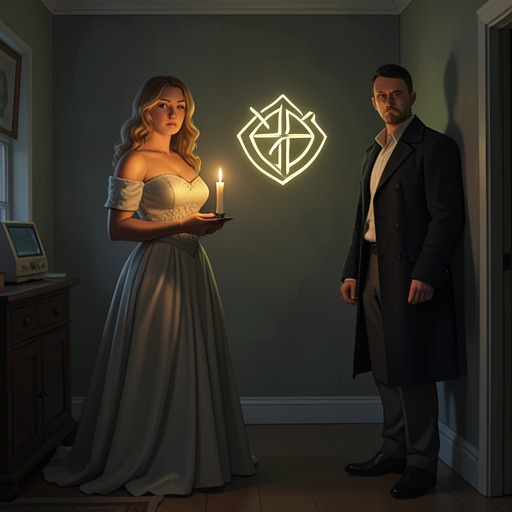
The prophecy describes a war occurring when the sun is black and stars cross the sky. Its declared contestants are vampires and werewolves, and the war is expected to determine which race will become dominant. The prophecy also states that two hybrids of the same origin will lead the victorious side. Because Saphira Richards and Trevor Richards are twins with two supernatural origins, Amanda identifies them as fitting the prophecy's description of the hybrid leaders.
The celestial sign is initially displaced into the distant future. Amanda explains that a natural solar eclipse and meteor shower occurring on the same night should not happen for another thousand years. That apparent distance makes the prophecy seem like ancient information rather than an immediate threat, but the councils' political response removes the protection of that timeline. There is discussion that a powerful sorcerer will deliberately cast down a meteor shower during a solar eclipse expected in March. Whether the stars fall naturally or are created by magic becomes politically irrelevant: the vampires and werewolves are prepared to treat the sign as sufficient reason to fight.
The Date Becomes Immediate
The approaching March event changes the meaning of the prophecy for Saphira Richards. She objects that pregnancy leaves her in no condition to fight or lead a war, while Amanda answers that, if Saphira Richards and Trevor Richards are the hybrids named by the prophecy, they will have no choice. The celestial event thus converts bodily vulnerability into a political obligation. Saphira Richards is not simply waiting for an astronomical spectacle; she is confronting the possibility that her pregnancy, her family responsibilities, and her identity as a hybrid will all be subordinated to a conflict defined by councils and prophecy.
The event is also connected to a larger pattern of revelations and dangers. The Banshees' attack on the faery village demonstrates that supernatural communities already exist in a state of hostility, while Simon List's protective reaction toward Amanda exposes the possibility of intimacy across species boundaries. Against that background, the eclipse and meteor shower threaten to consolidate separate local antagonisms into a war between entire races. The prophecy supplies a common explanation for scattered dangers, but it also gives those dangers a framework through which leaders can justify escalation.
Signs of Fulfillment
On the day of the planned or anticipated conjunction, Saphira Richards recognizes that the eclipse and meteor shower are no longer abstract predictions. She tells Trevor Richards that this is the day when the eclipse and meteor shower will be created and that something terrible is expected to happen to the twin hybrids in Amanda's prophecy. Her hope that the day might remain normal establishes the central contrast of the event: ordinary domestic life continues in the face of a supernatural timetable that threatens to interrupt it.
That fragile normality collapses when Trevor Richards enters the kitchen in tears and Saphira Richards feels overwhelming pain upon meeting his eyes. The reaction is especially significant because Saphira Richards has previously described the twin bond as a connection in which each twin senses the other's distress and even physically feels the other's injuries. Trevor Richards's arrival therefore makes the prophecy's danger intimate before it becomes fully explained. The celestial event is experienced through the body and through kinship, not only through the sky.
Confirmation and Consequences
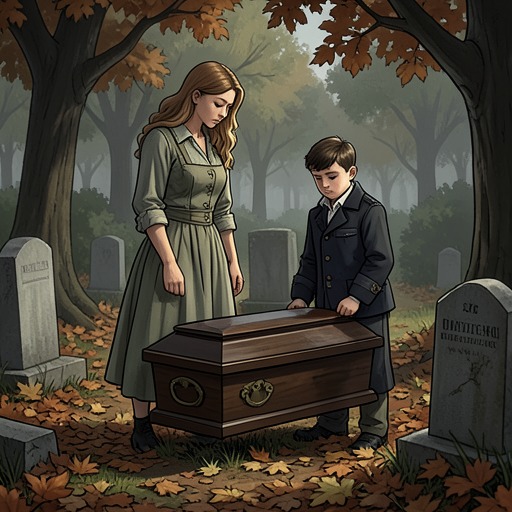
Afterward, Saphira Richards asks Trevor Richards whether the eclipse and meteor shower occurred on the day their father died. Trevor Richards confirms that they did, adding that Saphira Richards had been unconscious at the time. This retrospectively links the celestial sign to the death of their father and makes the prophecy appear to have already fulfilled one of its predicted circumstances. Saphira Richards concludes that everything Amanda said would happen has happened and asks whether she and Trevor Richards are the hybrids in question.
Trevor Richards does not dismiss the possibility. He tells Saphira Richards that, if Amanda was correct and they are the figures named by the prophecy, they will fight. His answer converts revelation into commitment, even though the evidence has not removed the danger or clarified the war's outcome. The event consequently produces no safe resolution: it confirms the prophecy's reach while leaving Saphira Richards and Trevor Richards facing an imposed role as potential leaders of a species war.
Narrative and Thematic Significance
The night operates as a threshold between forecast and history. Before it arrives, the black sun and crossing stars belong to a story about a future that seems a thousand years away. Once councils contemplate manufacturing the sign, once the day is associated with the death of Saphira Richards and Trevor Richards's father, and once Trevor Richards's suffering reaches Saphira Richards through their twin bond, the prophecy becomes a structure governing memory, politics, and bodily experience.
Its force also lies in the tension between cosmic destiny and chosen family. Saphira Richards repeatedly treats family as an obligation stronger than fear, as when she insists that family cannot be abandoned during the rescue of Sondra. The eclipse and meteor shower threaten to enlarge that obligation into a demand to protect or lead an entire supernatural race. The event's significance is therefore deliberately double: it may reveal a destiny shared by the twins, but it also exposes the danger of allowing prophecy and species rivalry to define what family members must become.